Through Hull backing pad, how big?

wipe_out

Well-Known Member
Joined
23 Feb 2013
Messages
1,399
Location
Bournemouth
Visit site
Hi,
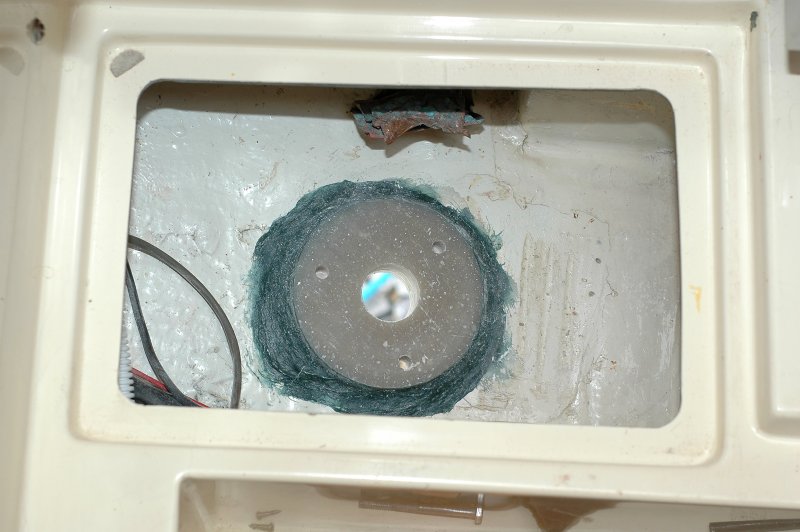
I’m installing TruDesign through hull fittings which say they need at leat 20mm hull thickness. My hull where I am fitting a couple of them is only 7mm thick. Even though I am using the load bearing collar I figure I need backing plates.
The question is how big (diameter) should they be? If I am fitting a 1.5 inch through hull? Is there a ratio of hole size to backing plate size that gets used as a general rule?
Thanks.
 
If you're fitting the load bearing collars, you could probably use backing plates which are the same diameter as the collars. If you're worried, make them 10-20mm bigger!

HDPE sheet is good stuff for backing plates. Easy to cut, stable, won't rot. Lots of suppliers of small sheets in different thicknesses, eg - HDPE Sheet | Direct Plastics Limited
 
If you're fitting the load bearing collars, you could probably use backing plates which are the same diameter as the collars. If you're worried, make them 10-20mm bigger!

HDPE sheet is good stuff for backing plates. Easy to cut, stable, won't rot. Lots of suppliers of small sheets in different thicknesses, eg - HDPE Sheet | Direct Plastics Limited
I have to say that you are a constant source of very useful information, thanks. Finding this stuff is half the battle.
 
If the hull is only 7mm and you need 20 mm, the OBVIOUS answer is to bond prelaminated FRP, which will become a part of the hull if properly prepped and tapered. It is really quite easy and MUCH stronger than using whimpy, slippery plastic. Add the FRP BEFORE you cut the hole!

HDPE (chopping board) is non-structural, subject to creep, prone to stress cracking under load, and does not bond to beding compounds. It is, frankly, cheap, easy, and a little lazy. I'm sorry if that sounds harsh, but would you want it done that way on a new boat? For course not. Do it right by building up the hull. The next owner will see the quality.

I've seen numerous HDPE backing plates split after a few years of high load.

83698319.vUWZVqZD.jpg
 
Hi,
I’m installing TruDesign through hull fittings which say they need at leat 20mm hull thickness. My hull where I am fitting a couple of them is only 7mm thick. Even though I am using the load bearing collar I figure I need backing plates.
The question is how big (diameter) should they be? If I am fitting a 1.5 inch through hull? Is there a ratio of hole size to backing plate size that gets used as a general rule?
Thanks.

Am I going blind? Is your hull fiberglass? Where am I going wrong: what have I missed? Is the through hull above or below the waterline?.

I have now read all the posts on the thread and if your hull is fiberglass I agree with thinwater 100%

thinwater is absolutely "SPOT ON".

As thinwater says the OBVIOUS answer is to buy a Pre-manufactured fibreglass backing block and epoxy it to the hull. If it was my boat I'd make up the epoxy fiberglass pad myself and epoxy the pad in while the pad was still curing.

Wipe-out be careful of accepting some of the advice offered by "experts" on these forums!!


Screenshot_2020-08-02 Marine Plumbing Done Right Presenter Brock Kelsch Marine Mechanical Tech...png

https://www.nanaimoboatyard.ca/wp-content/uploads/2018/10/Plumbing-done-right-2018.pdf

Screenshot_2020-08-02 Replacing Thru-Hulls and Seacocks - Marine How To.png

Replacing Thru-Hulls and Seacocks - Marine How To
 
Last edited:
Am I going blind? Is your hull fiberglass? Where am I going wrong: what have I missed? Is the through hull above or below the waterline?.

I have now read all the posts on the thread and if your hull is fiberglass I agree with thinwater 100%

thinwater is absolutely "SPOT ON".

As thinwater says the OBVIOUS answer is to buy a Pre-manufactured fibreglass backing block and epoxy it to the hull. If it was my boat I'd make up the epoxy fiberglass pad myself and epoxy the pad in while the pad was still curing.

But then in a previous thread your view was rather different...

I have assumed marine ply backing pads are fine and that is what I am using on the yacht I am building.
 
If you go quietly into your kitchen and “borrow“ a chopping board it will be even quicker, I’ve manage to convince SWMBO that she keeps misplacing them ?
I’ve noticed though John Lewis chopping boards have become much thinner than they used to be. (Used to make a tank inspection cover. ) So now use Amazon for better quality than JL.
 
But then in a previous thread your view was rather different...
Screenshot_2020-08-02 Through Hull backing pad, how big (1).png

We used to have village idiots but now with the internet you guys have gone global. ?

My yacht is a cored hull so I cannot use marine ply backing pads (or any backing pads) for thru hull fittings. You obviously not the slightest understanding of construction techniques.

I use marine ply backing pads for winches, rope clutches, solar panel fastening points. dinghy fastening points.... Understand?? (You are well and truly out of your depth)

I'm not going to responds to your idiotic posts.


Screenshot_2020-08-02 A quote by Mark Twain.png
 
If you're fitting the load bearing collars, you could probably use backing plates which are the same diameter as the collars. If you're worried, make them 10-20mm bigger!

HDPE sheet is good stuff for backing plates. Easy to cut, stable, won't rot. Lots of suppliers of small sheets in different thicknesses, eg - HDPE Sheet | Direct Plastics Limited
I think it would make more sense to start from a basis of 20cm bigger and work upwards from there.
Can HDPE sheet bond with epoxy resin?
 
I was installing an additional transducer in the bow, solid glass below the waterline, and needed to fill or build up the hull to allow the supplied backing plate to be bedded down. I did as Coopec suggested in post No 10 and used fibre glass sheets I made up earlier (for such a task) using 750gm glass. I simply cut the sheets progressively bigger to fill the void and bonded one on top of the other. Once I had a large enough flat surface to comfortably accept the supplied back plate I then drilled for the transducer. I don't recall the precise dimensions but the hole would have been about 25mm and the backing plate about 100mm long and 100mm at its widest.

I bedded the transducer with Sika.

I make up fibre glass sheets about 500mm x 500mm with single piece of fibre glass and have other pieces that I have bent at 90 degrees, as the resin is setting off - in case I need to add some additional structure.

None of this is difficult - it just needs a bit of time and patience but because I've got them already made, it takes no time and no patience :)

Jonathan
 
You obviously not the slightest understanding of construction techniques.

I have actually, even though I haven't spent 20 years building a yacht in my garden, as you have. When's the launch day?


I'm not going to responds to your idiotic posts.

That would make lots of us very happy. ;)
 
I think it would make more sense to start from a basis of 20cm bigger and work upwards from there.
Can HDPE sheet bond with epoxy resin?
Will epoxy resin stick to HDPE?
Polyethylene
plastic is wonderful stuff because nothing sticks to it, including epoxy. Even polysulfides like 5200 or Sika‑flex won't stick to boards of high-density polyethylene - such boards must be screwed in place. But this makes polyethylene very useful when working epoxy. (Google)
 
Top