Teak problem

Sandro

Well-Known Member
Joined
20 May 2004
Messages
281
Location
Northern Italy
Visit site
I resort to the forum experience for understanding and possibly solve a problem.

I own a 35 years old Drascombe Dabber in GRP with teack trimming (gunwales, centreboard case cap, thwarts, etc.).
I usually treat the teak once a season with boiled lineseed oil thinned with turpentine (natural or synthetic I don’t know) after a light sanding.
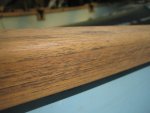
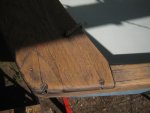
This year the teak looked very dark/dirty. Sanding improved the general colour but in the grain something black remains, as well as in any dent. Probably this went unnoticed because of the slow growing in the years. The black matter does not look like rot. I supposed that it could be dirt from the exhaust smoke, included my own diesel car’s, during road trailing. This could be true as the teak protected by the cockpit cover is in much better condition. I tried and bleach or thin the black matter with household bleach, dishwashing liquid, mechanic’s hand cleaner, to no result.
Perhaps deeper sanding would eliminate it but I don’t want wasting too much wood for an only aesthetic (I hope) reason.
Has someone met the same problem? How did he/she cope? Is this perhaps the normal look of old teak?
I enclose (if I can) some pictures taken after sanding.
I thank for the advices that will surely arrive.

Sandro
 

Attachments

  • IMG_4999TeackSporco.jpg
    IMG_4999TeackSporco.jpg
    89.3 KB · Views: 0
  • IMG_5000TeackSporco.jpg
    IMG_5000TeackSporco.jpg
    91 KB · Views: 0
  • IMG_5001TeackSporco.jpg
    IMG_5001TeackSporco.jpg
    89.2 KB · Views: 0
I resort to the forum experience for understanding and possibly solve a problem.

I own a 35 years old Drascombe Dabber in GRP with teack trimming (gunwales, centreboard case cap, thwarts, etc.).
I usually treat the teak once a season with boiled lineseed oil thinned with turpentine (natural or synthetic I don’t know) after a light sanding.
This year the teak looked very dark/dirty. Sanding improved the general colour but in the grain something black remains, as well as in any dent. Probably this went unnoticed because of the slow growing in the years. The black matter does not look like rot. I supposed that it could be dirt from the exhaust smoke, included my own diesel car’s, during road trailing. This could be true as the teak protected by the cockpit cover is in much better condition. I tried and bleach or thin the black matter with household bleach, dishwashing liquid, mechanic’s hand cleaner, to no result.
Perhaps deeper sanding would eliminate it but I don’t want wasting too much wood for an only aesthetic (I hope) reason.
Has someone met the same problem? How did he/she cope? Is this perhaps the normal look of old teak?
I enclose (if I can) some pictures taken after sanding.
I thank for the advices that will surely arrive.

Sandro
Try using a good teak cleaner, there was a test recently in the magazine so lots of products.
The one i use and am delighted with it TEAK WONDER, I have a teak deck which looks great, highly recommend it to you, I believe it is made in Italy!
 
Using your oil mixture is the basic cause of your problem. The oil absorbs dirt. You need to clean the teak using either a proprietory cleaner or Patio Magic. You can either leave it bare (NO OIL) in which case it will go grey, or use a sealer such as Semco, or finish with a bright coating such as International Woodskin.
 
If you think your problem arises from exhaust smoke specifically, it may also be worth trying Autoglym Engine and Machine cleaner, which I found to be excellent for removing black streaky marks on the topsides caused (I believe) by hydrocarbons/soot deposited in rain. I have not tried it on teak, and of course ingrained material will inevitably be harder to shift, but I was very pleasantly surprised by its action compared with many other cleaners I had tried. (I got to it from a caravan website, where its ability to remove road grime was remarked - IIRC it is a detergent mixture, not an acid or alkali, but do check on the bottle.)
 
This looks to me like the normal fungal growth one gets in the grain of teak. My boat has a lot of teak (but not a teak deck) which had not been cleaned for 10years or more and was black. Not the silvery grey weathered look but black. I have spent the last 6 weeks on restoring the teak to its former glory. The first layer of black was on the surface but when that was removed the black was left in the grain as in your pictures. You can sand it out, but you will be removing a thin layer of wood. I found that using a two part teak cleaner was pretty effective though the wood was slightly bleached afterwards and the grain was raised neccessitating some light sanding. After the cleaning I coated mine with 3 coats of Woodskin. Because Woodskin has a teak tint the bleached wood now looks really good and blends well. I have used oils, Varnol and Deks Olje and varnish before but have found them needing a lot of maintenance, though on the spars and masts I use a good quality varnish. I would try sanding first to see how deep the ingrained black is. If you feel it is too then deep resort to a chemical cleaner. So far I have been pleased with the results of Woodskin, but time will tell. I know that there will be some on this site that will scorn the use of chemicals on teak and will swear by oïl, but I have found this works best for me.
 
Go to a chemist and get some oxalic acid, he may have to order it for you, mix up a solution and brush onto the clean teak, it will brighten the teak and make it look like the tree was chopped down yesterday, its what is the main ingredient in most teak brighteners you buy for vast expense in the chandlery. please, please don't use oil or anything else on your teak, it makes the job so much more difficult and its NOT teak oil. clean occasionally with soap and water and rinse regular with salt water. You can varnish it of course or one of the proprietary teak systems like ceetol or what ever, I don't, I varnish the stuff I want shiny and leave the rest alone.
 
Go to a chemist and get some oxalic acid, he may have to order it for you, mix up a solution and brush onto the clean teak, it will brighten the teak and make it look like the tree was chopped down yesterday, its what is the main ingredient in most teak brighteners you buy for vast expense in the chandlery. please, please don't use oil or anything else on your teak, it makes the job so much more difficult and its NOT teak oil. clean occasionally with soap and water and rinse regular with salt water. You can varnish it of course or one of the proprietary teak systems like ceetol or what ever, I don't, I varnish the stuff I want shiny and leave the rest alone.

In France you can buy the pure powder in Castorama and mix it up yourself. Be careful!!

http://www.castorama.fr/store/Acide-oxalique--prod6270024.html?isSearchResult=true&navAction=jump
 
Before you use a teak brightener you must use a teak cleaner to remove the old oil residue and associated dirt. You can use a proprietary cleaner but sodium hydroxide (good old fashioned washing soda) is all you need and lots of elbow grease with a stainless steel pad - across the grain if possible to avoid taking out too much of the soft wood between the grain.

Any acid will do for the brightener - some of the proprietary brighteners are hydrochloric. B&Q brick cleaner is a very cheap source of HCl.
 
Boracol is wonderful stuff - I use it on my deck and sprayhood. But I don't think someone who's been oiling his teak will like the clean natural look.

We're experimenting with Boracol this year and the results look very promising.

Without getting into the "should you oil teak" debate, I would suggest that even someone that does intend to apply oil should consider applying Boracol first. The marks in the pictures definitely look like mildew. Boracol will remove the existing mildew and leave the wood protected against new growth for a couple of years - it does not seal the wood and I can't see why the OP could not apply more oil if he wants to.
 
The black could be one of two things fungus (which has been addressed) or using teak oil. Although it doesn't say so on the pack teak oil bought at chandlers contains castor oil which goes black with UV exposure. The only answer if you have used that is to keep sanding until all the black goes, then buy pure teak oil which is not cheap but stops the problem.
 
The black could be one of two things fungus (which has been addressed) or using teak oil. Although it doesn't say so on the pack teak oil bought at chandlers contains castor oil which goes black with UV exposure. The only answer if you have used that is to keep sanding until all the black goes, then buy pure teak oil which is not cheap but stops the problem.

While you may have to sand it out, I would strongly recommend trying a fungus remover first - there is a limit to how many times you can sand so aggressively.
 
Thanks to all for the advices.
I did not use any special "teak oil" but old boiled lineseed oil thinned in turpentine just because I thought to do good to the wood.
Now I understand that teak can do very well also if left alone and so I shall do. I like the silver grey of weathered teak.
The problem is now to remove the black thin lines in the grain. I shall try some more chemical. If no result, I shall do a little more sanding but not too deep and leave it so. I like better to have some black marks than removing a lot of wood.
After all "Giulia" is a 35 years old lady and it is not a terrible sin if she show it.
I shall post if I find some miracle cleaner.

Fair winds

Sandro
 
Boracol seems to do a very good job of removing fungal marks and will protect against future growth.
 
Before you use a teak brightener you must use a teak cleaner to remove the old oil residue and associated dirt. You can use a proprietary cleaner but sodium hydroxide (good old fashioned washing soda) is all you need and lots of elbow grease with a stainless steel pad - across the grain if possible to avoid taking out too much of the soft wood between the grain.

Any acid will do for the brightener - some of the proprietary brighteners are hydrochloric. B&Q brick cleaner is a very cheap source of HCl.

I would never use or recommend the use of Hcl, for cleaning wood and I've seen a lot of teak brighteners and never seen Hcl in any of them. There is another acid in them, that sounds like hydrochloric, but for the life of me cant remember what it is and its not hydrofluoric.
 
Top