
Studland update, and a question

oldharry

Well-Known Member
Joined
30 May 2001
Messages
10,074
Location
North from the Nab about 10 miles
Visit site
ON the public front things are pretty quiet as DEFRA digests the huge amount of information it has about T3 MCZs. But behind the scenes quite a lot is going on. Defra is carrying out a study on anchor damage, and we are told this is likely to confirm the Seastar report findings, that anchoring makes little or no difference to the health of eelgrass beds. We remain hopeful that Studland will be dropped from T3, but are making contingency plans should it be included and be designated by the Minister.

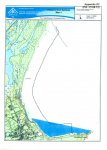
Interestingly, ‘zoning’ has emerged as a possible way of managing the Bays eelgrass as an MCZ. This would mean that anchoring would be restricted to certain parts of the Bay in order to conserve the Eelgrass. There is no indication yet of how this would work, or how it would be policed, but one suggestion that carries a good deal of support is that the existing speed limit markers should define the offshore anchoring limits. The chart below shows where this lies. The proposal is still no more than a suggestion, and the detail has yet to be worked out, not least how it would be enforced.

There would also be a howl of rage from SHT who perversely placed their 'secret research area' inside the 5kt zone (it is in the blue area, inshore of the 5kt marker line!).

Assuming Studland becomes an MCZ, and anchorage zones are created along these lines, do you think this is viable from our point of view? It could get very crowded on the rare fine Bank Holiday….
img007.jpg
 
Yes, that would be very restrictive for those who use Studland as a destination for example for children to play on the beach and for shallow draft boats. Less of a problem for those using the bay as a refuge or waiting for the tide etc.

Just on my way out there with the boat so will refresh my memory of where the buoys are.
 
One assumes the 5kt buoys are the 6no. yellow ones shown on Admiralty Chart 2172. If so then the anchorage is shown to the north of those buoys anyway and I would not want to be anchored in 0.3m.

The policing would be very interesting as to who would actually do this. Perhaps SHT could apply for the job! I don't think he would last long on a sunny Bank Holiday weekend!!!
 
It may or may not work but it will be completely ignored on summer weekends when you can practically walk ashore across the mobos and fewer number of yachts.
 
It may or may not work but it will be completely ignored on summer weekends when you can practically walk ashore across the mobos and fewer number of yachts.

Agreed, even with bilge keels we can't get in too close to the shore unless we want to dry out. However, the dayboat lot out from Poole think nothing of just parking on the beach. Who is going to tell them they can't park there or in the shallows and walk ashore and under what authority, some rule about a MCZ? if they refuse what then, call the Police on a bank holiday weekend? Perhaps as suggested point out to Defra how they are going to enforce any rules.
 
MMO, who will be tasked with the Policing job are very well aware of the issues - and their lack of cash! I discussed it at some length with the previous Head of Enforcement at MMO. It seems to me (and this is purely my own opinion) that voluntary regulation can be the only way forward. Even that is pretty impossible: how on earth would you get the information out beyond local boat and angling clubs? A great many visitors tow their boats from inland and are not affiliated to any organisation that would tell them the does and donts. Looking beyond that we could be in danger of registration and regulation for all seagoing leisure vessels in order to implement the MCZ regs! Dont laugh - the Conservationist looney left sees that as the obvious solution and are already asking why boats are not regulated with compulsory driver training as cars are. MMO dont have the budget for that either. Anyone visiting Studland can see how well the existing 5kt limit is observed and enforced!
 
Anyone visiting Studland can see how well the existing 5kt limit is observed and enforced!

Actually if the MMO wanted to do something really useful that might be complied with by most then move the 5 knot limit from half way between the beach and Old Harry with a line of bouys due North.
 
If it helps, I have overlaid the above image onto a chart image

Studland.png
 
Day trip boats may anchor in that part but those staying overnight wouldn't - look at the depths! OH, how do the Bank's Arms and other moorings fit into this plan?
 
Day trip boats may anchor in that part but those staying overnight wouldn't - look at the depths! OH, how do the Bank's Arms and other moorings fit into this plan?

Lookinbg at that superimposed on the chart, I would have an issue with the North East corner. Depths there seem to be 3m at CD. Not unreasonable for even quite deep keel boats to anchor there in the right conditions. I would have said somewhere around the 1m contour ( not that it's on the chart but by guesswork ) would look reasonable.
 
Studland this afternoon at low water.

IMG_20160504_143540.jpg


This is the middle one of the 3 buoys shown on the chart above

IMG_20160504_143827.jpg


Little further north . You might just be able to make out the line of buoys running roughly north showing the limit of the 5 knot zone - and roughly where it shallows. In fact touched bottom for 10 mins or so at low water with 1.5m draft.

As you can see many boats anchored or on mooring buoys in what will be the no anchor zone. Mostly shallow draft, but as suggested earlier this area is wall to wall boats on any decent weekend.
 
Day trip boats may anchor in that part but those staying overnight wouldn't - look at the depths! OH, how do the Bank's Arms and other moorings fit into this plan?
Bankses moorings are a little less than half way between the large yellow buoy marked off S Beach, and the red pillar buoy marked close inshore, and extend southward parallel to the shore from a line drawn between the two marked buoys in around 1m. Deep keelers will ground at LW, and this happens fairly regularly.
 
I might not be keeping up, but if the Defra study into anchoring looks like it will confirm little or no damage from anchoring, why would an MCZ then propose the introduction of a no-anchor zone
to manage the eelgrass beds?
 
Last edited:
I might not be keeping up, but if the Defra study into anchoring looks like it will confirm little or no damage from anchoring, why would an MCZ then propose the introduction of a no-anchor zone
to manage the eelgrass beds?

For the whole reason the MCZ nonsense exists to start with; forget reality, career conservationists can make a good living out of such BS...:rolleyes:
 
I would have no objections to this. No-one wants to anchor near the speedboat playground to the south. As a beach user and swimmer keeping boats back from the beach would be nice. Studland is preserved as an anchorage which is the big thing.

the Conservationist looney left

Do you have specific intelligence on Mr. Garrick-Maidment attitude to fiscal policy and what has that got to do with eel grass anyway? From posts he's made I got the impression that his politics were rather right of centre on traditional left-right axis but attitude towards conservation is orthogonal to that axis and in any case many boaters who strongly support conservation also support the debunking of the Seahorse Trust's dodgy pseudo science. Phrases like the one above risk undermining your good work by affirming a characterisation of their opponents that the SHT would like to promote.
 
I might not be keeping up, but if the Defra study into anchoring looks like it will confirm little or no damage from anchoring, why would an MCZ then propose the introduction of a no-anchor zone
to manage the eelgrass beds?

I find anchoring and mooring is used as a synonym in the conservancy world.

In North Wales we are facing a similar "threat" in place at Porth Dinllaen.

This is very similar to Studland Bay in that it has extensive Eel grass meadows which support the early birth and growth of much aquatic life including Fish and of course probably the odd "Sea Neddy".

The pressure in our area is because surveys have shown the deep scouring of the eel grass by MOORING CHAINS in areas where small boats are MOORED (less than 1meter draft) causes a large area of grass to be lost.

This weekend due to spring tides all visiting KEEL boats will be anchoring in depths of at least 2 M at low water. The eel grass does not extend into this area!

I have never anchored at Studland but I would expect a similar situation for any reasonable sized Fin Keel Yacht.

There is evidence that a major problem at Porth Dinllaen was the Chelsea Tractor brigade driving across the bay rather than walking to the Ty Coch Pub at low water and compounded by the launching of small boats by the fishing fraternity based there!

Actions were put in place to restrict this but only after substantial areas had been lost.

These Areas were also subjected to the occasional weekending Bilge keeler , Ribs and speed boats and Lift Keelers drying out close to the Pub!

I would suspect that most of us would support a scheme that encouraged owners of small boats not to beach, anchor or moor their craft on such areas of intertidal seagrass.

So perhaps a no beaching zone is more appropriate!
 
Last edited:
Why would beaching boats be any problem to wildlife ?

As for Old Harry's comment, I know Old Harry well and his remark was technically 100% correct, the chap mentioned really is the definition of ' Looney ' ! :)
 
Re Porth Dinllaen, an area I know well, I was in the early stages in touch with the research team there. The big difference is that they have (had?) intertidal eelgrass there, which was being destroyed as you say largely by the Chelsea Tractor brigade, and people launching and retrieving their boats. Beaching a boat on eelgrass is unlikely to damage the rhizome mat on which it depends, unless when lifting off the owner uses his engine to pull himself off to save a few minutes on the rising tide. That can cause major scouring, and IS something to be avoided in eelgrass. Also, with a much bigger tidal range than Studland, mooring chains are much longer and can scour out a larger area.

One difficulty we keep encountering is that few non-boating people know the difference between 'anchoring' and 'mooring', or that there is indeed any difference, so that anchoring tends to get confused and lumped together with the laying of swinging moorings which can in certain circumstances clear an area of the seabed within its scope.

Answering Graham D's comment: the primary issue is the protection of valuable eelgrass beds. Marine Biologists see this plant as playing a key role in sub tidal eco systems, providing important shelter and support for a wide range of other species: whether or not it is in an anchorage there is a clear need to protect seagrass (of which eelgrass is a specific type) worldwide, Generically, seagrasses tend to be very fragile and slow growing, and are easily damaged. Once dmage occurs it can take many years for it to recover. Our native eelgrass in UK is very much the exception, being a robust and much faster growing variant, which even when seriously dmaged is widely reported to recover very rapidly even from major disturbances- sometimes in as little as a seasons growth. We find it deeply frustrating that so many experts, including Dr Collins from Soton University, who started this controversy, insisted on comparig Eelgrass (zostera marina) to its Mediterranean counterpart (Posidona oceanica) and basing his conclusions on studies of that species which is known to be very slow growing and strongly susceptible to disturbance which can take five years or more to even begin to recover. If we had Oceanica in Studland, I would very strongly support moves to look after it.

As it is neither Marlynspyke or I in five years have been able to find ANY scientific literature which supports Collin's claim about the fragility fo Zostera - indeed very much the opposite: its all spelt out on the BORG website, in to date 26 study papers!
 
The aerial photo's of Studland since the 1930's support BORG and Old Harry's stance.

Despite a disease massively reducing the eelgrass around the 1930's, and the huge expansion of pleasure boating from the late 1950's, the eelgrass has greatly expanded.

Hopefully the same applies at Porth Dinllaen.
 
Re Porth Dinllaen, an area I know well, I was in the early stages in touch with the research team there. The big difference is that they have (had?) intertidal eelgrass there, which was being destroyed as you say largely by the Chelsea Tractor brigade, and people launching and retrieving their boats. Beaching a boat on eelgrass is unlikely to damage the rhizome mat on which it depends, unless when lifting off the owner uses his engine to pull himself off to save a few minutes on the rising tide. That can cause major scouring, and IS something to be avoided in eelgrass. Also, with a much bigger tidal range than Studland, mooring chains are much longer and can scour out a larger area.

One difficulty we keep encountering is that few non-boating people know the difference between 'anchoring' and 'mooring', or that there is indeed any difference, so that anchoring tends to get confused and lumped together with the laying of swinging moorings which can in certain circumstances clear an area of the seabed within its scope.

Harry I will get a picture for you with a bit of luck this weekend. For old times sake!

I think the local conservation group are actually doing a good job in encouraging responsible boating in the area and involving people in the discusion and way forward. This may be in contrast with the key protagonist in Studland.

Here is a link
http://www.penllynarsarnau.co.uk/projects.aspx?lang=pages&id=19

I actually agree pretty much with their estimation of the area of the intertidal and tidal meadow and most visiting yachts will rarely be anchoring in the light green area displayed in their leaflet.

I am not sure I have seen the leaflet on display in the Ty Coch !
 
Top