Strategy for old, painted topsides

DHV90

Well-Known Member
Joined
23 Aug 2013
Messages
325
Visit site
Hi guys,

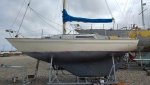
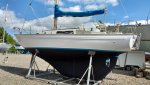
The topsides on my boat have been painted over by previous owners, hiding a number of repairs and also a lot of filler work. The finish is excellent in the places where it isn't damaged, but those are few. This paint job must be 20 years old, im guessing after a big collision, but the paint got absolutely battered under the previous owners since then. I need to tidy it up, its bad, but not sure what strategy to take.

First up, a pro respray is out of budget and out of the question, unfortunately, im currently in the process of doing all the underwater surfaces, a complete deck refurb and the interior as well.

I was hoping to get some advice on what strategy to take when dealing with an unknown paint surface. Are there any tricks to identify what sort of paint was used? Specific solvents that dissolve specific paints maybe?

Is doing a large number of smaller repair areas and trying to blend them in likely to yield poor, patchy results or with a professionally colour matched paint could this offer a good solution? Doing an area at a time would take a lot of pressure off, rather than committing to a complete repaint. But then again, perhaps a complete repaint is the only option, it just seems a shame to lose the good areas of the pro job.

I would guess that 40% of the topsides need patching

Any advice much appreciated!
 
Hi guys,

The topsides on my boat have been painted over by previous owners, hiding a number of repairs and also a lot of filler work. The finish is excellent in the places where it isn't damaged, but those are few. This paint job must be 20 years old, im guessing after a big collision, but the paint got absolutely battered under the previous owners since then. I need to tidy it up, its bad, but not sure what strategy to take.

First up, a pro respray is out of budget and out of the question, unfortunately, im currently in the process of doing all the underwater surfaces, a complete deck refurb and the interior as well.

I was hoping to get some advice on what strategy to take when dealing with an unknown paint surface. Are there any tricks to identify what sort of paint was used? Specific solvents that dissolve specific paints maybe?

Is doing a large number of smaller repair areas and trying to blend them in likely to yield poor, patchy results or with a professionally colour matched paint could this offer a good solution? Doing an area at a time would take a lot of pressure off, rather than committing to a complete repaint. But then again, perhaps a complete repaint is the only option, it just seems a shame to lose the good areas of the pro job.

I would guess that 40% of the topsides need patching

Any advice much appreciated!

If you are considering a two pack system try the effect of some thinners for that system on the existing. If it affects it it indicates that the existing is probably single pack and that you should use a single pack.
 
A single pack will go over a 2 pack, but not the other way. Simplest, cheapest and most effective is to flat it all down, repairing any dings with an epoxy filler such as Watertite then prime undercoat and Toplac top coat. If you get the preparation right you will get a durable high gloss finish for minimal cost (in money terms!)
 
Agree with VicS above re testing the current paint.
For repainting a series of small repairs are sure to look patchy so you need to do a larger area. One full side of the hull is perfectly OK and will only show up to someone looking from directly ahead or astern
 
A single pack will go over a 2 pack, but not the other way. Simplest, cheapest and most effective is to flat it all down, repairing any dings with an epoxy filler such as Watertite then prime undercoat and Toplac top coat. If you get the preparation right you will get a durable high gloss finish for minimal cost (in money terms!)
Agreed: you really don't want to do a lot of sanding/prep then find that two-pack "discovers" something incompatible underneath in one or two spots....

Toplac the usual choice, but have also seen a fantastic finish from brushed Tekaloid.
 
Thanks guys, much appreciated, thats helped put my mind at ease. Ill try and get samples of a variety of enamel paints, and do large test patches on the hull to test adhesion and also to practice brushing and tipping, then sand back and have a good go at it! Looking forwards to it rather than dreading it now.

Thanks for the tekaloid suggestion, that looks like really good stuff as well with a long history of use, do you reckon it's changed its basic compound at all? on the web its listed as 'formerly BG18' just a rename? or has it recently become a lesser quality due to legislation or anything like people claim for so many other materials?

EDIT: One more question, sorry guys,
Do I need to worry about epoxy filler at all? Will enamels universally adhere well to epoxy or is the saying that nothing will stick to epoxy true for paints as well? I might not necessarily use epoxy but I dont want to try and figure out if all the areas already filled and faired on the topsides are epoxy based or not! Again, just another un-known part of the build up which can't be realistically removed.
 
Last edited:
I have painted several boats-our wooden top narrowboat was like the forth bridge, when the last brushstroke was made and you stood back to admire it, it was nearly time to start again!

Prep is the key, as well as using top quality brushes and getting the paint to exactly the right consistency for brushing.

I recently coach painted, using ordinary black enamel from Wilko's, a motorcycle frame. Four coats of primer,alternate grey and red, rubbed down between each coat and the top coat applied quickly and finished off with long gentle strokes to avoid runs and sags. Only two topcoats were required.

When assembled and put on display the motorbike compared very well to pro paintjobs at high cost.

Get the prep right, practice brushing or rollering and go for it.

The job satisfaction alone is worth it!

I leave for Wellington, NZ at the end of the month. Our Hartley 32 steel yacht that we keep there need a bit of TLC including a full repaint of the flush steel deck. I think I shall rub down and prepare using a flexible sanding pad on an articulating stick and use a roller on a stick for the paint application.

Whatever you decide on, good luck.
 
Agree that doing small sections isn't thr way forward. You'd need to know exactly what paint was already on, and if it's more than a couple of years old it will likely have faded too much to get a good match with new paint anyway.

There was a good article in PBO about a year ago where Ben Meakins repainted his Impala. It was a proper job, DIY but everything done to a very high standard. From memory he sanded back to the gelcoat and did several wash downs with both solvents and water, then did the actual painting, using roller and brush, within a dust tent built around the boat, which was stored in a shed for the duration.

At the other end of the scale, I've repainted a boat dried out against a wall between tides. Looked quite good for a year or so but I think I skimped on the paint (I used Teamac) and if doing it again would spend more on Toplac.
 
EDIT: One more question, sorry guys,
Do I need to worry about epoxy filler at all? Will enamels universally adhere well to epoxy or is the saying that nothing will stick to epoxy true for paints as well? I might not necessarily use epoxy but I dont want to try and figure out if all the areas already filled and faired on the topsides are epoxy based or not! Again, just another un-known part of the build up which can't be realistically removed.

Modern paints like Toplac are not enamels and there is no problem with adherence to epoxy. suggest you use all from one manufacturer, which is why I suggested International. Watertite for filling and fairing, then primer, Pre-Kote and Toplac. All compatible and will seal whatever you have on there already.

Hempel have similar products, but my experience has been with International and know that it works.
 
Unless you can get the boat under cover you are not going to get a good finish. Therefore what to do?. Rub it down to the last best good solid non flaking substrate, then roll, brush or use a pallet knife to put on 4 to 5 coats of gelcoat. It is not that expensive. You also do not need to be too careful of runs insects etc. once it has cured just flat it off with 180 grit then go to 240 then polish. this method gives the best finish for outdoor work. comes out like glass. (get a good random orbital (you wont regret it))
PS: you can put any coating onto a two part, whether the two part is epoxy, polyester or polyurethane etc. once they are thoroughly cured. Once cured they become inert and are just about insoluble. However they do need a key because the new coating will only adhere mechanically
 
Unless you can get the boat under cover you are not going to get a good finish. Therefore what to do?. Rub it down to the last best good solid non flaking substrate, then roll, brush or use a pallet knife to put on 4 to 5 coats of gelcoat. It is not that expensive. You also do not need to be too careful of runs insects etc. once it has cured just flat it off with 180 grit then go to 240 then polish. this method gives the best finish for outdoor work. comes out like glass. (get a good random orbital (you wont regret it))
PS: you can put any coating onto a two part, whether the two part is epoxy, polyester or polyurethane etc. once they are thoroughly cured. Once cured they become inert and are just about insoluble. However they do need a key because the new coating will only adhere mechanically

So far my thinking on that subject has been this:

I love working with gelcoat and was very frustrated when I realised it wasn't the original finish. The amount of fairing and repair on the topsides means that finding good substrate (laminate) is impossible without spending the next year trying to re-fair the topsides. The fairing work is very good, and I don't want to undo it all so I had decided that I have to rule gelcoat out.

The other thing is that I've always been told that polyester gelcoat wont go onto epoxy well (I know west claim it's possible, but for my own amateur efforts I'd much rather stick with simple compatibility especially on such a large area). I have no way of knowing whether the laminate repairs, filler work, or paint layers are epoxy based.

BUT the other thing is, how would I find out for sure that the current finish isn't actually gelcoat? Its just occured to me that the boat could have been filled, faired and re-gelcoated. It was definitely a pro job, It seems thick and takes a fair bit of sanding to get through so there may be hope yet. Is there a test to positively identify polyester resin?? The other reason for thinking this is that there is no intermediate layer between (what I think) is the original gel coat and the outer coat in the areas which havent been faired with filler.

Edit:
For further info (again) the current finish is blue and very chalky/dusty and responded well to oxalic acid cleaning a year ago which is the 2 reasons Ive always assumed it was gel, and why I now think that theres a small chance it could still be gelcoat!
 
Last edited:
Unless you can get the boat under cover you are not going to get a good finish. Therefore what to do?. Rub it down to the last best good solid non flaking substrate, then roll, brush or use a pallet knife to put on 4 to 5 coats of gelcoat. It is not that expensive. You also do not need to be too careful of runs insects etc. once it has cured just flat it off with 180 grit then go to 240 then polish. this method gives the best finish for outdoor work. comes out like glass. (get a good random orbital (you wont regret it))
PS: you can put any coating onto a two part, whether the two part is epoxy, polyester or polyurethane etc. once they are thoroughly cured. Once cured they become inert and are just about insoluble. However they do need a key because the new coating will only adhere mechanically

That is way OTT. Who says you cannot get a good finish outside? Never had any problem. Just use products designed for application outdoors. Clearly you need warm dry conditions, so best done in the spring, but all the prep can be done in less good conditions. Using the products I suggested will get an excellent finish provided the prep is sound. The final coat of Toplac on my 26' boat takes 2 of us less than an hour to apply and in my experience (recognising it is dark blue) it holds its gloss for 7-10 years. Obviously not as good as a really well applied 2 pack but easily passes the 10 yard test for a fraction of the price.
 
Re-gelcoating sounds a good idea, and I have seen it done, several times sucessfully and once much less so. However the flatting and polishing is VERY hard work. Paint is so much simpler and easier, and paint has been a good enough finish for yachts for over 100 years.
 
I paint my wooden boat top sides at least every couple of years. It is perfectly possible to get a great finish outside. You can get 4x the work done in the summer, compared to winter or spring. I use nautifote paint and it looks brilliant. Not the cheapest but so much nicer to work than toplac and a much nicer sheen, that lasts muc longer.
 
I paint my wooden boat top sides at least every couple of years. It is perfectly possible to get a great finish outside. You can get 4x the work done in the summer, compared to winter or spring. I use nautifote paint and it looks brilliant. Not the cheapest but so much nicer to work than toplac and a much nicer sheen, that lasts muc longer.

Impressively, the search term 'nautifote paint' returns zero results on Google.
Where might I find out about this mysterious substance?
 
Impressively, the search term 'nautifote paint' returns zero results on Google.
Where might I find out about this mysterious substance?

http://www.marinechandlery.com/epifanes-nautiforte-white-750ml

I painted Nellie Dean earlier this year with Epifanes Nautiforte. Old finish stripped back to gelcoat using Orbital sander from Screwfix, then 1 coat primer followed by 2 coats Nautiforte. Looks fantastic.
After sanding back:
nd mid.jpg
After 2 coats
ND port after.jpg
 
I've been following this thread as my boat needs a good tidy up too. It's an old Westerly and has, I think, had several coats of paint, type unknown.
Anyway, I contacted our local paint manufacturer, Spencer Coatings, they have a good reputation for supplying paints and specialist coating to the oil industry, agriculture and civil engineering businesses. Their suggestion was to sand back to a sound base, apply their two part epoxy undercoat called Bondon 116 then finish with their Coloured Solution topcoat, available in many colours.
I was wary of using a two part epoxy on an unidentified substrate but this is what they recommend and I guess they know more about paints than I ever will!
 
I've been following this thread as my boat needs a good tidy up too. It's an old Westerly and has, I think, had several coats of paint, type unknown.
Anyway, I contacted our local paint manufacturer, Spencer Coatings, they have a good reputation for supplying paints and specialist coating to the oil industry, agriculture and civil engineering businesses. Their suggestion was to sand back to a sound base, apply their two part epoxy undercoat called Bondon 116 then finish with their Coloured Solution topcoat, available in many colours.
I was wary of using a two part epoxy on an unidentified substrate but this is what they recommend and I guess they know more about paints than I ever will!

Why take a chance with industrial products when there are proven marine products available from a number of specialists such as International, Hempel, Epifanes, Jotun etc.

PBO published a book on refurbing their project boat which has an extensive section on refurbing GRP hulls and decks. Explains the alternative materials and their pros and cons and then describes the techniques used. Well worth buying by anybody doing up an old GRP boat.
 
Top