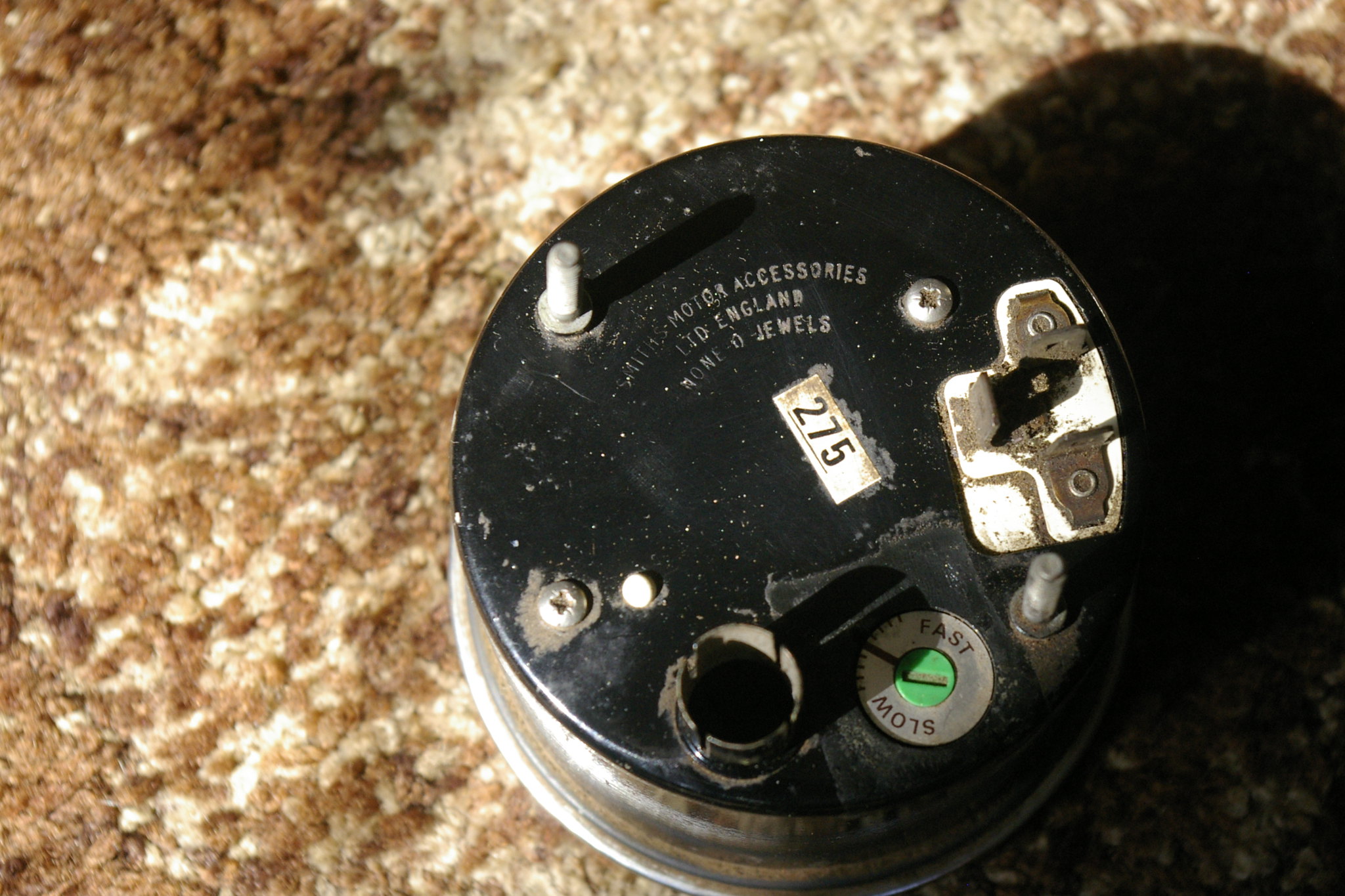
Smiths boat speedometer

rogerthebodger

Well-Known Member
Joined
3 Nov 2001
Messages
14,325
Visit site
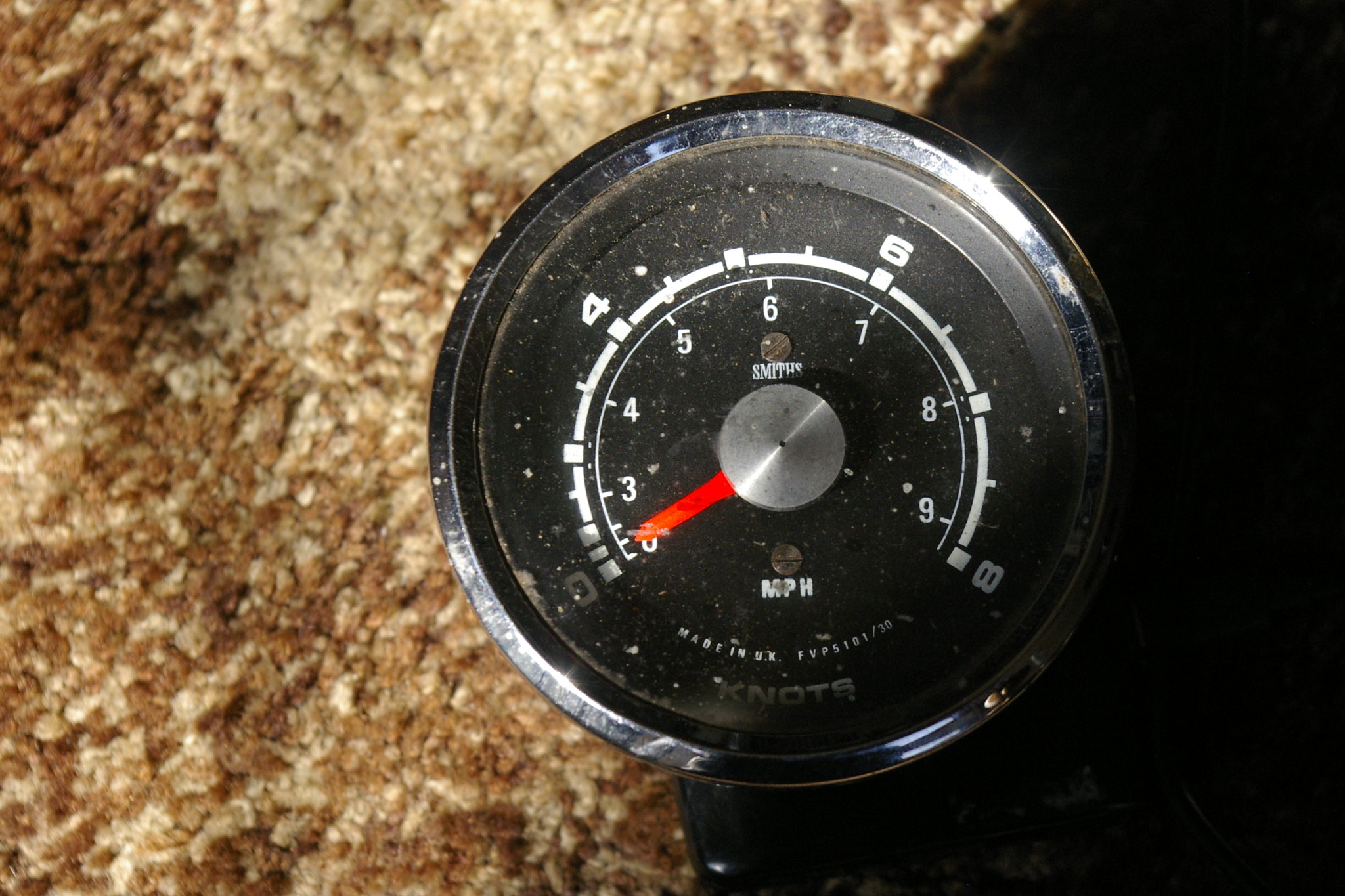
Found this old Smiths boat speedometer but cannot find any info or the sensing propeller.
49893299173_ad0133d1ee_k.jpg


49893821366_e148cb448c_k.jpg


Any one any info or connection diagrams.
 
I inherited one of these and sold it at a boat jumble. As I recall, there was a thing like a very skinny outboard motor: vertical tube which clipped onto the transom, propeller below the waterline.
 
As I recall, there was a thing like a very skinny outboard motor: vertical tube which clipped onto the transom, propeller below the waterline.

Yes that's correct but in my case the " propeller unit has gone missing " but if it uses pulcesses to drive the gauge I could adapt a through hull speed sensor for my little mobo.
 
The Knotmasters with a remote speed indicator used a simple ac generator - a magnet revolving in a coil. The output was rectified by old fashioned Germanium diodes ( very low forward voltage) and the indicator was a millivoltmeter. Your Smiths instrument might use the same principle - notice the non-linear markings on the dial. The three connections is a bit of a quandary, though, but maybe the third one is only there to ensure correct polarity of connection. You might try measuring the resistance between each of the connections - you might see a response from the needle on the front!
 
The Knotmasters with a remote speed indicator used a simple ac generator - a magnet revolving in a coil. The output was rectified by old fashioned Germanium diodes ( very low forward voltage) and the indicator was a millivoltmeter. Your Smiths instrument might use the same principle - notice the non-linear markings on the dial. The three connections is a bit of a quandary, though, but maybe the third one is only there to ensure correct polarity of connection. You might try measuring the resistance between each of the connections - you might see a response from the needle on the front!

Thanks neil will try that.
 
I seem to have missed his post sorry. I had in use a Snith's log for a long time on my trailer sailer. It had if I recall a reasonably linear scale compared to yours. The non linear at low speeds might at first indicate a pitot head type speed meter using water pressure ona forward facing hole. This would be connected bya tube to the indicator. The fact that you don't have a log of miles covered would support this. My Smiths log used a paddle wheel type transducer witha mafnet on the rim of the paddle and a magnetic reed switch close to the rotating paddle. So the 3 connections where a ground to the screen of the cable and 2 wires that were shorted together by the reed switch pulsing with rotation. I found the little magnet got very weak and would not operate the reed switch so I replaced it with a Hall effect sensor to a transistor switch to get the same effect. It all failed periodically with water in the wiring and sensor. But I fixed it each time. I eventually gave up on the whole log idea due to constant weed and crustacean fouling of the paddle wheel.
So I can't answer your question. I would say it is a pitot head type but it does not seem to have a spigot for a tube attachment. I would say it is a paddle wheel type with the 3 connectors but the non linear scale and no log would argue against that. I imagine by now you have got a GPS for speed and binned the indicator perhaps best move ol'will
 
I seem to have missed his post sorry. I had in use a Snith's log for a long time on my trailer sailer. It had if I recall a reasonably linear scale compared to yours. The non linear at low speeds might at first indicate a pitot head type speed meter using water pressure ona forward facing hole. This would be connected bya tube to the indicator. The fact that you don't have a log of miles covered would support this. My Smiths log used a paddle wheel type transducer witha mafnet on the rim of the paddle and a magnetic reed switch close to the rotating paddle. So the 3 connections where a ground to the screen of the cable and 2 wires that were shorted together by the reed switch pulsing with rotation. I found the little magnet got very weak and would not operate the reed switch so I replaced it with a Hall effect sensor to a transistor switch to get the same effect. It all failed periodically with water in the wiring and sensor. But I fixed it each time. I eventually gave up on the whole log idea due to constant weed and crustacean fouling of the paddle wheel.
So I can't answer your question. I would say it is a pitot head type but it does not seem to have a spigot for a tube attachment. I would say it is a paddle wheel type with the 3 connectors but the non linear scale and no log would argue against that. I imagine by now you have got a GPS for speed and binned the indicator perhaps best move ol'will

Thanks ol'will

It is not a pitot type as it did come with a propeller on a long tube like Jumble duck posted.

The prop now lost hence my request.

I found it while tidying up during lockdown and thought I may use it on my Mobo.

Some time ago I did get a GPS module from E Bay and was planning to connect it to a Simrad IS11 speed indicator by using a Arduino to change the NMEA message to the message type for the the speed indicator.

If it does use a pulse input that will make it easy to knock up a paddle wheel to the the indicaator.
 
Top