Iain B
New Member
Hello, folks!
Old boat, old system, but it still works. If it ain't broke...
However...instruments are kinda new to me. Walker log and a compass did me for 20 years and 20 trips from Edinburgh to Bergen...on a motorboat.
Now I've got a sailboat. 40yr old ferrocement Samson C-Quinn. It has toys. Raymarine ST7000 autopilot, ST60 instruments. NEW windvane transducer. All Seatalk 1. (Yes, I know the windspeed indication is 30% high because of this!)
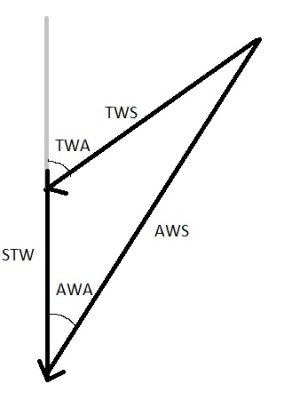
I'm assuming that the windspeed indication, let's say when motoring directly into the wind, will calculate true wind speed by deducting boat speed from wind speed. Doesn't seem to, true and apparent are only 1m/s different at 6 knots. I was running dead downwind today, same 1m/s... Surely the true and apparent should be wind speed plus, minus, boat speed? Am I wrong? I've (almost) got the calibration on the boat speed to read the same as the GPS (not on the Seatalk bus, though there is one on it). Presumably, true and apparent wind angle will be affected similarly.
From what I've read, it doesn't matter which instrument is connected to which, the Seatalk bus doesn't seem to care.
Any insights, clues, or £10 notes gratefully received
Thanks,
Iain
Old boat, old system, but it still works. If it ain't broke...
However...instruments are kinda new to me. Walker log and a compass did me for 20 years and 20 trips from Edinburgh to Bergen...on a motorboat.
Now I've got a sailboat. 40yr old ferrocement Samson C-Quinn. It has toys. Raymarine ST7000 autopilot, ST60 instruments. NEW windvane transducer. All Seatalk 1. (Yes, I know the windspeed indication is 30% high because of this!)
I'm assuming that the windspeed indication, let's say when motoring directly into the wind, will calculate true wind speed by deducting boat speed from wind speed. Doesn't seem to, true and apparent are only 1m/s different at 6 knots. I was running dead downwind today, same 1m/s... Surely the true and apparent should be wind speed plus, minus, boat speed? Am I wrong? I've (almost) got the calibration on the boat speed to read the same as the GPS (not on the Seatalk bus, though there is one on it). Presumably, true and apparent wind angle will be affected similarly.
From what I've read, it doesn't matter which instrument is connected to which, the Seatalk bus doesn't seem to care.
Any insights, clues, or £10 notes gratefully received
Thanks,
Iain