Run a ground... could have happened to anyone !!

One of my friends went aground on longsand which I dont think is too far away, I was a bit surprised he managed it but your account sort of explains it.
although you managed to find a new little bump, it was/is well within a shallow / drying area and outside a navigation marker that I would not cut across. A sand bank which part dries where there is deep water within 1/2 nm should be avoided imho, but I accept that you didnt do anything wrong as Powerskipper is a pro so I presume its acceptable in the eyes of the RYA.

Ive not done in depth formal navigation training, I just sort of picked it up as I went along but when I used to cross the Thames estuary (up/down 2-3 times a year ), unless it is absolutely calm its best to stay in the buoyed channels in order to avoid breaking waves, only cutting through in the deep water gaps, makes a bit of a dog leg but a much smoother ride when its choppy so it saves time (especially as you are less likely to run out of water) :)
 
Blimey Steve, makes our grounding on Breydon Water several years ago look like a walk in the park!! Excellent article and it sounds as though you and Heather did the right thing. I am guessing that thoughts of D'absolute's props rattling the bottom at Oulton Broad may have influenced your decision to shut the engines down quickly :-)

Pleased that both of you (and Mystique) came through unscathed.
 
As they say - there are two types of sailors : those that have run aground and those that haven't yet...
 
Local knowledge is great.

One of my friends went aground on longsand which I dont think is too far away, I was a bit surprised he managed it but your account sort of explains it.
although you managed to find a new little bump, it was/is well within a shallow / drying area and outside a navigation marker that I would not cut across. A sand bank which part dries where there is deep water within 1/2 nm should be avoided imho, but I accept that you didnt do anything wrong as Powerskipper is a pro so I presume its acceptable in the eyes of the RYA.

Ive not done in depth formal navigation training, I just sort of picked it up as I went along but when I used to cross the Thames estuary (up/down 2-3 times a year ), unless it is absolutely calm its best to stay in the buoyed channels in order to avoid breaking waves, only cutting through in the deep water gaps, makes a bit of a dog leg but a much smoother ride when its choppy so it saves time (especially as you are less likely to run out of water) :)


but sometimes things change or go wrong , never mind the why or hows, its how you handle it, and I think they did very well, letting the coastguard know and accepting help
[ we don,t always want to admit at times that we mite need help]
a good ending to something that could have gone very wrong.
 
One of my friends went aground on longsand which I dont think is too far away, I was a bit surprised he managed it but your account sort of explains it.
although you managed to find a new little bump, it was/is well within a shallow / drying area and outside a navigation marker that I would not cut across. A sand bank which part dries where there is deep water within 1/2 nm should be avoided imho, but I accept that you didnt do anything wrong as Powerskipper is a pro so I presume its acceptable in the eyes of the RYA.

Ive not done in depth formal navigation training, I just sort of picked it up as I went along but when I used to cross the Thames estuary (up/down 2-3 times a year ), unless it is absolutely calm its best to stay in the buoyed channels in order to avoid breaking waves, only cutting through in the deep water gaps, makes a bit of a dog leg but a much smoother ride when its choppy so it saves time (especially as you are less likely to run out of water) :)

Take a look at some East coast charts Pete, you'll find that trying to stay in buoyed channels isn't exactly practical all the time. It's perfectly normal practice on the East coast to cut across the sandbars. We do it all the time and in areas we know well, don't worry too much when the sounder is showing 6 feet of water, sometimes less. When we were in The Wash, there were a couple of spots in the channel where we'd sometimes creep through shortly after LW, with one foot of water under the keel. Having a prop protector and the ability to take to the ground does allow us to take a bit of a liberty here and there though :)

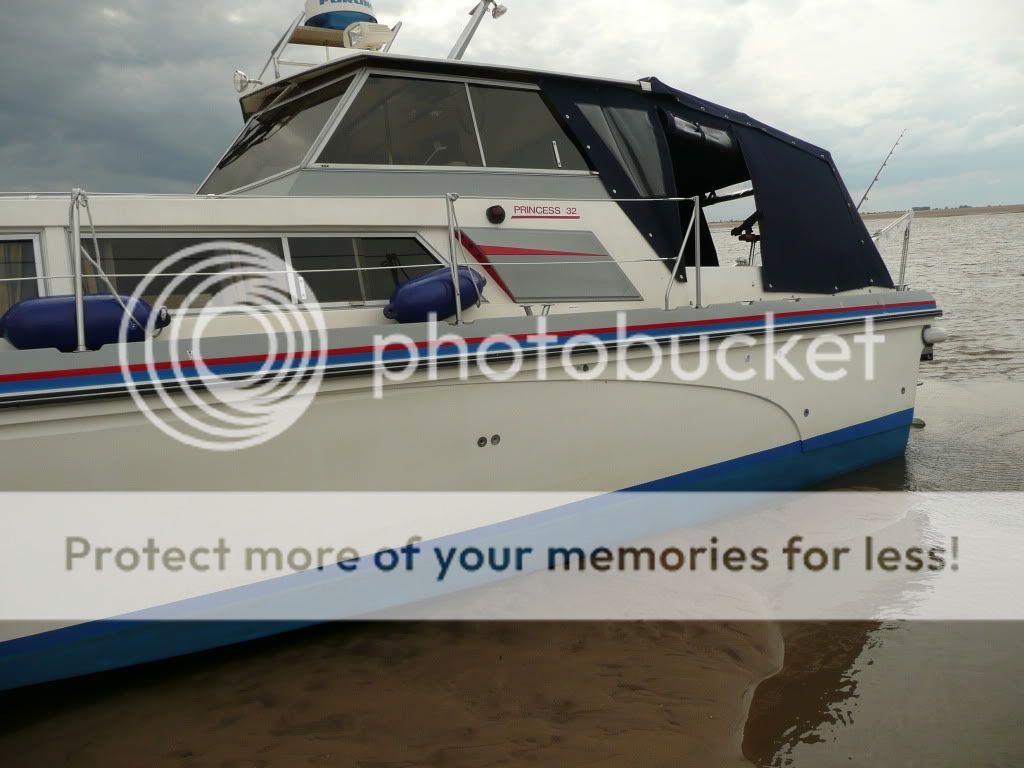
Oh, the pic below is us on one of our very early trips out into The Wash with a Princess 32. We were well in the buoyed channel. When i questioned the accuracy of the channel with the local harbour master, he replied "the channel isn't marked for you, it's for the big ships at high water" lol

P1000299.jpg
 
As they say - there are two types of sailors : those that have run aground and those that haven't yet...

Yes, but it's only those that have run aground that ever quote it.......

Boat and crew too precious (oh dear Fraudian slip, I mean crew and boat) I would definately not have chanced it. But credit where it's due, once grounded he handled the matter well.

Marking as follows:-

Passage planning: 4/10 (Avoid LW and remember sand can move)
Disaster recovery: 8/10
Above average.........

Well done for posting, we can all learn something from others mistakes. glad it did not end up like.....

dgtf8x.jpg
 
You might have the ActiveX filtering turned on, if so just turn it off.
Or if you don't have the Flash Player installed, you should dowload it from Macromedia website.

Thanks for that, activex isnt on but I managed to get onto the article in a roundabout way.

Very interesting and great decision to turn off the engines it seems, I think many would have been tempted to try and back off and caused damage (including me) but armed with your experience I wouldnt try. Thanks for sharing.
 
Top