Returning to the sea after 30 years absence

trevg

New Member
Joined
5 Jul 2021
Messages
4
Visit site
Hello all on this great forum.
As the title says, I have just got a seagoing pleasure cruiser after a long break from being at sea and intend to take her out for sea trials in the next month or so.
I used to work small coastal tankers when I was last at sea and naturally a motor cruiser is a different scenario ( BTW it is a fairline T36 with twin 250hp Volvo engines ) and I have many questions arising and would be grateful if you could indulge me here:

1. Planing. I get what it is and understand that to get the craft on the plane and cruise comfortably I need to be doing around 15 KTS. Once on the plane, does the fuel consumption remain constant at around a gallon per NM, for example between 15 and 20 KTS ( WOT on mine is around 25 KTS ) regardless of speed? Naive question perhaps but never had a planing boat.

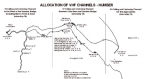
2. On a passage between lowestoft and the upper Humber, what are the radio check in points now and where are they?

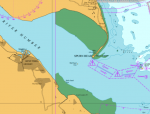
3. Anchorages. Are there any good safe anchorages between the northern wash and mablethorpe area and do you need permission to anchor and from whom?

Thanks in advance for your input. I am looking forward to getting back on the lumpy stuff after 30 yrs on inland waterways but just a little rusty on protocols etc as there is no doubt a difference between navigating pleasure craft and commercial craft.

Any other useful input that can be offered would be very welcome indeed.
thank you all in advance.
Trev.
 
Hi I am in a similar position looking at boats this week I bought a reeds almanac
A lot of your questions are answered in there.
I am 40 years since being at sea and cant wait to get back, good luck.
 
Simple answer is that fuel consumption will increase the faster you go because you are demanding more power and therefore burning more fuel. However the increase from 15 to 20 knots is nit as great as speeds between displacement and planing when a lot of power is used to overcome the "hump".

There is no need to make any radio checks while on passage but if you feel you want to notify anyone then the National Coastwatch have a number of stations on that stretch of coast - call on channel 65.

That stretch of coast is very bleak and few anchorages, but suggest you buy a Pilot book such as Tidal Havens of the Wash and Humber which will give detailed information

Might be a good idea to get some training such as the RYA Coastal Skipper for navigation and boat handling/management and maybe a bit of one to one own boat instruction from a qualified Powerboat instructor.
 
Simple answer is that fuel consumption will increase the faster you go because you are demanding more power and therefore burning more fuel.

For several boats, this is not the case.
My SC35 obviously burns more per hour as you go faster, but the MPG figure is mostly flat once planing until you are almost flat out.
The most economical speed is something like 5kts, which is very boring.
 
For several boats, this is not the case.
My SC35 obviously burns more per hour as you go faster, but the MPG figure is mostly flat once planing until you are almost flat out.
The most economical speed is something like 5kts, which is very boring.
But the OP asked about the amount the engine consumed, not consumption per mile.
 
But the OP asked about the amount the engine consumed, not consumption per mile.

Once on the plane, does the fuel consumption remain constant at around a gallon per NM, for example between 15 and 20 KTS

Consumption per NM is exactly what the OP was asking about.
 
The important part is learning to trim the boat...if it’s on outdrives or outboards then tuck the drives in and when it gets on plane start trimming out...you want the boat to ride quite close to level after you’ve got over the hump. When the trim is right you will feel it, the engines will not struggle as much (saving fuel) and you will be able to see where you are going. Every boat is different (and how many people on board plus how you stow all your belongings will also affect trim) so just have practice.
Don’t look for hard and fast rules...just enjoy yourself ?
 
1. Planing. I get what it is and understand that to get the craft on the plane and cruise comfortably I need to be doing around 15 KTS. Once on the plane, does the fuel consumption remain constant at around a gallon per NM, for example between 15 and 20 KTS ( WOT on mine is around 25 KTS ) regardless of speed? Naive question perhaps but never had a planing boat.

15 kts sounds like it will be grossly uneconomical on fuel and 25kts WOT sounds a bit on the slow side .
What engines exactly ? I ask as had understood for example kad43 is 230hp , kad44 is 260hp
 
15 kts sounds like it will be grossly uneconomical on fuel and 25kts WOT sounds a bit on the slow side .
What engines exactly ? I ask as had understood for example kad43 is 230hp , kad44 is 260hp

I'm thinking more along the lines of Volvo TAMD60 for a T36 (assuming that T36 means Turbo 36)
 
Last edited:
The only places to stop going north are either Wainfleet haven, right in the North East corner of the Wash, or at Saltfleet haven about 8nm north of Mablethorpe. You might find this an interesting exercise in seamanship and navigation.
 
You may be correct - I had Targa in mind
In that case the speeds may be correct.
My mistake

Just out of interest, Formula on KADs, she will plane quite economically and with little engine stress at 14-15 knts. Funnily enough there seems to be a second hump between 15 and 17.5 that requires a handful of throttle to overcome but only ~200 rpm increase to maintain, but she comes alive and skips after 23 knts. This characteristic comes in quite handy when we get the short lumpies as a 15knt cruise she will settle in nicely and not try punch through or slam. I am sure we are not unique in this.

 
Hello all. Thanks for the updates.
It is not so much havens I am looking for but anchorages e.g. off the skeggy or mablethorpe coast. Has anyone done this please. Thanks in advance.
Trev
 
Top