Replacing teak toerail capping

zoidberg

Well-Known Member
Joined
12 Nov 2016
Messages
6,962
Visit site
How best to secure it into place....?

Later Edit ( for I ought to have added more ): The toerail base is GRP - hull moulding fastened to upturned deck moulding. The teak capping is not thick enough for countersunk screws AND plugs; I'd certainly use a bonding/sealing adhesive or thickened epoxy..... whether Sika, CT1 or OB1, or what.
 
Last edited:
Depends on what you are attaching it to. if onto timber then glued with your favourite potion and countersunk screws with plugs .
 
I'd ask the same question as Tranona, but I'd also want to know how the capping is constructed

Mine is timber on either side of the f/g toe-rail with a routed capping on top. (all epoxied in place)
 
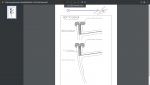
This is how it is done on my boat:


1630752127969.png
Courtesy Jeremy Rogers Limited


In practice the big gap, shown between the two sections, is small to non existent. If you have similar it is as well to chase the top of the join with a vee shaped tool and run epoxy in. The depth of that toerail section is 3/4 in.

I see you have no room for a screw and a plug...............note in the drawings above the screws are quite tiny gauge.

If there is no room even for a very light screw I would consider using raised head countersunks ...........screwing and clamping it in place and, when the bond is set, either putting up with the screw heads or removing them and plugging the holes.

.
 
I would agree with doug., particularly chasing out a groove to increase the surface area of the bond and use epoxy. Panhead selftappers with large washers underneath to spread the load. When cured, remove the screws, bore for plugs and if possible bore down into the GRP say 5mm and use a long enough plug to go through the cap into the GRP. I have used this method successfully with things like half round trim where there is not enough depth for a screw and a plug.
 
Thanks, 'doug748', and 'tranona'. That's very similar to my setup.... there's virtually no gap between the sections. I'll do what you suggest, chasing the top and infilling with epoxy. My capping-piece is 10mm thin, so I'll use thin 'flatheads' potted into the epoxy, countersunk just enough to be flush - and spot-painted in teak-brown. I'll also use a bonding 'gunk' such as PGB for rebedding.

Should anyone comment, I'll mention that I, too, have brown liverspots.....
 
Thanks, 'doug748', and 'tranona'. That's very similar to my setup.... there's virtually no gap between the sections. I'll do what you suggest, chasing the top and infilling with epoxy. My capping-piece is 10mm thin, so I'll use thin 'flatheads' potted into the epoxy, countersunk just enough to be flush - and spot-painted in teak-brown. I'll also use a bonding 'gunk' such as PGB for rebedding.

Should anyone comment, I'll mention that I, too, have brown liverspots.....
If the bond is successful (which it should be!) the mechanical fastenings add nothing so could be removed and matching teak plugs inserted. Much neater - but if you are happy with exposed heads of screws then certainly less work.

Sitting in my study looking at the mahogany capping of the desk top edge I made 30 years ago using exactly the method I described. You can barely see the plugs. Several sets of built in shelves around the house edged with 6mm teak mouldings also done the same way.
 
If i had a fiver for every such capping that had got ripped off alongside another boat or quay i would be a lot richer!
Must have replaced & scarfed in bloody hundreds!
 
As was my last boat. Zoidberg, do you have enough height in the toe rail to accommodate timber longitudinals either side, in which case the cap rail can be fastened to those? FWIW my efforts here SOHVI: A new Cap Rail – Part 1
Just had a look mat your photos and they brought back memories!

You need many, many clamps.( I custom made a lot as I had to have clamps that held the capping to the side timbers as we)
 
Just had a look mat your photos and they brought back memories!

You need many, many clamps.( I custom made a lot as I had to have clamps that held the capping to the side timbers as we)
Helped a friend do rubbing strips recently. In lieu of clamps (not practical) we had 4 helpers. Holes drilled, counter sunk then tap ran in to hole in GRP. 5 cordless drills needed The screws when tightened hold the wood. In this case no glue used but just the same with glue just more mess. ol'will
 
This is how it is done on my boat:


View attachment 121860
Courtesy Jeremy Rogers Limited


In practice the big gap, shown between the two sections, is small to non existent. If you have similar it is as well to chase the top of the join with a vee shaped tool and run epoxy in. The depth of that toerail section is 3/4 in.

I see you have no room for a screw and a plug...............note in the drawings above the screws are quite tiny gauge.

If there is no room even for a very light screw I would consider using raised head countersunks ...........screwing and clamping it in place and, when the bond is set, either putting up with the screw heads or removing them and plugging the holes.

.
I had the timber merchant make up and cut as per your bottom picture example. Unfortunately, I didn't inspect and measure all the way round the capping. The width of the join on the boat varied enormously which required lots of extra work.

I found it easier to join the toe rail all together before fitting onto the boat. i.e. the whole of one side in one go.
 
Just had a look mat your photos and they brought back memories!

You need many, many clamps.( I custom made a lot as I had to have clamps that held the capping to the side timbers as we)

I've inherited 20-odd spare clamps, to add to the dozen or more I already have.
 
Top