
Repack stern gland (shaft log / stuffing box) while still in the water..?

ChasB

Well-Known Member
Joined
11 Nov 2006
Messages
543
Location
Limehouse
Visit site
Is it madness to even consider doing this? It's a 1981 3007 Carver.

The boat hasn't been moved in a few years and I'm worried the packing may have deteriorated, and if it has then when I run the engines water may pour in (?). So I'd like to repack, but the nearest crane is a couple of miles away, and to get there...
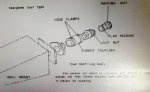
Winni shaft log.jpg


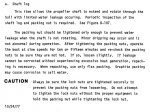
The manual says if it gets hot with the engine running I should repack. Which means taking the boat out of the water again? That could be expensive...
Screen Shot 2021-07-08 at 12.25.33.jpg


And any thoughts on what kind of packing should be used? I'm moored in fresh water, but the sea is only a few hours away.

Many thanks! ;)
 
Been reading up on this recently as I'm dealing with related issues (replacing stuffing box). The bible (according to Nigel Calder) recommends drip-free packing (PTFE) sandwiched between two rings of conventional packing and lubed with PTFE-based grease. My edition is 2005 so not sure if things have changed.

You can find several options here: Search | ASAP Supplies
 
It can be done, although doing it like that the first time you repack a gland is definitely a high stress plan. The packing may need adjusting, but rather than hauling things apart better to check and see if it's necessary; rotate the shafts by hand, if they turn ok and there's no appreciable water ingress then it's probably fine. Even if it was knackered it's quite a slow way of sinking a boat, more of a fast drip than a flood.
 
Thanks. Very helpful. (y)

What size packing should I get? To give a sense of scale, those hex nuts are 2 inches across. And if I just wanted a temp top-up (till I can get it to a crane) what type should I put in?
 
Last edited:
Its not leaking now so won't leak much when you start the engine and rotate the shaft under power. If it does it will be a drip. Packing material doesn't deteriorate or rot normally. It may harden over time and permanently take the shape of the stationary shaft which of course should be consistent through it's diameter. Therefore the worst that can happen is a drip which can be the norm. Try it. If it leaks more than you want then try just replacing the first ring of packing and not all of it as a temporary measure. Packing size is dependent on the shaft size and gland internal diameter. If the shaft size is 1" and the internal gland diameter is 1 1/2" then the difference is 1/2" inch. 1/4" packing will do the job.
How to repack a Stern Gland - step-by-step - Practical Boat Owner
 
I agree with Greeny it should not leak much, however I would strongly recommend NOT to try and repack it while afloat for all sorts of reasons especially if you have not done it before, so best done ashore.
 
Oh, and what should I clean away the green layer of oxide with?

I would think the green is on the gland itself and surrounding area so a wire brush would do for starters if you can get access for that. Maybe one of the small wire brushes used for spark plug cleaning would help. Other wise I'd just try to clean it up as best I could with cloths and an old toothbrush and maybe a squirt of WD40. Anything really to get the loose stuff off as best I could before splitting it open.
 
First time you do this is a learning curve, getting all the old packing out can be tricky, I used a large wood screw to get it out, and then it comes out in chunks .
Replacing is straightforward, just cut the rings and stagger the gaps, you might have to hammer the new stuff to make it fit, but I don't think the old packing deteriorates, it's usually greasy. Good luck.
 
Water is unlikely to suddenly gush in if you undo the packing nut and pull the end out slightly. You might find that there's enough space to put in one or even two offset strips of new packing and some grease. If that is possible you won't need to put as much pressure back to seal the gland correctly. The old packing will be highly compressed and the new stuff would expand first. It will also give you a chance to measure the gap, even if there isn't space to add more packing. Not much risk if you don't turn the shaft or try to dig out the old packing and you can always do it properly after your next lift-out. The old packing might not leave any room but it could be worth a quick check before trying to dig it out.
 
Top