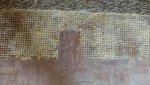
Removing saloon sole floor (deck) covering

Mariner69

Well-Known Member
Joined
5 Jun 2006
Messages
1,061
Visit site
The previous owner arranged for a carpet fitter to lay lino inside the boat and he used a strongish adhesive for the job.

In the warm weather the glue slips and becomes exposed and my feet/socks stick to the deck. Very, very irritating.

I'm planning to try and remove this flooring by rolling it back and using a solvent like white spirit on the rolls of blue paper to try and remove the glue as I fold the lino into a bundle.

Am I on the right track?

Will white spirit be the best solvent for removal allowing for anaesthetic effects and flammability?

Many thanks in advance for your advice.
 
Should work ok but you may find white spirit won’t touch the adhesive. Test on a small area to see if it works try other solvents such as acetone if it doesn’t. White spirits is fairly innocuous as solvents go and shouldn’t cause any problems. But if find that you need to use another solvent then found that when I’ve had to work with solvents in a confined space, the use of a respirator can extend the time I can work before it gets too unpleasant. Also proper ventilation, in so far as it’s possible helps.
 
Petrol is my solvent of choice (you don't need to ignite it) :)

:-) but think carefully about ventilation - petrol vapour is nasty stuff! It is heavier than air and is going to collect in the bilges and lower half of the saloon - both toxic to you trying to work down there and very explosive! This is going to be a problem with almost any useful solvent in that kind of environment - most are flammable and all will be poisonous in the sort of concentration you are going to build up! If you really do intend to proceed, you'll need to rig up some kind of extractor fan with a hose to get the fumes outside the boat.
 
BTW - consider the rest of the boat structure and contents when selecting a solvent. The vapour of some excellent solvents like acetone can attack plastics - we do a lot of 3D printing and one common technique for finishing the output is to put the item into a large glass container with a cloth soaked in acetone next to it - the vapour softens the surface of the plastic and leaves it shiny - provided you don't overdo it. Leave it in there too long and the item will soften so much that it can collapse. You don't want the same thing happening to your wiring and water pipes that are routed through the bilges!
 
Thank you every one for that advice.

I shall see if I can persuade SWMBO that this is her glory moment, else it's down to me.


It may make sense to wait until winter and ashore to remove the log fitting so the solvent can crawl out of the bottom.

A lot of thought needed.
 
Agree with the comments on solvents - I think it will need acetone to have any effect on the glue, and I know that large quantities of acetone swilled around in the cabin can be a problem.

Hence: can you remove the sole boards from the boat and work on them ashore?

Pete
 
can you not use some mechanical method to secure the lino at the edges, battens and screws? that way the lino will not be able to move and expose the glue?
 
I've used methylated spirits to remove glue residues, often quite successfully. The ventilation issue is still relevant though.
 
I have found the blue/purple paint brush cleaner from B&Q effecting in removing sealant/glue. soak a rag and dab onto area or pour into area and leave a few minutes and it removes the stickyness and can use a scraper to remove easily.
 
I'm planning to try and remove this flooring by rolling it back and using a solvent like white spirit on the rolls of blue paper to try and remove the glue as I fold the lino into a bundle. Am I on the right track?

Much depends on what you're going to do after you remove the adhesive. Teak & holly striped veneers are very thin so if that's what you have for sole boards and they will be exposed, then care needed. If OTOH you're going to cover with something then it's easier.

A couple of years ago, I had to remove glued rubber backed carpet from apartment wood block floors and having tried various solvents, ended up by using a 2 handed skarsten scraper and then a sander. No fumes and shop vac used on sander.
 

Attachments

  • P1000881.jpg
    P1000881.jpg
    286.5 KB · Views: 0
Top