
Reducing roll downwind?

Tim Good

Well-Known Member
Joined
26 Feb 2010
Messages
2,888
Location
Bristol
Visit site
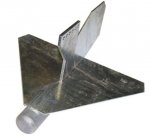
Having sailed down Portugal and over to the Canaries I've grown tired of rolling boat at times and looked at my little contraption I use for fishing which is trolled and dives. I'm always fascinated at the power it produces and difficulty of retrieving it. So I looked around Google and saw in fact fishing boats do use such things.

Has anyone tried something like this sailing downwind? The article below refers to it as a bird.
IMG_0583.JPG

https://www.cruisingworld.com/how/reduce-boat-roll-flopper-stoppers#page-4
 
Having sailed down Portugal and over to the Canaries I've grown tired of rolling boat at times and looked at my little contraption I use for fishing which is trolled and dives. I'm always fascinated at the power it produces and difficulty of retrieving it. So I looked around Google and saw in fact fishing boats do use such things.

Has anyone tried something like this sailing downwind? The article below refers to it as a bird.

View attachment 73119

https://www.cruisingworld.com/how/reduce-boat-roll-flopper-stoppers#page-4

They fly them from long steel booms, one on each side. Can't see that catching on on a yacht
 
Don't see why you couldn't try it, flown off the boom end or jib-pole (just like a flopper stopper). The tricky bit I guess will be getting the right amount of downwards pull. Too much will heel the boat (and add drag), too little probably won't be effective. Ideally it would dive fast enough as you roll towards it that the line never goes slack (not like a flopper stopper) which may mean excess downforce in the steady state condition.

Edit to say that the normal approach for excess downwind rolling is to play around with your choice of sails, for example a staysail sheeted in hard to fill the foretriangle is supposed to be effective.
 
Last edited:
Don't see why you couldn't try it, flown off the boom end or jib-pole (just like a flopper stopper). The tricky bit I guess will be getting the right amount of downwards pull. Too much will heel the boat (and add drag), too little probably won't be effective. Ideally it would dive fast enough as you roll towards it that the line never goes slack (not like a flopper stopper) which may mean excess downforce in the steady state condition.

Edit to say that the normal approach for excess downwind rolling is to play around with your choice of sails, for example a staysail sheeted in hard to fill the foretriangle is supposed to be effective.
We find under poled out asymmetric and mainsail with true wind up to about 18 kts, we are stable. If we pole out the genoa with the main goosewinged we roll down wind so we fly the mizzen sheeted in hard. This helps reduce the roll a lot. If this doesnt do it for us then the staysail with about 7 rolls also sheeted hard does the trick
 
On dinghies this sort of rolling (aka "death roll" because it so often ends in a capsize*) is usually blamed on wind spilling from leech and luff alternately. The answers are usually to (a) put down a little more centreboard, (b) run goose-winged, (c) change course to a little off a dead run or (d) sheet in the main a little. Accepting that unless you have a lifting keel (a) may not be possible on a yacht, have you tried the other three?

(* and led to my doing a little unplanned "open water swimming" last weekend!)
 
Thanks... some good suggestions. We have a heavy boat so need a good amount of wind to get us going. Mostly a problem when wind drops below 15kts.

We do have a two. Headsail twistle setup but unfortuantly not had chance to use it yet but I've head it can help.
 
As said, sheeting on the main will help, as will sailing a little less square.
But the most important anti-roll trim is your vang. You need to reduce twist in the main to as little as possible, which requires trimming the vang hard. The same applies for the headsail. Reduce twist as much as possible - this done by downhaul on the pole
 
I have a parasail for downwind sailing. Rolling is much reduced, indeed in most cases eliminated. You just have to be careful of conditions as it's so easy to leave it up a little too long. Snark carries it better than a spinnaker but it is much bigger than my spinney.
 
I have a parasail for downwind sailing. Rolling is much reduced, indeed in most cases eliminated. You just have to be careful of conditions as it's so easy to leave it up a little too long. Snark carries it better than a spinnaker but it is much bigger than my spinney.

Yeah we have a big cruising chute and albeit not ideal for downwind it's not a great passage making sail or for nights or squalls or anything over 18kts. And when we fail to get it down in time it often becomes a beast to handle on the foredeck. Whilst offshore with only 2 people it's not something I want to rely on.

Thanks Venus. I'll rig a pole downhaul and try that also. Thanks.
 
As said, sheeting on the main will help, as will sailing a little less square.
But the most important anti-roll trim is your vang. You need to reduce twist in the main to as little as possible, which requires trimming the vang hard. The same applies for the headsail. Reduce twist as much as possible - this done by downhaul on the pole

Agree, but Catch 22 may pop up, if the roll gets to the point where the boom end dips into the top of a sea.
 
>We do have a two. Headsail twistle setup but unfortuantly not had chance to use it yet but I've head it can help.

Definitely use it we had one and cuts down rolling significantly because it is free flying, what happens with a poled out sail the sail pushes the mast and vice versa thereby increasing the rolling.
 
I have a parasail for downwind sailing. Rolling is much reduced, indeed in most cases eliminated. You just have to be careful of conditions as it's so easy to leave it up a little too long. Snark carries it better than a spinnaker but it is much bigger than my spinney.

So parasails really work then? I always thought they were just a fragile looking gadget.
 
A tip I got from Eddie Shougal (head of Oyster aftersales) to reduce rolling is as follows:

Set the boat up wing and wing, i.e. the main to leeward and the genoa poled out to windward.
Then hoist your heavy weather jib on the solent stay and sheet it hard to leeward.

Suddenly the boat stops rolling and tracks straight, works like magic! if a squall hits, just roll away the genoa. Sure gybing is a bit more involved, but no need for any extra gear etc.

Dunno quite how it works, maybe the extra jib sets up some sort of pressure bubble, or feed air to the leeward side of the mainsail.
 
Last edited:
Top