Predator Carbon Gel batteries

jmnapier

Well-Known Member
Joined
29 Jun 2007
Messages
196
Visit site
Hi Folks
I need new batteries. After a bit of research I have been told that Carbon Gel are the next best thing if you don’t want Lithium batteries. This is domestic batteries only, I have separate engine start batteries. I’m looking at 4x12 volt at 200Ah giving 800Ah and a daily usage of about 130 amps. I have 2 x 80 amp engine alternators feeding Sterling BB1260 boxes and a Mastervolt 60 amp shore power charger. I give these details as background, really the question is a generic one about next best battery technology if you don’t want Lithium. Many thanks
 
There is no "best". The key figure is the number of cycles against price. Generally speaking the higher the cost the greater the number of cycles and therefore longer life. The claims for Carbon Gel are that they offer greater number of charge cycles to higher discharge levels and faster charge acceptance, but at a price premium over say AGMs. You have a huge excess of capacity, but you don't say how you use it, particularly your style of sailing and how many days you spend aboard, nor how long you stay away from shorepower. Do you have solar or are you dependent on your engine to recharge? Is the 130amps a day net of recharging?

I know you said your usage and charging is background, but when choosing batteries knowing how you use them and your expectations of how long you want them to last is probably more important than the battery type.
 
4 x 200ah carbon gel batteries would cost £1600, you'd have to be mad to go this route, rather than LFP, especially as you already have B to B chargers.

They quote 1500 cycles, EVE quote 8000 for LFP.

4 of them weigh in at 204kg ! Two packs of 314Ah LFP weigh just 44.8kg.

Two packs of cells and two BMSs cost £700

As Tranona asks, it would be useful to know how you use the boat and what charging you have.
 
Last edited:
Thanks both for the input.
The main reason for the capacity is to allow 4-5 nights at anchor during the summer trips with no recharging at all during that period. The boat is only used for day trips outside the summer.
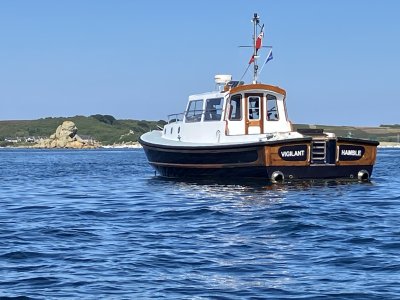
At anchor in the Scillies….IMG_1890.jpeg
I’m anti Lithium due to the insurance complications/need to have a professional fit them/need to change shore power charger/massive fire/explosion in one of my motorbike batteries, really bad experience.
I will consider adding solar to extend independence if needed after trialling next summer. 130 amps is average usage and is mainly the fridge although charging devices is a close second.
Weight is not an issue, I actually need weight aft for CG reasons.
Price. They are £336 each and Victron AGM don’t seem much less?
Life of battery…I’m assuming 10 years and am happy at that.
Appreciate your help and I understand that my level of knowledge is adequate rather than deep! Please ask further questions if the query is incomplete.
 
Last edited:
I know this opinion is unpopular on here but the thing I find compelling about carbon AGMs is that they'll tolerate deep discharges better than regular AGMs. If you're not paying attention and discharge regular AGMs down to 11.5v then they're knackered and have permanently lowered their capacity. Obviously you shouldn't do this - I did it thanks to a miscalibrated SmartShunt, when the meter was new to me. As far as I can tell (based on the specifications of Victron's lead carbon batteries) will survive this with no impact.

At this time I want a drop in replacement for my current AGMs, and I'm not prepared to upend my electrical system to accommodate lithium until I've lived with AGMs a bit longer. I see carbon AGMs as insurance against the possibility that I might screw up again.
 
That makes a bit more sense, although 4 days without charge will take them down to a realistic around 30% SOC and take a long time to get back up, particularly with the relatively small mains charger.

The claimed properties of Carbon Gel would make them better for your type of usage predator-batteries.co.uk/product/pr12-200-aes/ than AGM but I would have concerns about the claimed life of 1500 cycles with that level of regular deep discharge. However 1500 is 150 cycles a year for 10 years. Adding some solar to reduce the daily 130A usage would help.

BTW LiFPo4 batteries as used in boats do not explode or catch fire although the ambiguity of insurance cover is an issue.
 
Thanks again for the replies.
Agreed, dropping to 30% needs a lot of recharging, perhaps this is where the solar panels will ameliorate that reduction. Failing that we’ll have to up anchor now and again to top up with engine alternators. The BB1260s really seem to help recharging quickly, presumably even more so with CG?
Carbon Gel were recommended on exactly that premise, less chance of long term damage due to abuse, intentional or otherwise. My lead acids have been ‘zeroed’ several times due to incompetence on my part, probably they’ve never recovered!!
 
Top