
NMEA in - Can 2 devices supply one input

Yeoman_24

Well-Known Member
Joined
15 Jun 2014
Messages
176
Location
Gloucestershire
Visit site
I have a vhf radio (Silva) with a single NMEA 0183 'in lead'. I am going to link this to an NMEA out on my main Garmin GPSmap820 plotter to allow positional DSC on the radio. All straight forward so far!

I also have a back up Garmin GPSmap 551 which I was thinking about also wiring an 'out' into the same VHF 'in' connection, the idea being if the main plotter packs up, I have a backup linked to VHF.

The questions I have are;
Will this be ok if I only have one plotter on at a time?
What will happen if I have both plotters on at the same time?
Finally, what should I attach the NMEA 'screen' wire too?

Many thanks,
 
Will this be ok if I only have one plotter on at a time?
Probably yes, but not clever as that's hard to ensure in practice.

What will happen if I have both plotters on at the same time?
Your radio will be confused and you'll conceivably cause damage to one or the other chart plotters if you have them both on at once (depending on their output circuitry protection). Not the way to go. You could increase the chance of it working, and remove the damage risk, by putting a forward diode in the NMEA data output lead of each of the two chartplotters.

Finally, what should I attach the NMEA 'screen' wire too?
Ground. It's quite possible - depends on the electrical isolation of the particular devices' data outputs and I haven't looked them up - that this is not obligatory.

This very troublesome solution is only being proposed in case one of your plotters somehow packs up. That is most unlikely: you're creating far more of a problem than you're solving. And where are the plotters getting their lat/long and time data from anyway? - presumably from a 4800 baud NMEA 0183 network, so why not take a feed from that bus straight into your radio's NMEA input and be done with it? Most likely that data is fed into the NMEA input of both chartplotters. Then the radio has the data it needs, and it's not dependent on either chartplotter to work properly.
 
I would wire them through a toggle switch that way you can easily switch to one or the other but not both at the same time.
 
On device to transmit many to listen. As Spyro says rig a switch.

All of my devices have their own GPS receivers, much easier to handle and gives a lot of redundancy.
 
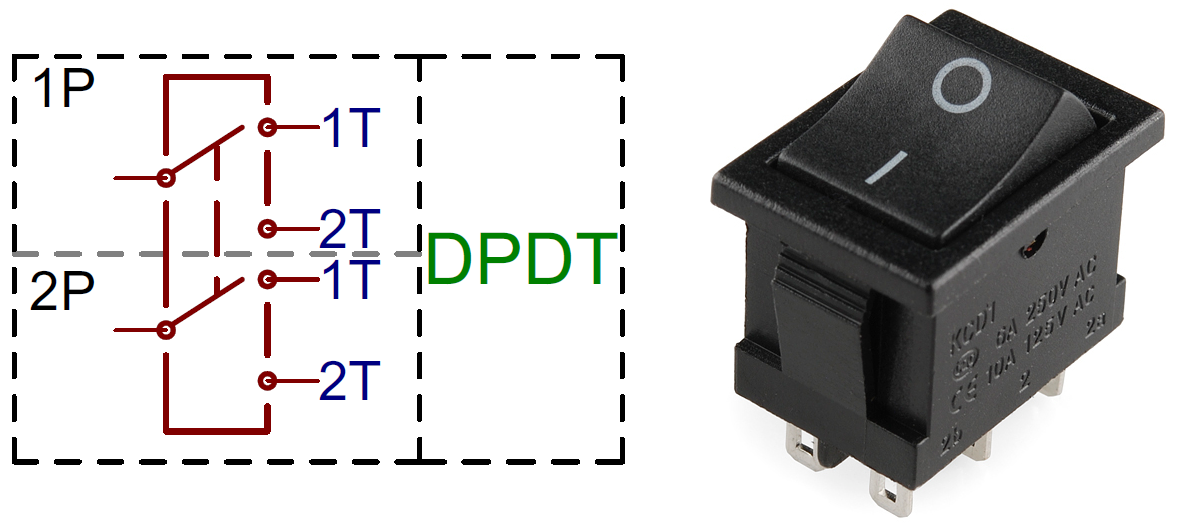
You could achieve it through a DPDT switch that will both switch the power and switch the NMEA traffic at the same time.

Alternatively, more elegantly but with more expense, the ShipModul Miniplex allows you to give priority to sentences of a certain type from one source and allows it to fail over to the second source if the first stops transmitting. I only noticed that in passing in the manual, but you could download it and read through that functionality thoroughly to check if it is what you want.
 
On device to transmit many to listen. As Spyro says rig a switch.

It's a messy solution I'm afraid. Half the time the switch will be selecting the wrong chartplotter, and the GPS won't have lat/long or time, which is inconvenient and in the case of needing to do a DSC, downright dangerous.

It's all an inconvenient solution to a problem that didn't exist in the first place. Feed your NMEA network, which gathers GPS data and passes it to your instruments and INto both chartplotters, to the radio as well. Everything works, no data conflict, the DSC radio works without the correct chartplotter being turned on, without your data switch being set correctly, even when a chartplotter goes down which was the OP's original problem!
 
I would wire them through a toggle switch that way you can easily switch to one or the other but not both at the same time.
+1 by far the best solution - a cheap toggle switch in the data line is fine (you can common the earths). I have done this to allow the single input on my autopilot to switch between GPS and Wind
 
It's a messy solution I'm afraid. Half the time the switch will be selecting the wrong chartplotter, and the GPS won't have lat/long or time, which is inconvenient and in the case of needing to do a DSC, downright dangerous.

It's all an inconvenient solution to a problem that didn't exist in the first place. Feed your NMEA network, which gathers GPS data and passes it to your instruments and INto both chartplotters, to the radio as well. Everything works, no data conflict, the DSC radio works without the correct chartplotter being turned on, without your data switch being set correctly, even when a chartplotter goes down which was the OP's original problem!


The switch wont be doing any selecting It will be done manually by a finger. I'm not talking about a data switch. A simple 3 way toggle, . He has a vhf that he want's a back up feed to. The chart plotter is feeding the VHF. If the chatrtplotter fails he toggles the switch to provide a feed from the other nmea output of his garmin gps. Simple.
 
Last edited:
The switch wont be doing any selecting It will be done manually by a finger. I'm not talking about a data switch. A simple 3 way toggle, . He has a vhf that he want's a back up feed to. The chart plotter is feeding the VHF. If the chatrtplotter fails he toggles the switch to provide a feed from the other nmea output of his garmin gps. Simple.

2 way toggle double pole double through change over.

517edbabce395fd51d000000.png


P1 /2 would connect to the radio and the T1/2 would connect to each of the 2 GPS devices.
 
Personally I don't see the point.

What is the likelyhood of your plotter failing AND you needing to make a DSC call at the same time?
If that were to happen, would you just make a ch16 call and give the lat/long from your other plotter?

A lot of mucking about for something that's not really ever going to happen IMHO.
 
It's a messy solution I'm afraid. Half the time the switch will be selecting the wrong chartplotter, and the GPS won't have lat/long or time, which is inconvenient and in the case of needing to do a DSC, downright dangerous.
Sure is. The one reason for me getting a DSC radio with a GPS receiver was I did not have to worry about hitting the wee red button if ever I needed to.
 
Sure is. The one reason for me getting a DSC radio with a GPS receiver was I did not have to worry about hitting the wee red button if ever I needed to.

No need to worry, If your DSC radio is not getting any NMEA input it will soon tell you.
 
2 way toggle double pole double through change over.

517edbabce395fd51d000000.png


P1 /2 would connect to the radio and the T1/2 would connect to each of the 2 GPS devices.

That's the idea but you don't even need a double pole. Single switched nmea feed and common earth would be fine.
 
That's the idea but you don't even need a double pole. Single switched nmea feed and common earth would be fine.

In most cases yes but NMEA is realy RS 422 differential and not knowing the exact spec of the 2 output devices switching both wires is safer in my view and the cost difference is not much anyway.
 
In most cases yes but NMEA is realy RS 422 differential and not knowing the exact spec of the 2 output devices switching both wires is safer in my view and the cost difference is not much anyway.
Most if not all NMEA devices I have seen use a single wire to transmit / receive and a common signal ground.
 
Most if not all NMEA devices I have seen use a single wire to transmit / receive and a common signal ground.
I'm just about to update a bit and my Airmar H2183 heading sensor, Vesper AIS XB8000 transponder, SH GX2000 radio and Raymarine SPX30 autopilot ALL have two-wire differential NMEA 0183 connections.
 
I'm just about to update a bit and my Airmar H2183 heading sensor, Vesper AIS XB8000 transponder, SH GX2000 radio and Raymarine SPX30 autopilot ALL have two-wire differential NMEA 0183 connections.
Okay - I'll rephrase that - almost all Garmin devices use a single wire :)
 
Okay - I'll rephrase that - almost all Garmin devices use a single wire :)

That's because Garmin don't comply completely with NMEA 0183 at the electrical level and some of their messages also are specific to Garmin.

All my old SIMRAD comply but I can make then single wire to connect to non complement like my RS232 to USB to connect into my computer running OpenCPN.
 
Top