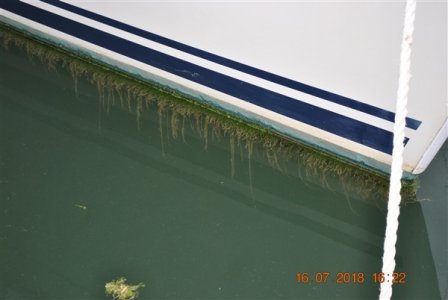
My copper coat has failed again. Prime before antifoul yes/no?

I had copper oat on my last boat on the hull, and eroding antifouling on the swing keel for the last 3 seasons so can make some sort on comparison on the Crouch waters.

They are both equally effective, or ineffective. No discernible difference in growth. But at least after a June lift and jet wash the coppercoat surface is back to smooth racing finish and doesn't build up overtime.

I suspect that the eroding antifouls are only going to get weaker and weaker anyway
 
So a soft brush cleaned the waterline growth did it? Interesting
All modern antifouls are fairly rubbish. We use conventional hard racing on our XOD. The X fleet is so competitive that the slightest film of scum will see you straight to last place at the windward mark. We scrub every week, and every other day in Cowes week. Other racers just dry sail, but this being a wooden classic, the class rules, and common sense, dictate it must be in the water. It was not always such a struggle.
 
I have always fancied coppercoat but stories like this do give me pause. It is also pretty expensive and I can't help but worry that I'd get something wrong and it will fail. As a bit of an experiment, I used silic one non biocidal silicone antifouling on our cat this winter. It needed a conversion primer, tie coat and the two top coats so was a bit of a pain to apply but didn't require any special prep. She's been in the water since Xmas and grew a huge beard at the water line in no time at all, much to my dismay. But, one quick sail and the fouling was completely gone - the motion through the water just took it clean off. I've since noticed the water line fouling can be wiped off with a touch of a finger or probably just a stern look. If it keeps doing that for the two years they say it will then I will be delighted. Might be worth others considering instead of coppercoat?
 
Certainly seems to be a calculated risk.

The boat currently adjacent to mine looks to have copper coat applied and has significant weed growing off it, There is a can of Micron 250 in the cockpit presumably to be applied when it is next lifted.

As I noted in another thread, the one just beyond had c/c applied by one of the boatyards at the top of the Hamble and has fouling visible despite having been lifted in late March and raced every weekend since.
 
It is very difficult as anecdotal evidence is location specific and has many variables. I know that an antifoul that works on one east coast river doesn't on another - by anecdote.

my experience has been positive, others haven't.

Independent tests seem to give coppercoat a positive view.

Plymouth Marine Laboratories Independent Antifoul Coatings Tests — HullWell Advanced Marine Coating Technology New Zealand (NZ)

Best antifouling paint: 8 leading options in head-to-head test

I have it on my old boat but am undecided on my new to me contessa 32.
 
I have always fancied coppercoat but stories like this do give me pause. It is also pretty expensive and I can't help but worry that I'd get something wrong and it will fail.
I've had CopperCoat since before Covid, during the Covid years I did 12 nm and on lifting had the layer of slime that was power washed off.

From time to time I park the boat on the club scrubbing grid and wipe the CopperCoat down, check the hull and anode then remove anything from the naked prop - I can't be bothered to paint it with snake oil.

I've saved days of antifouling, aching arms and sore backs - all priceless.
 
Top