MTU Engines - Quality engineering only expected from the Germans

MTB452

This is MTB452 in about 1954 during my childhood at Shoreham. She was comissioned in November 1943 and saw action in 1944 and 1945. Top speed 40kts.
Iris.jpg
 
Hi Brendan

The course did say somewhere that you needed a basic understanding but I've never done any formal engine training. It was important to know the basics of how a diesel engine works but most of us on this forum would have managed to understand and I didnt feel at all out of depth. In fact if I didnt understand anything, I simply asked.

In fact it was just enough to know the following:-

Suck - Squeeze - Bank - Blow
As it was once explained to me - a long time ago.

Apart from that, having a knowledge of car engines would help a little.

As far as being big, IMO the bigger the more simple they appear. The electronics these days are far more sophisticated than they used to be and common rail technology means that, using electronics, greater control over the supply of fuel can be achieved. As a result these new engines hardly smoke when started from cold whereas some engines even 5 years ago discharge loads of black smoke when they first start up.

Also, using modern electronics, a crash/emergency stop can be controlloed better and is less likely to rip the engines off their mounts. If you were to grab the throttles when motoring along at full speed and put them into full astern, the engine management system will control the deceleration, select reverse at the best time and then wind up the power in reverse as best it can. I think the advice was "dont try this at home"!!!
 
Hi Mike what a great report. Yes I clearly remember the engine shutdown !! /forums/images/graemlins/blush.gif
I seem to remember we turned and looked at each other, a typical 'what next skipper'. /forums/images/graemlins/tongue.gif
We then dived for the manuals and had a crash course in diagnostic codes. /forums/images/graemlins/grin.gif
Interesting that the engines perhaps need to run a little faster to allow the turbo's to work at an optimum. I'm sure this is worth a try /forums/images/graemlins/wink.gif /forums/images/graemlins/wink.gif

Please keep up the posting, I can look at decent engines all day. /forums/images/graemlins/smile.gif
 
Great post Mike, it's brill to see engines like this even at the leisure end of the their market. Little Volvo D series are just toys in comparison. I always find it intersting to see anything on the large scale, even a 3" spanner.

When Jez and I were on the Greek collection run (first one with Cap'n Solitaire) we were 'escorted' by the Helvanic coastguard. The guys on board became quite emotional when I took some pics but later told us they could acheive 60 knots in their cutter, powered by...

Yep, 2 huge Mtu's. I don't know what size but they showed us below and they looked about 12 foot long. Fantastic! /forums/images/graemlins/cool.gif
 
Oh yes - I forgot to give the answers to the quiz.

Q1
IMGP1443Medium.jpg


Q2
IMGP1446Medium.jpg


oneway got them correct.

The first is an extractor for the injectors.

The second in a special tool that hold the high pressure lines in place whilst you tighten the nuts. You can see it in position on this shot - the answer was in the question - so to speak.

IMGP1442Medium.jpg


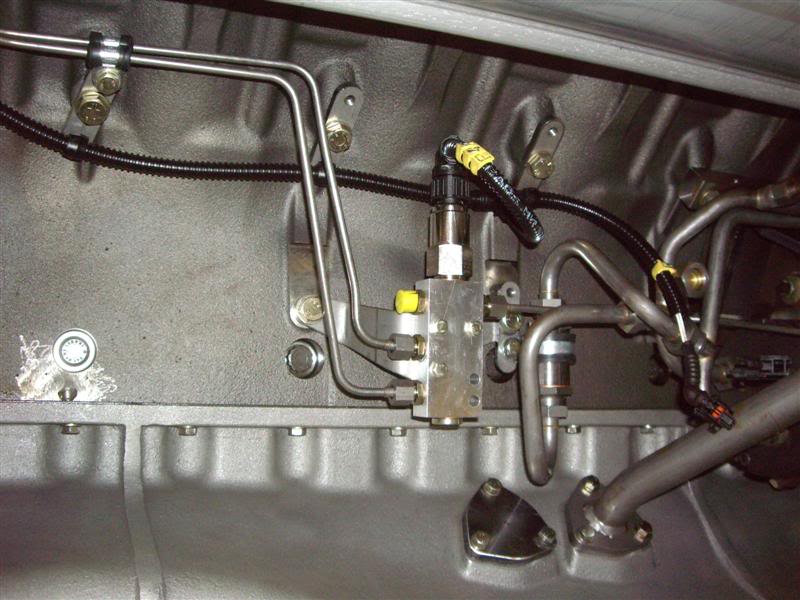
The common rail has pressures of 1800 bar and at this pressure it is possible to get fuel leaking. In fact a jet at this pressure can be dangerous. The whole common rail is protected in a douple skin pipe with the outer feeding any spillage back to a small reservoir.

This is the reservoir with the drain pipes feeding it - a level switch feeds back a warning to the engine controller and any surplus fuel can be drained out the bottom of the reservoir. I imagime that if you do get a leak that the reservoir isnt large enough to catch any significant amount of fuel. This would result in an alarm very quickly. If it isnt that serious a leak, I believe that removing the plug and jury rigging a larger means of collection would enable the engine to be operated.

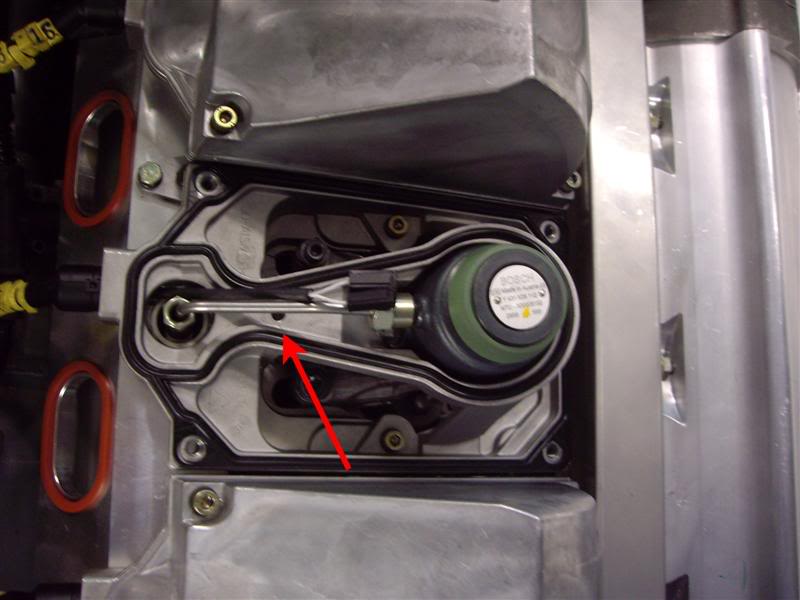
IMGP1445Medium.jpg


And here's the area around the injector in more detail. You can see a separate sealed area which is created when the cover is on so any fuel leaks will drain away to the drain system above.

IMGP1400eMedium.jpg


So, back to the second question in the quiz - this tool holds everything in place so that all the glands line up properly when tightened. I beliebe origionally designed for use on the factory production line but it is now a tool that can be bought from the MTU tools catalogue.
 
Last edited:
Thanks mike, great post. Many folks who know their stuff regard MTUs as the best in size range, ahead of MAN

And fantastic that you are now an authorised service agent!
 
Great post - thanks.
Super pics and details.

- as an aside - early MTB's at the beginning of the WWII...?
There were of course the mid-1930's British Power Boat (Hythe) 60 foot type fitted with 3x500hp Napier Lions, speed? About 35 knots max. Then there were the 1939-type 70 foot Vospers which had 3x1300hp Isotta-Fraschini marine engines (with two Ford V8's on the outer shafts for 'silent running') - (about 43 knots max)... Then these superb Isottas became unavailable, so the last of the 70 footers in 1940, and the subsequent 72 footers were fitted with 3x1200hp Rolls-Royce Merlin aero engines when they became available... or fitted with Packards - but these boats were heavier armed and with less power, therefore weren't quite as fast... I think... Later MTB's, and MGB designs are much more complicated... err...

Best wishes
 
Thanks again Hurricane. I passed your regards to Ralf today. who has been a great instructor. I have realy enjoyed this course and would feel confident in attempting to replace any service engine componant. What a great way to get owners or skippers behind the MTU brand.
 
Top