Milled Aluminium Stanchion Bases (advice needed)

weaver_fish

Well-Known Member
Joined
10 Aug 2005
Messages
265
Visit site
Has anyone with an engineering background got some advice

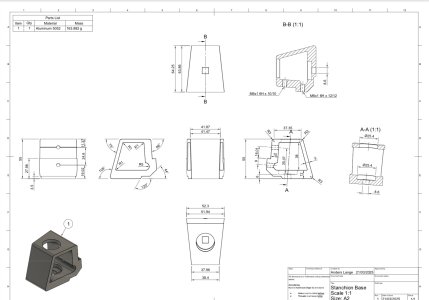
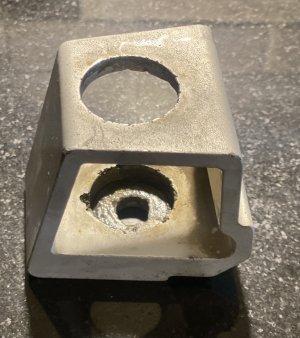
(1) any company who might be able to machine a series of stanchion bases as per the pics / drawing

(2) what sort of price we might expect to pay for eight

Many thanks - my sister ship owner has tried ringing around places with no success

I’m very much not an engineer but I think we can get the drawing files electronically from our helpful Swedish owner who created the drawing

Many thanks
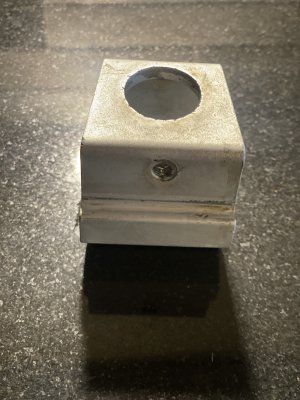
IMG_7632.jpegIMG_7634.jpegIMG_7631.jpeg
 
I would not make it from aluminum I would use stainless steel as i made my scansion bases from stainless steel and polished then to a nice shiny finish

More people can fabricate from stainless steel than aluminium
 
I would not make it from aluminum I would use stainless steel as i made my scansion bases from stainless steel and polished then to a nice shiny finish

More people can fabricate from stainless steel than aluminium
Thanks - the shape is designed to lock into the aluminium toe rail so alu probably best?
 
I would not make it from aluminum I would use stainless steel as i made my scansion bases from stainless steel and polished then to a nice shiny finish

More people can fabricate from stainless steel than aluminium
The OPs stanchion bases look like they are designed to lock into an aluminium toerail. Stainless steel would be a very poor choice for this scenario
 
The OPs stanchion bases look like they are designed to lock into an aluminium toenail. Stainless steel would be a very poor choice for this scenario

I have aluminium toe rails and ar stainless steel stanchion bass and stainless scansions of increase height to prevent any one falling over board

The trick is to sperate the aluminium and stainless from each other

The toe rails are fixed down using csk stainless steel set screws with insulations washers as supplied by the toe rail manufacturer

The bass are separated from the toe rails to prevent any corrosion between the two metals

Its all about proper design and separation of metal

My current boat is steel so its important to know material separation and electrical flows unlike GRP boats that are easer to keep metals separate in material design.
 
I have aluminium toe rails and ar stainless steel stanchion bass and stainless scansions of increase height to prevent any one falling over board

The trick is to sperate the aluminium and stainless from each other

The toe rails are fixed down using csk stainless steel set screws with insulations washers as supplied by the toe rail manufacturer

The bass are separated from the toe rails to prevent any corrosion between the two metals

Its all about proper design and separation of metal

My current boat is steel so its important to know material separation and electrical flows unlike GRP boats that are easer to keep metals separate in material design.
I understand about metal separation but 6000 grade marine aluminium billet, machined to fit into similar aluminium toerail, makes so much more sense.
Mine were over 40 years old before we replaced them. No cracks but some pitting.
 
I understand about metal separation but 6000 grade marine aluminium billet, machined to fit into similar aluminium toerail, makes so much more sense.
Mine were over 40 years old before we replaced them. No cracks but some pitting.

I was just stating my preference but its up to the OP to chose his preferred setup as are you are. i also have engineering knowledge and skills together with machinery to build any equipment I need. I have both mig and tig welding but very little aluminium welding skill/

As you can see on the pics here

Roger Shaw’s albums | Flickr

And no I didn't do work for others
 
About 20 yrs ago an engineering place used to machine me lumps of aluminium about that size. We typically ordered 50 at a time - up to 4x a year and I recall them costing £36 each - but that was probably after anodising.
 
The drawing doesn't match the real item. On the right hand outer edge in the photo the drawing shows sharp internal corners. The real item has radiused corners in those locations.
 
Last edited:
Have you got the step file that that drawing was generated from? Like like it was generated in Fusion360.

I reckon you could get them machined and anodised in China for about 20 quid each. We don’t even bother getting small stuff like this quoted in the UK anymore.
 
Our stanchion bases were simple bent stainless, to a design not much different to the shape of the cast/extruded item. If ours were 'ex stock' I'd suggest looking at the Ronstan website.

I'd agree cast/extruded would be stronger (but significantly more expensive), than bent stainless.

We did not have a toe rail


As an aside I have noted increased prices on items from China, copies of Antal's LFRs and copies of Alan Bros, in Essex, threaded deck bushes are 2 items that are priced highly from China, still cheaper than the originals but not so cheap to encourage many sales. Labour rates are increasing in China.
 
I reckon you could get them machined and anodised in China for about 20 quid each. We don’t even bother getting small stuff like this quoted in the UK anymore.
My gut feel is that as an “amateur” buyer wanting a product like this you *could* get local machine shop who are easier to work with than the far east and also remove the uncertainty of shipping, customs charges etc. What you want is the sort of place that takes your drawing and calls you up and says “is R1 actually critical because if putting a small radius there means changing tool to a more delicate cutter” or “can you cope with a radius on the internal square holes” or “we’ve got some 50mm stock - so you really need 2inches on that dimension” etc. My experience buying in the far east is you will get exactly what you specify but little “sense” to ask if your spec is right.
 
My gut feel is that as an “amateur” buyer wanting a product like this you *could* get local machine shop who are easier to work with than the far east and also remove the uncertainty of shipping, customs charges etc. What you want is the sort of place that takes your drawing and calls you up and says “is R1 actually critical because if putting a small radius there means changing tool to a more delicate cutter” or “can you cope with a radius on the internal square holes” or “we’ve got some 50mm stock - so you really need 2inches on that dimension” etc. My experience buying in the far east is you will get exactly what you specify but little “sense” to ask if your spec is right.

The sad reality is that the Chinese are now far better at this sort of stuff than any UK engineering company.

Places like JLC CNC (Online CNC Machining Service - JLCCNC) allow you to upload a part and get an instant price, including all the finishing options etc.

It then gets reviewed by an engineer within a few hours who will ask all the questions you have raised if required.

They then make the part in a couple of days and ship it out with DHL. Normally about a week turn around. They handle all the import charges.

Unfortunately for small run prototyping UK industry is totally dead. The Chinese will have the parts in your hand before the UK company will have even replied to your initial email.

And I say that as someone running a UK manufacturing company employing 30 odd people. It’s absolutely impossible to compete on this kind of thing. The ecosystem is just not available.
 
Last edited:
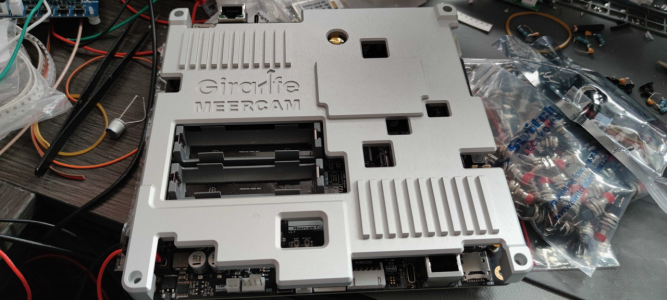
This aluminium heatsink was around £50 GBP including shipping and it was on our desk in less than 10 days from order. For a quantity of 1 including bead blasting & anodising.

IMG_1832.png
 
Top