Marine wax vs. Gtechinq sealant

peterjaw

Well-Known Member
Joined
25 Sep 2017
Messages
384
Location
Taipei, Taiwan
Visit site
Good day, Captains,
Per my previous question and suggestions from this forum,

http://www.ybw.com/forums/showthrea...t-last-as-advertised/page3&highlight=gtechniq

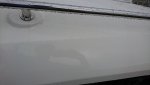
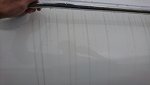
I made a comparsion between Marine Wax and Gtechniq sealant. The following pictures show the result 2 weeks after applying.
As you can see, the beading is not that much different but the wax section are full of streaks while the sealant section is
relatively clean.

The wax section:
DSC_0750.JPG


The sealant section:
DSC_0751.JPG

The testing were done on my starboard roof so the 2 section were supposed to be in the same condition.

wax_sealant.png

Before taking these 2 photos, there have been rained for 10 days (non-stop), it was also rainy when I took these photos.

Why the wax section has streaks but the sealant section doesn't?
 
Last edited:
Regret I can't remember his name but we have a resident expert on here … anyone know his moniker?
Just remembered …. he might be Marine Reflections … he really does know what he's talking about - message him or hope he turns up! …. :encouragement:
 
Last edited:
The sealant is probably more hydrophobic than the wax and the dust runs off the surface more efficiently is my guess. That or your cabin drains off water more to the rear rather than the front. That would mean more dust and fallout drains off the back and causes stains on the waxed part.
 
The sealant is probably more hydrophobic than the wax and the dust runs off the surface more efficiently is my guess. That or your cabin drains off water more to the rear rather than the front. That would mean more dust and fallout drains off the back and causes stains on the waxed part.

I think your guess is logical. The only way to prove this is to test on the port side roof but
reverse the sections.

Maybe I will find some other time to do another test.
 
Which product are you happier with in terms of finish and ease of use?

Sealant needs some prep and if anything wrong or improperly during that, the out come will be screwed up. Honestly, I am not sure if my prep is qualified enough.

As regarding to the marine wax, it is quite easy and intuitive --- it's an old school way that I have done on my car for years.

Finish-wise: they are pretty close. My boat is brand new and just delivered in last August, so the gelcoat is still in very good condition.

Ease of use: I would say wax is easier. But if we eliminate the prep procedures of sealant, they are about the same.

Above are my personal opinions. I think some real experts here may have different thinking.
 
Last edited:
Regret I can't remember his name but we have a resident expert on here … anyone know his moniker?
Just remembered …. he might be Marine Reflections … he really does know what he's talking about - message him or hope he turns up! …. :encouragement:

Yes, Marine Reflection gave me a lot of suggestions and information that actually create some shortcuts. I hope he will show up here.

I also would like to hear others, as many as possible.
 
I use the spray version of the Gtechniq which is super easy to use. No doubt it’s less effective than the harder ceramic coatings they produce but I’ve found it pretty good last year. It’s unlikely I would go back to traditional waxes (or at least go back to solely using traditional wax).
 
Good day, Captains,
Per my previous question and suggestions from this forum,

http://www.ybw.com/forums/showthrea...t-last-as-advertised/page3&highlight=gtechniq

I made a comparsion between Marine Wax and Gtechniq sealant. The following pictures show the result 2 weeks after applying.
As you can see, the beading is not that much different but the wax section are full of streaks while the sealant section is
relatively clean.

The wax section:
View attachment 75159


The sealant section:
View attachment 75160

The testing were done on my starboard roof so the 2 section were supposed to be in the same condition.
View attachment 75161

Before taking these 2 photos, there have been rained for 10 days (non-stop), it was also rainy when I took these photos.

Why the wax section has streaks but the sealant section doesn't?

A wax is going to hold on to the very misty light stuff such as aviation fuel and marine diesel in the very top skin of its surface in the same way an oxidised surface does in comparison to a smooth shiny one.
In short the Sealant has created a more closed, uniformed surface at the microscopic level, despite not beading as well as the wax.

Which products specifically did you use?

Despite the two sections having different exposures and run-offs due to angle, they should be fairly similar in condition. Ruling out leaching from say anodised ally they are performing differently because of their acceptance levels.

The wax section has a better contact angle on the droplets (it's beading more) this could be run off angle but I supect it's actually because the wax is doing a better job in terms of contact angle, just not as well as the sealant in terms of acceptance.

Tony
 
A wax is going to hold on to the very misty light stuff such as aviation fuel and marine diesel in the very top skin of its surface in the same way an oxidised surface does in comparison to a smooth shiny one.
In short the Sealant has created a more closed, uniformed surface at the microscopic level, despite not beading as well as the wax.

Which products specifically did you use?

Despite the two sections having different exposures and run-offs due to angle, they should be fairly similar in condition. Ruling out leaching from say anodised ally they are performing differently because of their acceptance levels.

The wax section has a better contact angle on the droplets (it's beading more) this could be run off angle but I supect it's actually because the wax is doing a better job in terms of contact angle, just not as well as the sealant in terms of acceptance.

Tony

I used C1 (base) and C2v3 (top) (Taiwan does not have EXO), and the wax was Collinite Fleetwax.

If wax is prone to hold on elements, although in short period it is beading more, I would proceed with sealant.

Thank you very much.
 
I use the spray version of the Gtechniq which is super easy to use. No doubt it’s less effective than the harder ceramic coatings they produce but I’ve found it pretty good last year. It’s unlikely I would go back to traditional waxes (or at least go back to solely using traditional wax).

Are your saying C2v3?
 
Collinite Fleetwax is very good.

To explain, one of the most significant changes in the way a surface is to be protected once perfect has been to break down the surface demands into two factors: sealing and beading.

Traditionally, those two factors have been in one product; wax will seal the surface by filling in all the tiny pores while providing a beading factor in one.

Your product of choice for sealing (C1 in this case) had self uniformed and cured better than a wax can. It has not tried to offer a beading factor combined.
In this achievement of self levelling/uniforming, they've also managed to create a harder surface than the original gelcoat. A second skin almost, at the molecular level it's smoother.

Now your sealer needs a partner, something that provides a beading action alone and doesn't focus on being anything more.

So when choosing beading (hydrophic) products, the demands are ability and durability.
How well will it beads and how long will it bead.

Ability is really the contact angle, how spherical the water droplets are when sat on the surface - how well it will bead.
Durability would then, of course, be that achievement subject to rain, salt, sun, washing etc.

As good as a spray-on version of the main product is, it won't be able to match the ability and durability of that main product.

Now with this range, C2 being the spray version and with EXO being the main, for the sake of ease on the application, the ability and durability have been compromised.

Of course, subject to so many variables given a chosen maintenance schedule, but IMHO the main product is usually the most useful and cost-effective partner if you are separating the two factors of sealing and beading.

It seems like an extra effort, extra cost but I believe in the long run the benefits of more ability and durability will overtake the initial outlay.

C1 and Exo are main individual products and combined make a great team of sealing and beading.
C1 and C2 are still a partnership so it's on the correct path, but if you are chasing the most cost-effective system, you'll need to pair the main products together.
 
Thank you very much for such a detail information, Marine Reflections.

I think I got your points.

Now, my biggest headache is how can I remove all the wax completely that I applied before installing C1? I know any tiny residue from the
wax will screw up C1.

Do you think if I keep on washing my boat regularily with car-wash shampoo and after 2 or 3 months all the wax will be gone naturally ?
(Or at least most of the wax?)
 
So I'd probably opt for a few passes of Isopropanol alcohol neat.

Test if all the wax has been removed by running water over the surface and observing the bead height of the droplets.

Collinite Fleetwax is hardy stuff, If I wasn't happy, I might move towards Acetone.

Dish soap will strip wax, although it may take multiple washes, it's not advised you use this as a regular wash for this reason along with containing salt, but it may help if you can't find the above.

There are also many cleansers on the market that will get a surface raw.

You are aiming for a squeaky surface.
 
Last edited:
You're welcome.

There's still a fair bit of work with this process, wash and rinse well, but it is effective, and as with all these tasks of prevention and protection, the result, in the end, is minimal work as you're nipping things in the bud.

Tony
 
Top