
LIFePO4 longevity

Poey50

Well-Known Member
Joined
26 Apr 2016
Messages
2,319
Location
Chichester
Visit site
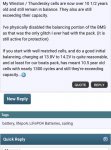
LFP is not a straightforward option as recent threads make clear. But is it worth it in the long term for those cycling their batteries very regularly? This screen shot is from the owner of a batch of Winston cells (which are popular in Europe since they are imported by EV-Power). The interesting thing here is that they are not only going strong after ten and a half years, but their capacity is still higher than the initial nominated capacity. This was posted in a thread on longevity in the Facebook group and there were other examples.

This isn't magic - Winston cells apparently usually measure above nominated capacity when new, so there will have been some loss of capacity, just at a very slow rate.
 

Attachments
  • 79261874_2649637185117126_4014454864410050560_n.jpg
    79261874_2649637185117126_4014454864410050560_n.jpg
    62.1 KB · Views: 19
Last edited:
The trouble with this sort of thing can be that you end up knowing a lot about what was on the market 10 years ago.
It's always a little worrying when evangelical early adopters start claiming better performance than the manufacturers.
How is the capacity being measured?
What conditions?
How much more capacity?
 
The trouble with this sort of thing can be that you end up knowing a lot about what was on the market 10 years ago.
It's always a little worrying when evangelical early adopters start claiming better performance than the manufacturers.
How is the capacity being measured?
What conditions?
How much more capacity?

It's important to retain scepticism in these matters. Winston cells, for some reason, are generally reckoned to come in about 120% of nominated capacity so, as said, to keep under 20% loss of capacity over 10 years isn't magic. This came up on a group with plenty of critical experienced users, not evangelists, but wasn't shot down which you might expect from a rogue figure. Anyone interested should of course do their own research.

Edit. This is useful on longevity. Interesting that heat is a key variable.
 
Last edited:
The trouble with this sort of thing can be that you end up knowing a lot about what was on the market 10 years ago.
It's always a little worrying when evangelical early adopters start claiming better performance than the manufacturers.
How is the capacity being measured?
What conditions?
How much more capacity?

I think BattleBorn deliberately make sure that their batteries have a bit more capacity than advertised... not a bad policy, IMHO

My second hand lithiums were "registered" in 2006, are still going strong, and seem to have all of their original capacity, based on some fairly low level calculations. They were 520Ah new, and are now somewhere between 500Ah and 545Ah.
 
I used to have a source of Lead Acid batteries which had been swapped out of telecomms back-up supplies, so they'd been on float 99% of the time with only a few dozen cycles perhaps over 8 years. They would give good capacity for a few years in a yacht.
Then they died quite quickly, but at least they had scrap value.
 
I used to have a source of Lead Acid batteries which had been swapped out of telecomms back-up supplies, so they'd been on float 99% of the time with only a few dozen cycles perhaps over 8 years. They would give good capacity for a few years in a yacht.
Then they died quite quickly, but at least they had scrap value.

How long is “quite quickly”?

I have only had mine since December, so not in a position to talk about my personal experience yet.... If things are still the same next December, that will be a good sign. I’ve usually destroyed LA batteries during the first year :(
 
How long is “quite quickly”?

I have only had mine since December, so not in a position to talk about my personal experience yet.... If things are still the same next December, that will be a good sign. I’ve usually destroyed LA batteries during the first year :(
Quite quickly can be anything from 3 months of hard use up to 3 years of cossetting.
I think there's one in the shed which has lasted a lot longer, been used for testing various stuff.
Hard to put any real numbers together, but the guys who use these things in industry and get rid of them before they start failing seem to know a thing or two.
 
Top