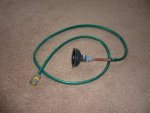
Leak check

Put a bung in the skin fitting and fill the pipe up with water. This will show any leaks in the valve or the internal joints, but not between the skin fitting and the hull. As the seal between the hull and skin fitting is to keep water outside the boat you can't test it without putting the boat in the water!
 
I was thinking of making a fence around the fitting with plumbers putty and filling it with water, and then checking outside for drips. I know this won't replicate the pressure of the sea when the boat is immersed, but might show an obvious problem?
 
I was thinking of making a fence around the fitting with plumbers putty and filling it with water, and then checking outside for drips. I know this won't replicate the pressure of the sea when the boat is immersed, but might show an obvious problem?
If you need to resort to that i would humbly suggest you get somebody else to fit the items :)
 
If you need to resort to that i would humbly suggest you get somebody else to fit the items :)

Just want to check existing through bolted fitting prior to the lift in. I've not fitted anything new. It's a bit late once in to discover weeping skin fittings
 
If you really want to, then mastic/silicon a funnel around the outside of the skin fitting with a bit of hose on the thin end and fill hose with water and support the free end of the hose to ensure the water in it is above the water line.
You may have to put a small hole in the funnel to bleed it of air and then plug the hole again.
 
If in doubt, change it.

If not in doubt, hit with hammer until absolutely not in doubt.

I only saw a broken skin fitting when applying antifoul. This was AFTER I'd serviced the seacocks inside, the fitting was only held by sikaflex!
 
I was thinking of making a fence around the fitting with plumbers putty and filling it with water, and then checking outside for drips. I know this won't replicate the pressure of the sea when the boat is immersed, but might show an obvious problem?

Any leakage will have shown on the inside when it was last in the water. If there was no sign of leakage then and you have not done any work on the skin fittings since then, difficult to see why they should leak now. Obviously different if you have disturbed them.
 
Had the plumber round the other day checking for leaks in the drains. He used smoke pellets. Very effective, (even though it proved that we were in line for a big plumber's bill :disgust: ).

It reminded me that that is what I used to do to check the seal on buoyancy tanks on sailing dinghies. On the basis that leaks work both ways, you could set off a smoke pellet suspended in an upturned bucket above the skin fitting and see if any smoke makes its way out the hull.

When you lift the boat in, one trick is to put some coloured tissue around the fitting that you have changed. It makes it easier to spot if there is the odd drop of water which can be hard to spot visually.
 
If you're having it lifted in, they will usually keep it in the slings for a little while to check below for leaks before releasing it. If you've not done it before ask the lift guys what their procedure is. Beforehand, give each skin fitting a thorough examination. If you can see a continuous bead of Sika all the way round, you will be ok. As others have said, if they weren't leaking last time it was in the water and you haven't disturbed them, they're unlikely to leak now.
 
Last edited:
What I used to do was ask the lift operator to hold the boat in the slings when the boat was in the water while I go down and check for leaks. All were happy with that including places ranging from Burnham on Crouch to Trinidad to Venezuela.
 
Top