Jabsco Anti-Syphon Valve - open or closed?

Joined
9 Apr 2021
Messages
27
Visit site
Hmmm is it so obvious I'm just not seeing it?

I have just fitted a Jabsco Anti-Syphon Valve to the inlet pipe, read the instructions several times and searched online and I cannot find any reference to the position that the valve at the top of the loop needs to be - open or closed?

Do you know please? It turns so there is obviously an option but I don't know the answer.

I can guess open as that is presumably how it works by letting air in and break the syphon?

Thanks WW
 
You need to be more specific as to what you have fitted. I expect you mean you have fitted a Jabasco anti syphon loop to the inlet pipe system. These loops can have a wee outlet hose connection at the top of the loop which should be open at all times and water from the tube disposed where convenient including overside by a tube ship side fitting.

Alternately the loop can be fitted with an anti syphon valve. This is usually an automatic device which is left to operate as intended and not manually controlled. These can stick and then the anti syphon properties of the loop are lost. It should certainly not be manually closed under normal circumstances as the loop would no longer have its anti syphon properties.
This valve automatically opens when not pumping . If stuck then water appears when the pump is operated.
 
It is normally a flap or disc nrv. When the toilet is pumped to flush the valve should close to prevent air entering that would prevent the pump from working. When pumping stops the valve should open to allow air in, breaking the siphon.
A light spring opens the flap and is overcome when the toilet is pumped.
 
It is normally a flap or disc nrv. When the toilet is pumped to flush the valve should close to prevent air entering that would prevent the pump from working. When pumping stops the valve should open to allow air in, breaking the siphon.
A light spring opens the flap and is overcome when the toilet is pumped.

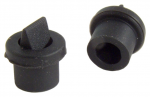
In the Jabsco vented loops they appear to be a "duck bill" type . Presumably installed duckbill facing down
Picture snipped from the Jasco shop website (click to enlarge)
1658658151467.png
 
Hmmm is it so obvious I'm just not seeing it?
I have just fitted a Jabsco Anti-Syphon Valve to the inlet pipe, read the instructions several times and searched online and I cannot find any reference to the position that the valve at the top of the loop needs to be - open or closed?
Do you know please? It turns so there is obviously an option but I don't know the answer.
I can guess open as that is presumably how it works by letting air in and break the syphon?

Thanks WW
Have to ask.
Have you installed the inlet loop ibetween the pump and the bowl in place of the short hoe normally supplied with the toilet.

See https://www.marlow-hunter.com/wp-content/export/Vendor-Manuals/Jabsco Manual Flush.pdf

.
 
Hi,
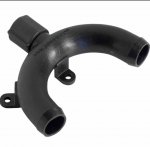
Thanks for getting back to me. I have attached a photo of the anti syphon valve and yes it's the valve at the top of this loop - set in the open or closed position.
I've installed it between the pump and the bowl.... nearly got it wrong but read the instructions many, many times :) but that's not part of the query.
So, that twiddly bit on the anti syphon loop, what you reckon - open or closed? Thanks WW
 

Attachments

  • Screenshot 2022-07-24 at 13.40.43.jpg
    Screenshot 2022-07-24 at 13.40.43.jpg
    43.7 KB · Views: 1
The duckbill valve which is a type of nonreturn or "one way" valve , will normally be closed.
When you stop pumping the pressure in the top of the loop will be very slightly less than the atmospheric pressure ( some would call it a slight vacuum) The valve will then open allowing air to enter and break the syphon .

When you are pumping water into the bowl there will be a slightly higher than atmospheric pressure at the lop of the loop which will hold the valve more tightly shut

The "twiddly bit" is surely just the cap which retains the valve insert in position.

.
 
The duckbill valve which is a type of nonreturn or "one way" valve , will normally be closed.
When you stop pumping the pressure in the top of the loop will be very slightly less than the atmospheric pressure ( some would call it a slight vacuum) The valve will then open allowing air to enter and break the syphon .

When you are pumping water into the bowl there will be a slightly higher than atmospheric pressure at the lop of the loop which will hold the valve more tightly shut

The "twiddly bit" is surely just the cap which retains the valve insert in position.

.

That makes sense, as I am pretty sure you can "service" these and maybe replace the NRV part. I'll try it closed then and see what happens.
We used a hose up the sea water inlet to test everything out as we are currently out of the water. I have replaced all the pipes, the pump and added this valve, when the "twiddly bit" was open it sprayed water out at me....hence the question. Using a hose, although not running particularly fast, is not the best testing environment.
Thanks for your help.
 
In the Jabsco vented loops they appear to be a "duck bill" type . Presumably installed duckbill facing down
Picture snipped from the Jasco shop website (click to enlarge)
View attachment 139317
If you install it in the open upside down configuration you may well get a loo full of brown coloured Doo Dah. Definitely not recommended and I am surprised if the instructions do not make this clear.
 
If you install it in the open upside down configuration you may well get a loo full of brown coloured Doo Dah. Definitely not recommended and I am surprised if the instructions do not make this clear.
We are actually discussing the valve in the inlet loop. You'd get a fountain of seawater when you pump if its was installed upside down.

If you installed the valve upside down in the outlet loop you'd get a fountain of effluent when you pump.
 
Hmmm is it so obvious I'm just not seeing it?
I have just fitted a Jabsco Anti-Syphon Valve to the inlet pipe, read the instructions several times and searched online and I cannot find any reference to the position that the valve at the top of the loop needs to be - open or closed?
Do you know please? It turns so there is obviously an option but I don't know the answer.
I can guess open as that is presumably how it works by letting air in and break the syphon?

Thanks WW
Here is a good video showing the same type of antisyphon loop as the Jabsco ones.

Note which way up the valve insert fits and that the cap should not be overtightened

 
I'm confused by references to the unit being installed "between the pump and the bowl". That would mean that it is in the intake (sea water,) side of the system. The one shown in the photo in post #13 looks of a diameter to be installed in the output side,which is where mine is.
 
I'm confused by references to the unit being installed "between the pump and the bowl". That would mean that it is in the intake (sea water,) side of the system. The one shown in the photo in post #13 looks of a diameter to be installed in the output side,which is where mine is.
If the toilet is close to or below the water line, on the level or any angle of heel, there should ideally be vented loops on both the inlet and the outlet.
See the link to the Jabsco instructions which I posted earlier.

If you have no antisyphon loop in the inlet you are relying on the little flap valves in the pump head unless you close the seacock after use
 
Top