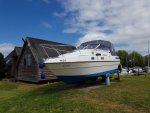
Is a Falcon 23 sports cruiser a good starter boat for the Norfolk Broads?

chick

New Member
Joined
14 May 2020
Messages
5
Visit site
My first Post and boat, so be gentle!!
Would use occasional coastal too, but 90% broads use.
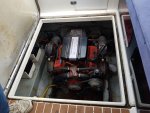
Been offered a 1990 model Falcon 23 for £14K by a friend. She has the original V6 with bills for around £3k spent in last 2 years.
My initial reaction should be £10K tops.
Thoughts please?f7f3466b-16cd-4e38-92f1-6c14cd62f7a1.jpg
 
how do i go about getting a survey on the norfolk broads? Is there a database??
 

Attachments

  • 5f9f70a0-bddf-47ae-8adc-41d9afc68461.jpg
    5f9f70a0-bddf-47ae-8adc-41d9afc68461.jpg
    240 KB · Views: 30
If your use is going to be 90% Broads, it's completely the wrong sort of boat. To start with, that engine will drink petrol, and you won't find it easy to refuel in most of the Broads, and you really don't want to be messing about with petrol in cans. As PeterWright has said, there are low speed limits, so you don't need the power. If you're still tempted, I'd have thought £6-7K might be a more realistic price.
 
My friend had a Falcon at Wroxham. Nice boat for Breydon where you can open her up a bit, but he was so frustrated at the handling at low speeds. The bow got blown about when trying to moor, the boat wanders left and right at low speeds, the fuel is impossible to get anywhere locally, the engine wasn't happy running at low revs constantly. It was a nightmare to handle in close quarters. Bit tall for many of the bridges too, limiting your navigational range.

Nice boat, just not for the Broads. Possibly a bit better on the Southern Broads, where there is more tide to punch and the rivers are wider. Northern Broads I would say would be a mistake. Broads cruisers are the bathtubs for many reasons.

Estuary or coastal much better.
 
People do use boats in the inland waterways . The asking price seems reasonable.

I had a Sealine S23 but with diesel engine that was very economical but cost a lot more to buy. I now have a F33 with twin engines which is equally not designed for inland waterways but there are plenty of such boats about.
At 5 knots the petrol engine will be be okay on fuel but open the taps and the opposite is true.

Ian Lumley would be good surveyor for this sort of boat. He just did my Boat Safety Certificate test renewal, which is a 4 year intervals.
Ian Lumley - The International Institute of Marine Surveying (IIMS)

.
 
Our S23 with kad32 diesel consumed 3 litres per hour at slow river speed - which is about 4.5 Knots
30 litres per hour at 25 Knots
 
Nobody ever gets it right first time.
Budget normally dictates what you buy.
Its the wrong boat with the wrong engine with the wrong drive system using the wrong fuel.
BUT if you like it and you get some fun and enjoyment and experience out of it ..just get on with it.
Just for Gawds sake get somebody who knows what they are doing to check the engine and outdrive.You want to see recent paper work not promises or ancient receipts from a bloke that built Noahs Ark.
The plan is to try and get the perfect boat for you after only the eighth or ninth try and good luck with that. :)
 
Last edited:
Nobody ever gets it right first time.

I think if the some research is done , including an understanding about where you want to travel, it is possible to buy a boat that is good fit . We kept our first boat 6 years and I wold have kept it longer but the chief officer insisted on a bigger boat. It proved to be a good move of course .

However I have seen people realise they bought the wrong boat after about the first day.
A couple used to moor near us but never moved their boat due to the fuel cost on their first, and only, trip out. They must have had no idea about fuel consumption before buying.

Others come and go - boating isn't perhaps as glamorous as people think it will be.

We bought a diesel engined boat since at the time petrol at the waterside was not available at our preferred marina, That proved to be a good decision.
 
Walk away! You want a slow, diesel powered boat. The slower the better. That is a planing hull, designed for going fast.
Google 'displacement hull' and 'planing hull', all will become clear.
 
As others have stated here, she's a decent boat, but much more suited to coastal use than the Broads. Trying to moor stern-on between a pair of hire cruisers on a busy weekend, backing up using just a 200+hp engine and no bowthruster would be trying for anyone, let alone a beginner.

You will spend far more time moored up than underway (possibly in rainy weather), so habiltability is way more important than boat performance, particularly if you have a partner or family who's not quite as enthusiastic about it as you are. It's very easy to sit at the helm of a boat and get enthused by the thrill of driving, but what you need to do is to sit in the accommodation and imagine how long you could stay there on a rainy day. You want to have a saloon where you can look out and see the scenery while you relax with a coffee: so large windows, not the little overhead portlights which you see on sports cruisers. A double berth tucked away in a claustrophobic little cave under the cockpit is (for some reason) a bit of a no-no for many people. Simialrly, it's best to have a separate sleeping cabin away from the saloon, so you are not making the bed each evening: this simple consideration makes the boat more homely, and feels less like camping, which is often a complaint heard from reticent partners. And a working heater is an absolute must on inland waters, which are often cooler than the coast: this will probably give you an extra two months on either end of the season.

Lots of boats fit this, mainly older types, which can be got for less than your proposed price for the Falcon. Good examples of Freeman 22, 23, 24, Seamaster 23, 27, Birchwood 25, Elysian 27 are all plentiful, and have depreciated as far as they will go: they are all popular starter boats on the Broads, and you are unlikely to lose out when you eventually sell on. However, in terms of accommodation it is hard to beat the dowdy little Hampton 25, which is probably still the "gold standard" for packing a quart into a pint pot: a large saloon with good views out (saloon canopy can also be slid back for the al fresco treatment on a sunny day), roomy toilet / shower compartment, and a large sleeping cabin with a full-size double bed and wardrobe. They are a bit more expensive than the others, but you can still get a tidy one for less than your mate's asking price for the Falcon.

Hope this helps.
 
Get your other half to view any prospective purchase before you do anything else.
Presume you would like your significant other to go along with you on all your new boating adventures and presumably to stay aboard.
50 years experience of boating indicates that the the fair sex take a somewhat different view of boating than most blokes.
One sniff of a interior reeking of diesel will ensure you will be boating alone.
This also explains why many sailors always seem to be on their own.
 
Last edited:
Top