
Instrument Data via WiFi

Harry Brown

Well-Known Member
Joined
1 Nov 2015
Messages
97
Location
East Med
Visit site
Hello,

I am looking for a solution to provide Wind, Depth, GPS, AIS data via WiFi, to Android tablets, PCs and Laptops.
I would also like to add a WiFi Antenna & 4G/LTE Router (this could be now or at a later date).
The boat has a Raymarine system with a Raymarine Smart Pilot.
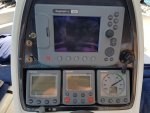
Here is a picture of the Instruments / connections (below).

C70 Chartplotter
ST60+ TRIDATA
ST60+ WIND
ST6002 AUTOHELM
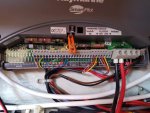

Raymarine Smart Pilot.jpg
I am reasonably handy with electronics, but I am not familiar with the equipment I would need for such an installation.
Could you guys please recommend what equipment I would need? I think I need a Multiplexer but not sure of the best one out there at present or any additional items I would need.
Would I be connecting it to the NMEA or SeaTalk connections? I'm sorry I don't know which versions of NMEA/SeaTalk I have.

Thanks in advance.
 

Attachments
  • Instruments.jpg
    Instruments.jpg
    92.5 KB · Views: 1
Last edited:
Following discussions in other recent threads on here i have purchased a vYacht multiplexor/wifi gizmo. It arrived Saturday and i hope to fit it in the next day or two. It is supposed to multiplex NMEA0183, NMEA2000 and Seatalk, then broadcast it over wifi, NMEA0183 or ethernet, depending on how you spec the order. I ordered one without the Seatalk port, but with an ethernet port. I plan to just feed it with NMEA 2000 data, which it will translate to NMEA 0183 and broadcast it over wifi to my laptop and tablet. I need all of the data to be NMEA 0183 at the laptop to use it with OpenCPN.

Will post on here when i've set it up.
 
If it's just nmea0183 data and something to act as a wifi repeater then a Raspberry Pi running openplotter will definitely do that,

http://www.sailoog.com/en
https://www.gitbook.com/book/sailoog/openplotter-documentation/details

I just downloaded V0.8 and loaded it onto a Pi 3 with only a power connection into the Pi and got it up and running in about 20 minutes using a laptop talking to the `Pi over a VNC viewer. You need to edit a configuration file, easy to do.

Now the Pi is a wifi hotspot rebroadcasting hotel wifi.

Assuming your raymarine kit outputs NMEA0183 then you'll need usb/serial adaptors for each feed, openplotter is dead easy to set up , it outputs signalK data as well.

There is work going on to get nmea2000 in as well but i haven't looked at that so can't comment.
 
Last edited:
There's a few options depending upon what you want to do. You really do need to think though about what data you have and which protocols are used before deciding. Usually pretty easy to find manuals online even if you don't have the printed version anymore, so that should tell you what bits of information are available and how they're sent.
 
First you need to get the data out of the instruments somewhere. Ideally in NMEA. The way I did that was with a Raymarine Seatalk/NMEA bridge (Part Nr. E85001 - shouldn't cost more than £50 and sometimes a lot less). This connects to your three Seatalk1 wires on one end and translates all instrument data on the bus into NMEA0183 format on RS232 and NMEA outputs. There are several alternatives to doing this, including open source Arduino ones based on a reverse engineered Seatalk1/NMEA data table. If your Smartpilot already outputs all the Seatalk1 bus data in NMEA format on those blocks you've depicted, you can use that and need nothing else.

Now that you have NMEA0183 sentences, you want to get them into a computer of some sort. Simplest way is to use one with a RS232 interface, or these days rather a USB-serial adapter. There are also ones that can handle RS422/485 (NMEA) for about £7. On the computer this is presented as a serial port.

AIS data will likely not be on your Seatalk bus, because that's clocked at 4800 bps, and AIS typically at 38400 (although there are kludges). So for AIS you just need another cheap USB-serial adapter. At this point, you could run something like OpenCPN, point it to those serial ports and have it show all your instrument data. Even if you don't want that, do it for a test as it's a great way to see if everything is working so far.

Next you want to make all this juicy data available to anyone on the network. For this, run a NMEA multiplexer. I use and can recommend kplex, written by a fellow forumite (Laika). You write a small config file where you tell it where to find the serial port(s), which speed(s) they are at and how you would like to present it to the network (typically a simple TCP listening port). Now anyone on the network connecting to that port on your computer will immediately get a copy of the NMEA data stream shoveled their way. That's where all your tablets, computers, phones, wifi instruments and whatnot can connect to.

The rest is standard computer geek stuff, such as setting up wired or wireless networks and getting computers to have IP addresses and talk to each other, which is covered aplenty elsewhere on the internets.

The "computer" I've been so generically talking about can be pretty much anything from a small embedded Linux box to a Windows server in 19" rack (if you have a really big boat). It doesn't really matter. It can also be the Wifi access point, which in most cases is already a Linux computer. If it has USB or a serial port, it can do the job of multiplexing NMEA data on the side - kplex is small and has minimal resource needs.

My boat setup is a Alfa R36 (~£30) running OpenWRT which acts as Wifi2Wifi/4G router (the external Wifi is an Ubiquiti Bullet with 12 dBi omni antenna). It also has both USB and an internal serial port and in theory could run the NMEA multiplexer so you could have it all in one tiny box, but because I'm a lazy bastard I'm currently simply running that on the Linux OpenCPN laptop at the nav station, where there is a cheaply USB hub with 3 ports, which are a) USB serial adapter from Seatalk bridge b) USB serial adapter from AIS receiver and c) USB GPS dongle for GLONASS backup [kplex can do a clever failover here if your Seatalk hasn't sent GPS data in a while - haven't played with that yet]. Multiple devices connect to it over Wifi and receive instrument data.

If you have no computer skills and don't like wires and electronics, you can instead spend rather much more money on one of the many boxes that do all of the above (except the Seatalk/NMEA conversion) in one pretty looking plastic box.
 
You can create a solution that is both far cheaper than any purchased box and far simpler than a Raspberry Pi application.

I got a cheap RS232 to wifi converter, using the same instruments as you have. RS232 is the serial data protocol that NMEA (National Marine Electronics Association) 0183 is based on. I just wired it to the 12V supply of the boat's instruments and fed the Raymarine chartplotter's NMEA output to its data input. In the chartplotter's system settings I set the baud (ie data bits per second) rate for its NMEA port to work at, and with a computer temporarily connected to the unit's Ethernet port I set the device's data rate to match, and gave it a friendly wireless ID name and password. Any wireless device on board can now relay the boat's instruments using one of a range of downloadable apps.

You mention you want it to transmit AIS to wifi although you don't include an AIS receiver in the list of kit. To allow sufficient bandwidth for the high volume of data that AIS provides, you would set the chartplotter's NMEA baud rate to 38,400 rather than the slower 4,800 rate at which the instruments talk to each other.

With your setup you could alternatively feed this data from your smartpilot controller box's NMEA output or assuming your system also feeds NMEA to a VHF for DSC lat/long, from the back of the VHF.

You can later install a wifi router to create a network linking this, shore wifi and your handheld devices. I intend to.

Happy to provide further information. There may be an online option to get the thing custom-set up for you to just plug and play.
 
You mention AIS data but don't appear to have an AIS transceiver. :confused:

I have the same set up as you and bought an XB-8000 AIS transceiver with wifi and connected it to the plotter using NMEA 0183. This works in both directions and all the data on the wired system (Seatalk and NMEA) is now available over wifi anywhere on the boat.

Richard
 
Top