Help! Random orbit sander hundreds of small semi circle scratches

  • Thread starter Thread starter Swg
  • Start date Start date

Swg

Well-Known Member
Joined
9 Dec 2010
Messages
182
Visit site
I've been sanding back some gel coat patches with 1000 and 1200 grit discs.
I've got loads of semi circular scratches, I think from the holes in the sanding sheets?
Where there are no scratches 'medium' rubbing compound is doing a cracking job of polishing but it won't lift these.
Do I need to rub these out by hand or is there another way.
Dispirited, can you help..?
 
What grit did you start with? 1000 wont take out swirl marks from coarse paper, i would go back to 240 grit on the sander then 400, then the fine stuff wet & dry by hand then compound it.
 
Chances are you got some grit between the disk and the gelcoat. Sand the scratches out with wet and dry paper, by hand and polish up with compound in decreasing grades.
 
Thanks both. I started with 600 grit. I'll try and sand out by hand. The little circular swirls and very consistent and very annoying, I'd hoped that machine would sand flat and then I could resort to cutting compound...
 
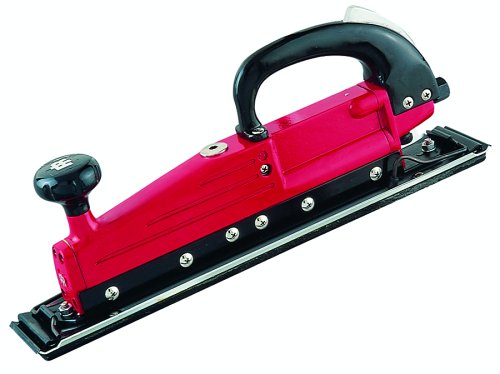
These sanders are excellent and can be loaded with wet and dry paper
41WKFDZ475L.jpg

https://www.amazon.co.uk/d/DIY-Tool...1938674&sr=8-18&keywords=reciprocating+sander

or this one for 1/3 the price
18C10C0C-3342-45FE-8120-FA1EF64B554C-large.jpg

https://www.machinemart.co.uk/p/cat49-long-bed-air-sander/
 
Chances are you got some grit between the disk and the gelcoat. Sand the scratches out with wet and dry paper, by hand and polish up with compound in decreasing grades.

You can also rub wet & dry paper across a bar of soap to add a lubricant and reduce its abrasiveness. I used to do this with 1800 grade before polishing, Trust his gelcoat is thick.
 
You can also rub wet & dry paper across a bar of soap to add a lubricant and reduce its abrasiveness. I used to do this with 1800 grade before polishing, Trust his gelcoat is thick.

Or add a little washing up liquid to the water.

No idea on his gelcoat thickness, but he's only using 1000 and 1200, so unless he spends a long time sanding he should be OK. I certainly wouldn't follow advice to use 240g on a sander though.
 
Orbital sanders do have a habit where the orbital bearing gets filled with dust where progressively the sander becomes less of a random orbital and more of a disc sander!
When I was doing similar work on the gel coat the sander seized up very quickly indeed.
 
I've never used a power polisher on a boat - I'm not skilled enough to do it without the risk of damaging the gelcoat. Plus, I've found that manual polishing is relatively easy.
 
The swirls are caused by a build-up of nodules of hot coagulated dust (plastic, wood, whatever) on the grit at various places. You need to do several things to prevent this happening:

+ Remove the excess heat by reducing friction, i.e. ease the pressure on the sander and lower the speed of rotation.

+ Fix a vacuum hose to the outlet on the RO sander (it will almost certainly have one), to remove as much dust as fast as possible from the interface of the disk and gelcoat (that is what the holes are for).

+ Periodically remove the sanding disk and flick it hard on an edge (say the ladder) to dislodge the start of any nodule build-up.

+ Change disks as soon as they start to look knackered or torn around the edges, exhausted on the surface (it'll feel much smoother than a fresh disk) or the first evidence of stubborn clogging.

Sanding is a process of scratching: coarse grit flattens fast but leaves deep scratches; the process of moving up through the grits is one of progressively scratching away the previously deep scratches with shallower ones. If at any point you allow a build-up of hardened nodules of dust on the disk, you've effectively got points of much coarser 'grit' digging in a swirling motion (the 'random' bit of the orbital rotation) into a surface you've just smoothed - and the only way to get rid of this is to go back one or more stages to a coarser grit and then back up again.
 
Having sanded and compounded the gel coat of my 37 year old Westerly Fulmar to an excellent result. However I should comment that older boats have a much thicker gel coat than modern boats. Westerly always applied (not always brilliantly) a double coat of gel coat which is 2 to 3mm thick. Other older boats will have a minimum of 1mm of gel coat that has been applied by brush. Modern construction methods now spray the gel coat in three thin coats with a thickness of about 0.5mm. This was said by a fiberglass repair guy, so he knows what he is talking about. This is a warning for all owners who are going to work improving their gel coat.
 
Top