GOOGLE MAPS AND OPEN CPN

fearmhuir

Well-Known Member
Joined
7 Nov 2017
Messages
127
Location
Bangor, Co Down
Visit site
Hi All,

Several years ago I sailed with someone who had Google Earth running as a map source in his OpenCPN setup. I don't think he was using saved images as he needed a mobile signal.

I have a trip coming up where this would be useful, as the survey data for the area is quite old and there are plenty of sandbanks. Is anyone using this setup?

The version of OpenCPN I am using is 5.8.4-0 and I followed the instructions here Using Google Earth with Open CPN - Marine Surveyor (AffilIIMS + AYDSA), Master (MCA), Consultant - Cameron Springthorpe but this dates to 2019.
Loading the Google Earth plugin either gives an error during or after loading. I have a suspicion that the latest version of OpenCPN

Using a separate phone or tablet and Google Maps would work, but would be nice to have the Admiralty chart and Google image side by side would be neat.

Thanks
 
In an area with sandbanks, I'd want to have the very latest charts based on the most recent surveys possible.
Depending on the area, sandbanks can shift around quite a lot.

I'd certainly not want to be using Google Earth or Maps for navigating around them as they tend not to show up too clearly, if at all. It's also quite difficult to know when the image was taken and how much post-processing has been done to get that picture to matching with others of the same area, taken at different times.
They have no survey data on them and don't even mark the state of tide at the time.

About the only real use I would make of Google Maps is for looking for views of the harbour & berthing areas.
 
….

About the only real use I would make of Google Maps is for looking for views of the harbour & berthing areas.
Charts aren’t always very accurate in some parts of the world.

There are plenty of places where old rowing boat surveys were precise - but not exactly at the coordinates they thought they were. So checking with satellite images is an essential safety step.

And even in the UK in some parts if you check the survey details they may be last century. Also many rocks are simply missing from the charts - I and many others have hit large solid objects that UKHO did not show. In my case the rocks were clearly visible on Google Maps, but not on UKHO’s charts!
Hence now I often check Google Maps as well as the chart - often can see more about the sea bottom in shallow waters in Google. Clearly need to be cautious either way, as sometimes cloud cover blocks GoogleMaps view, and if shifting sands need to check dates - of both Google image and chart data (NB UKHO can take many months before issuing new survey data to leisure charts).
 
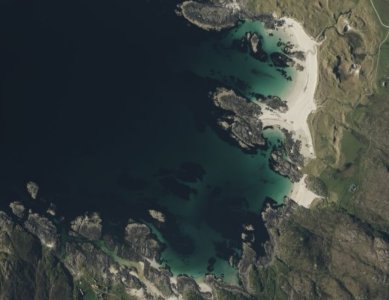
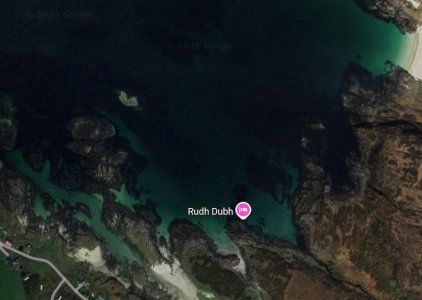
Apple Maps satellite photos are often better than Google Maps. No Apple device required, it's all online. For example compare these 2 views of Sanna Bay...

Apple
a.jpg

Google
b.jpg

Google Maps is built in to OpenCPN for Android though which makes it convenient.
 
Last edited:
Apple Maps satellite photos are often better than Google Maps. No Apple device required, it's all online. For example compare these 2 views of Sanna Bay...

Apple
View attachment 198855

Google
View attachment 198856

Google Maps is built in to OpenCPN for Android though which makes it convenient.
Looks like just by luck the first one was taken at a time of lower tide
 
Looks like just by luck the first one was taken at a time of lower tide
Maybe, but the Apple ones are often better.

Bull Hole
Search - Apple Maps

Google Maps

It may be lucky again, just the weather, but it's much more common for Apple to have clearer photos than Google than the other way round. Maybe Apple choose the best maps from a variety of sources.

You can even see the subsea cable on the Apple one.
 
Last edited:
Top