Gas fittings for cooker.

Humblebee

Well-Known Member
Joined
10 Nov 2001
Messages
1,842
Location
Home-Granton, boat James Watt Dock, the Clyde.
Visit site
I have an old Westerly Longbow with a Flavel Vanessa cooker and 4.5kg butane gas bottles.
Something is leaking and I'm not sure where, replacing the hose and fittings seems a good place to start. The present setup involves an old regulator, rubber hose, solid piping, armoured piping and rubber hose at the cooker.
Can I replace all this with a simpler setup reducing the number of joins? The terminology on some websites confuses me, are pigtails the same as fittings for regulators? Is good quality rubber hosing adequate for the whole job? Are there different diameters of hose etc available?
All advice welcome, next stop will be a caravan dealer.
Chris
 
I have an old Westerly Longbow with a Flavel Vanessa cooker and 4.5kg butane gas bottles.
Something is leaking and I'm not sure where, replacing the hose and fittings seems a good place to start. The present setup involves an old regulator, rubber hose, solid piping, armoured piping and rubber hose at the cooker.
Can I replace all this with a simpler setup reducing the number of joins? The terminology on some websites confuses me, are pigtails the same as fittings for regulators? Is good quality rubber hosing adequate for the whole job? Are there different diameters of hose etc available?
All advice welcome, next stop will be a caravan dealer.
Chris

Start by reading Chapter 7 of the Boat Safety Scheme Essential Guide.

This covers all aspects of the LPG installation in detail. https://www.boatsafetyscheme.org/media/180428/bss guide 2005 complete web.pdf

If your Longbow has the apology for a gas bottle locker that Westerly were fitting in the mid 1970s you will need to start by installing a "proper" gas bottle locker, That is one that satisfies the requirements of the BSS

All hose must conform to the relevant standards for LPG hose ! . Hose for a high pressure ( Pigtail) connection between bottle and a bulkhead mounted regulator must have pre-made ends ... hose clamps are not acceptable on HP hoses. 1 metre is the usual max limit for hose.

You ought to fit a "marine" Annex M regulator. ( although many will challenge that suggestion)

A bulkhead mounted regulator gives you the option, if necessary, to easily switch to Camping Gaz or to propane, which can be used in wintertime.

It would be sensible to include a bubble leak detector in the new installation. also a permanent permanent "test point" for connecting a manometer.

See your Westerly Owners Association Forum for details of the LPG system testing ( probably now superseded by a later version but IIRC one of the very earliest posts by Philip Stevens on the "cabin fittings " board )
 
Much obliged guys, and thanks for the links. They give me all the details I wanted.
Thanks also Vic, yes, I have the hopeless gas locker you mention, drains straight into the bilge. How it passed surveys I don't know.
Chris

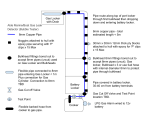
One final thing which I did was draw a simple diagram like the attached to ensure you have a list of items required. BTW the fleible barbed hose enetrs the battery locker which is where the test point is and cut off valve is; as I always shut the gas off at the bottle the cut off valve is not really required plus one of the Gas Safety Scheme recommendations for going through bulkheads requires using bulk head fittings and cutting the gas pipes which I wanted to avoid.
Gas Installation.png
 
Last edited:
One final thing which I did was draw a simple diagram like the attached to ensure you have a list of items required. BTW the fleible barbed hose enetrs the battery locker which is where the test point is and cut off valve is; as I always shut the gas off at the bottle the cut off valve is not really required plus one of the Gas Safety Scheme recommendations for going through bulkheads requires using bulk head fittings and cutting the gas pipes which I wanted to avoid.

Gas pipe passing though "electrical equipment spaces" should be free of joints and in a gas proof conduit which also must be jointless with its ends outside the space. A battery locker might be deemed to be an "electrical equipment space", especially if it contains any isolation switches or other electrical equipment

As far as passing through bulkheads is concerned n most cases the most you need to do is protect the pipe from chafe. A bulkhead fitting is usually only needed where the pipe passes through a watertight bulkhead and for the gas locker exit.

As your attachment shows you may be able to avoid cutting the pipe, and introducing extra potential leakage points, by boring out the "land" in the centre of the bulkhead fitting so that the pipe can pass through uncut. You can even cut off one of the compression joints if it make things easier or if one is inaccessible.. The remaining joint will preserve the water-tightness or gas tightness of the bulkhead or gas locker exit.

A loacl isolation valve is not needed if there is only one appliance on the system. A motorised cut off valve, linked to a gas alarm perhaps, would be better sited as close as possible to the regulator
 
Last edited:
Top