
Engine bed design

Craig87

New Member
Joined
15 Jan 2014
Messages
21
Location
Brighton East sussex
Visit site
I am now 100% on what Engine is going into my little 20ft fishing boat project and have worked out all the dimensions i need to make the bed.I am not 100% sure if the way i plan on doing so would be the best way to go about it so any creative criticism or input would be great. I have added a copy of my plans and the way I think would work after the research i have done .
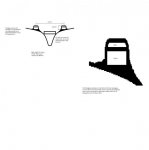
Engine bed (1.0).jpg
Thanks
 
Sorry - cannot read the text - but my initial thought is there does not appear to any way of holding the engine beds together athwartships

Regards


Paul
 
Do the beds run from the transom to the forward bulkhead? If so it's all fine.

no they do not they run from the cabin bulkhead 485mm toward would they need a extra support put in at the front and back? they design is pretty much a copies of what was there for the 10hm sabb engine that was in there as new but lower and with the width to match a volvo penta 2002

Thanks
 
Last edited:
If you haven't made them yet consider this. In the FVs I built (or rather fitted out, being GRP shells) I made plywood bearers, 3 x 18mm encapsulated in GRP, and wider apart than the engine, bulkheads cross jointed fore and aft, all encapsulated and bonded to the hull. Then bolt angle iron on the inside faces. This means the ply beds don't need to be accurately sized, and the angle irons can be positioned exactly to suit engine feet, and make fitting the bolts very easy. This has been used in boats much bigger than yours.
 
If you haven't made them yet consider this. In the FVs I built (or rather fitted out, being GRP shells) I made plywood bearers, 3 x 18mm encapsulated in GRP, and wider apart than the engine, bulkheads cross jointed fore and aft, all encapsulated and bonded to the hull. Then bolt angle iron on the inside faces. This means the ply beds don't need to be accurately sized, and the angle irons can be positioned exactly to suit engine feet, and make fitting the bolts very easy. This has been used in boats much bigger than yours.
From all my research it says that doing it this way will create more vibration and that the engine mounts should be directly over the beds to dissipate as much as it can so it dose not vibrate through the hull. Was this a problem for you as the engine beds in the boat now would be ideal size to bolt the angle irons to .
Thanks
 
The engines were a Lister single, Lister twin, and Ford 4 cyl 80 hp. Another boat, 30 ft, 4 cyl Ford did this to improve things, on the the test run they stood a fifty pee on edge on the dash. I don't think vibration in mine was any more of a problem, but obviously 1 and 2 cyl engines rattle around anyway. I think it is more down to the weight of material generally, and flexi or solid mounts. To improve vibration I would mount the engine on a raft, so angle iron, then flexi mounts, then another angle iron on the mounts, engine on that. You can install extra mounts, or move them further fore and aft to allow less engine movement. But think, solid mounts might be better?? What engine?
 
The engines were a Lister single, Lister twin, and Ford 4 cyl 80 hp. Another boat, 30 ft, 4 cyl Ford did this to improve things, on the the test run they stood a fifty pee on edge on the dash. I don't think vibration in mine was any more of a problem, but obviously 1 and 2 cyl engines rattle around anyway. I think it is more down to the weight of material generally, and flexi or solid mounts. To improve vibration I would mount the engine on a raft, so angle iron, then flexi mounts, then another angle iron on the mounts, engine on that. You can install extra mounts, or move them further fore and aft to allow less engine movement. But think, solid mounts might be better?? What engine?

I am putting in a Volvo penta 2002 18hp with a reverse gear. It will be on felxi mounts .
Thanks
 
This one? http://www.youtube.com/watch?v=207W0v5c-Ns
See, my 18 footer with the Lister twin, hull was built up to 13.5 ounces/sq foot, quite heavy, and the same weight as the 25 footer. The beds were long, 6 feet or so, plus crossed bulkheads so vibes spread out over a large area. Longer in the 25, 8 feet so load well spread through the hull. It's difficult to say how it will turn out, but I say bigger is better, and extending beds and a raft fore and aft must help. I expect your existing beds are not very long, so any vibes will be transmitted much like hitting the hull with a hammer rather than with a....well a big long thing spreading the same impacts.
 
Yes that is the same Engine . So would it be worth me making the beds from the cabin wall all the way to the transform? as the boat only needs 8hp for hullspeed i am hoping that it will not be at to high revs most of the time so it should (i think) be quite smooth. I just worry about a lot of rattle on idle . As you said they are very rattly at idle
 
Just looked at the pic from a while back, you obviously have the space in the cockpit area, I can only suggest that longer beds are better, and the more material in them the better. Many years ago the accepted fit out was to make an eggbox of interlocking bulkheads and stringers incorporating the engine bearers, so the whole of the hull below deck was supporting everything.
 
Just looked at the pic from a while back, you obviously have the space in the cockpit area, I can only suggest that longer beds are better, and the more material in them the better. Many years ago the accepted fit out was to make an eggbox of interlocking bulkheads and stringers incorporating the engine bearers, so the whole of the hull below deck was supporting everything.

ok cool well i will be cutting the cabin bulkhead out next week and getting started . I wanted to have the Engine as low down as i can get it so the angle for the prop is not any more than it needs to be so i think i will look into running the beads all the way down to the transform and put a few supports bracing it . Thanks for the help and info
 
Top