
Encapsulated keel isn't sealed, no tar in the ballast...

Turboviolet

New Member
Joined
10 Apr 2012
Messages
17
Location
Bristol
Visit site
20160902_125405.jpg

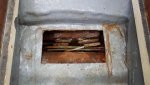
This is a top of encapsulated bilge keel of a 37 years old 23' pocket cruiser. I had no experience with encapsulated keels before but this doesn't look right at all. :confused: It isn't sealed from the top and it seems that there are no tar or concrete in between the scrap used as a ballast. But it survived until now somehow, being on a drying out mooring for last 18 years. Any advice?

Picture taken on a hull #1. I'll be viewing one of the later production yachts of the same type tomorrow, will check if it is the same or not.
 
That may well be trimming ballast and there is encapsulated ballast lower down in the keel. If scrap was used - commonly steel punchings rather than lumps of bar like that - it would be set in resin. Alternatively if it was a "quality" boat it might have a lead casting in the bottom of the keel and they got the sums wrong so added the extra after the boat was launched.
 
I was told that it got approx 10cm height iron cast "shoes" bolted at the bottom. But the boat was in the water so I couldn't check it.

Having in mind that this was a first boat out of that mould it is possible that they have adjusted the ballast after.
 
Well, if it's survived 37 years there is something OK about it!

If it were me, I'd be tempted to remove and weigh the ballast, taking photos as I go to identify positioning, and see what the depth is once all the 'free' ballast is removed. (My guess is that's been placed on top of the original, sealed in ballast.) Then take it from there. (1) Can either replace as is, seal in place with resin, add or reduce ballast or whatever, according to taste. (2) Wouldn't want to change the weight or position of ballast until I'd seen/felt the boat in action.
 
There are risks with encapsulated keels that are not readily apparent. If there is a perception that encapsulation means sealed for life or even solid, then that perception should change. Any damage to the keel that penetrates the outer GRP risks introducing water into what is likely not a fully sealed space. There will be little evidence and years may go by. Steel will rust and in some cases the expanding rust has ruptured the GRP. The other risk is that grounding leaks do not show up initially as the encapsulated keel fills with water and eventually rises above the level of the keel and floor. This can be an impossible leak to trace or even address at sea. Any grounding on an encapsulated keel should be inspected as soon as possible.
 
Last edited by a moderator:
Top