
ghostlymoron
Well-Known Member
With 6v traction batteries wired in series, for convenience one is located by the companionway and one in the forepeak. Connected by 35mm2 cables. Will this cause any problems with charging?



35mm? That is some thick cable?
Not particularly - I have 70mm2 (cross sectional area not diameter)!
35mm? That is some thick cable?
35/3.142 =11.14
Square root of 11.14 = 3.33 (radius)
Diameter = 6.6
Sounds a bit thin to me! (Or are my sums wrong?)
35/3.142 =11.14
Square root of 11.14 = 3.33 (radius)
Diameter = 6.6
Sounds a bit thin to me! (Or are my sums wrong?)
35/3.142 =11.14
Square root of 11.14 = 3.33 (radius)
Diameter = 6.6
Sounds a bit thin to me! (Or are my sums wrong?)

35/3.142 =11.14
Square root of 11.14 = 3.33 (radius)
Diameter = 6.6
Sounds a bit thin to me! (Or are my sums wrong?)
The boat in question does have a electric windlass but a friend was concerned about voltage drop between the 6v batteries when charging.For a small boat which is not likely to have high current accessories such as a bow thruster or electric anchor winch etc. it is certainly generous, for what is presumably just the domestic battery, but far better than being under sized.
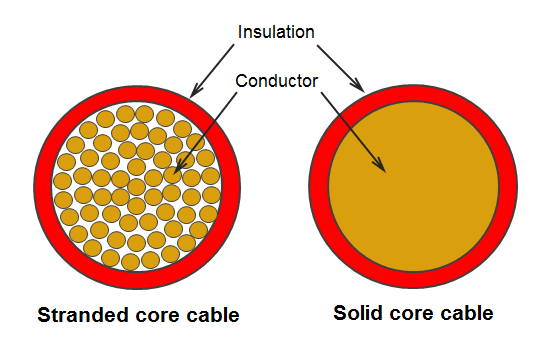
Your calculation is for a solid conductor. Multistrand flexible cable is less densely packed and has air voids inside it, so the apparent conductor diameter would be greater than 6.6mm.
The boat in question does have a electric windlass but a friend was concerned about voltage drop between the 6v batteries when charging.

The boat in question does have a electric windlass but a friend was concerned about voltage drop between the 6v batteries when charging.


Iv'e just posted this on another thread:Link to voltage loss Calculator as long as the amps and cable length is not too extreme
http://www.solar-wind.co.uk/cable-sizing-DC-cables.html