Dismantling and moving a 22000btu VECO CLIMMA SPLIT aircon unit, how?

vas

Well-Known Member
Joined
21 Jun 2011
Messages
8,200
Location
Volos-Athens
Visit site
as the title says,

got to get out of the way a 22kbtu CLIMMA unit (by VECO) model EV 22 SPLIT RC, which means EV model, 22kbtu, split as in two different entities compressor and air handling unit and Reverse Cycle.
It's currently squeezed nicely in a spot that I need good access in order to fit the stbrd side stabiliser fin on MiToS.
Crappy pics follow:
VECO_CLIMMA_1.jpg


VECO_CLIMMA_2.jpg


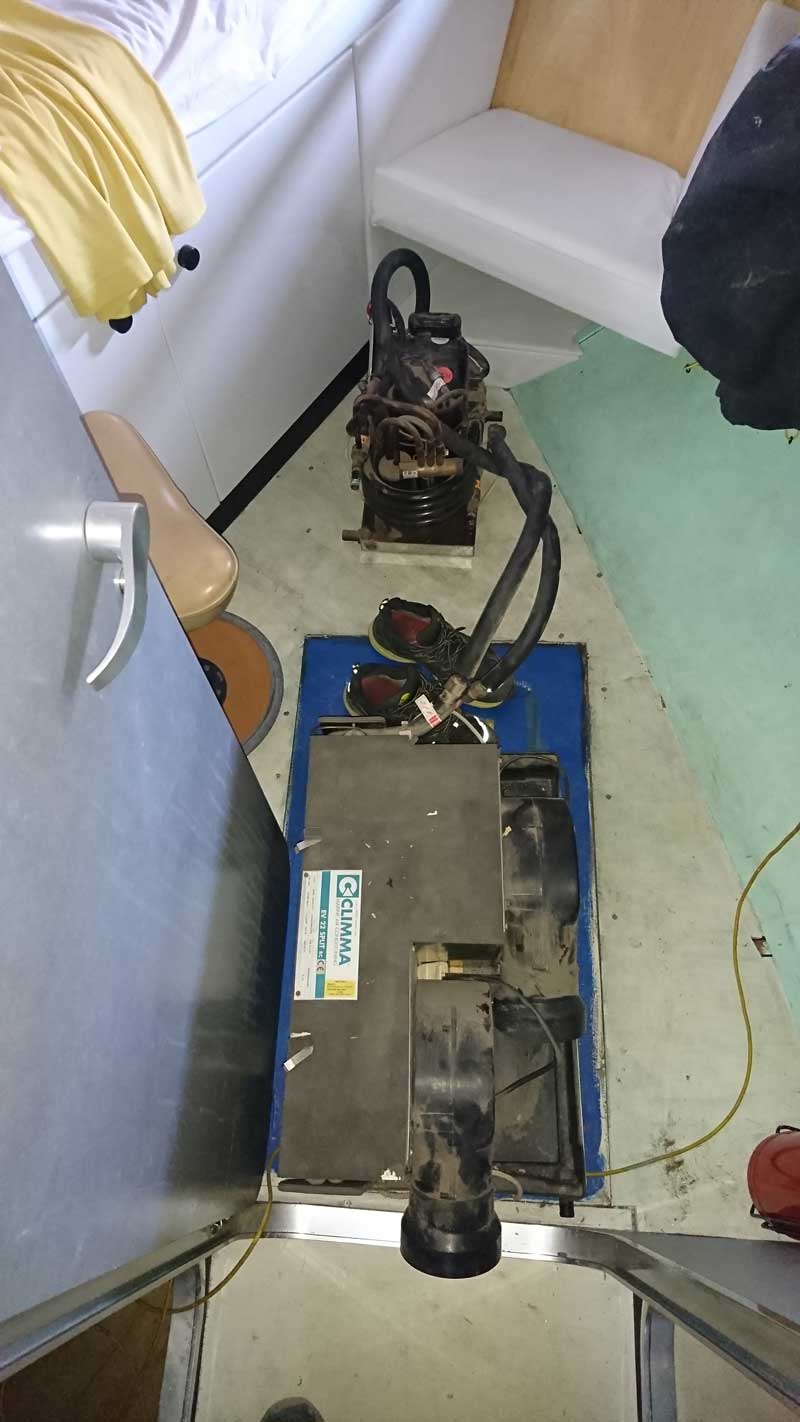
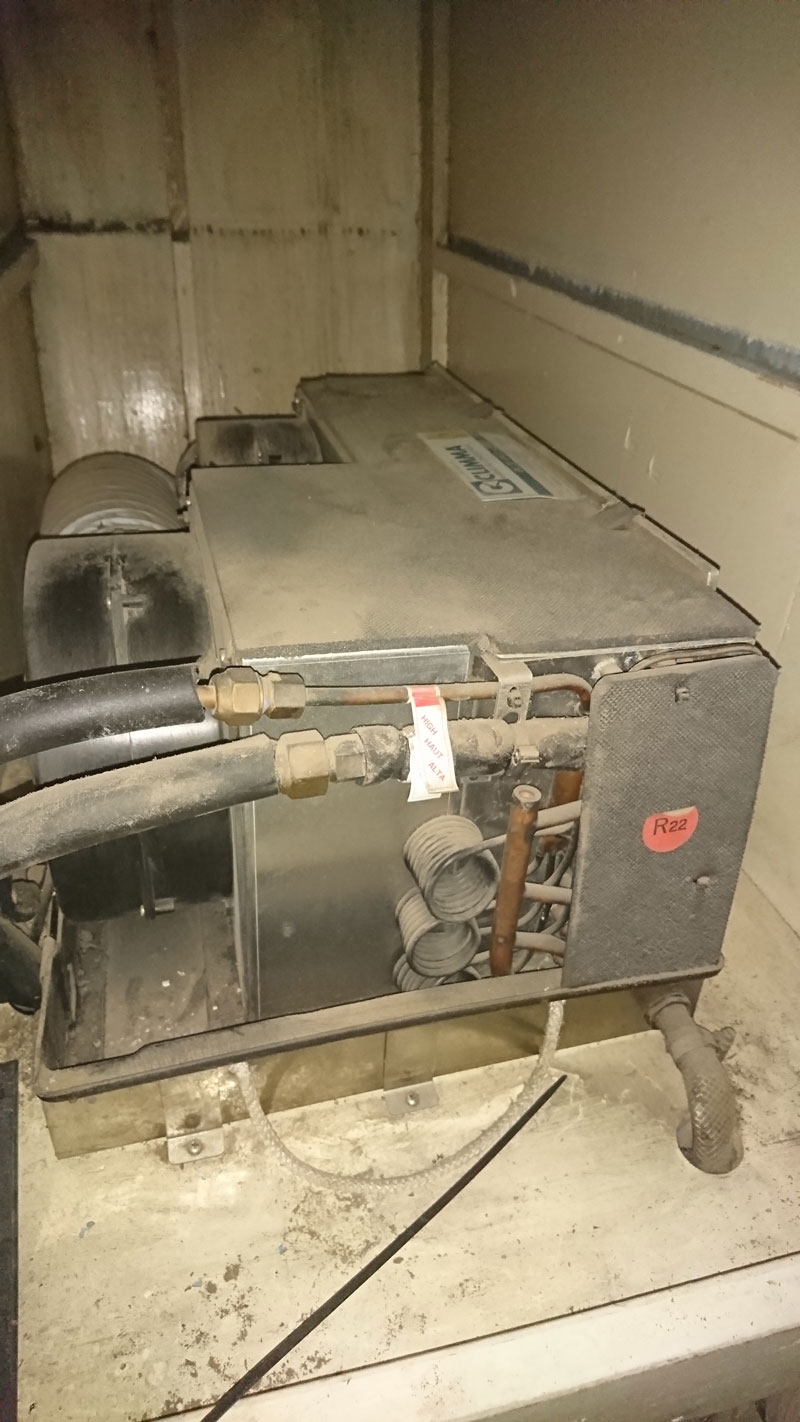
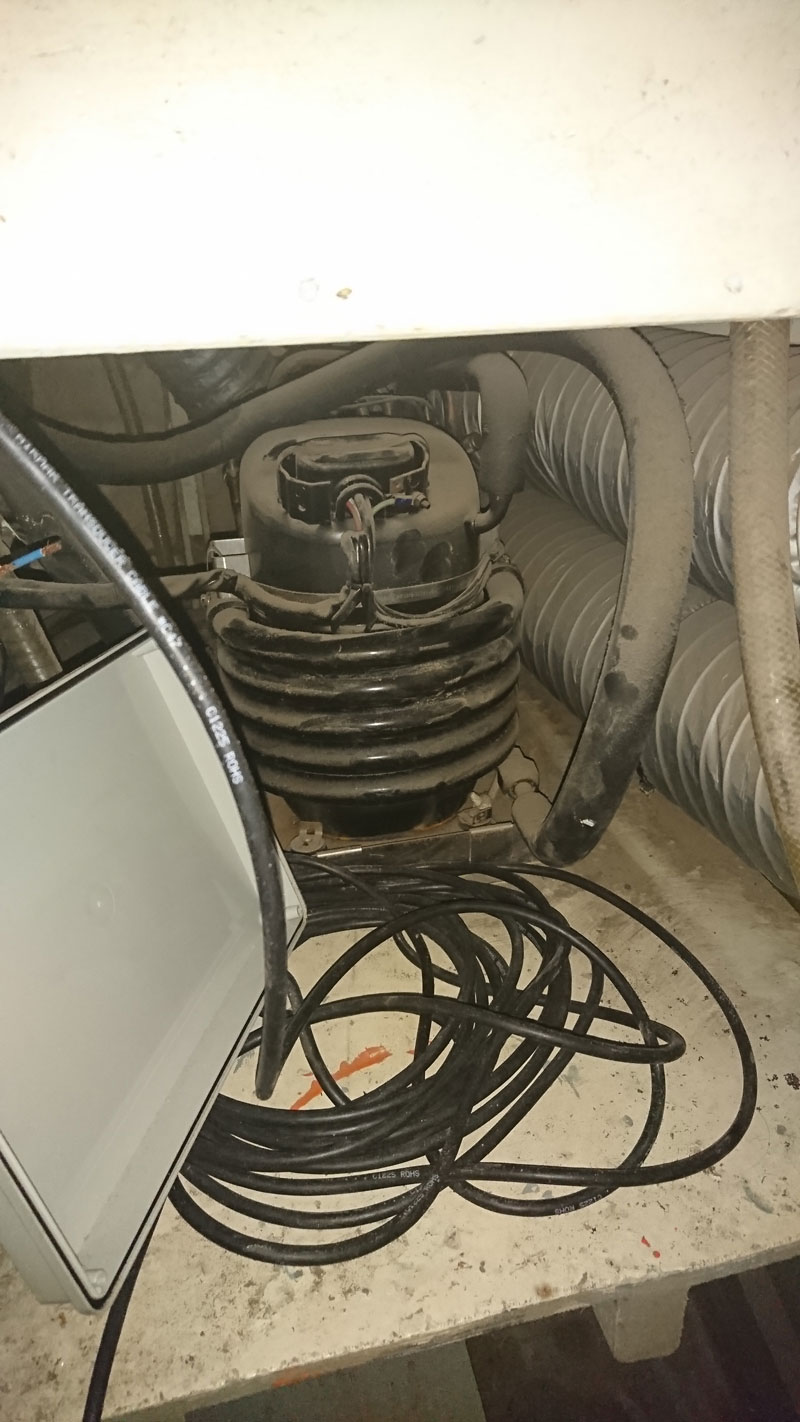
it's now in two levels air handler on top, compressor under it. Two main pipes with freon R22 apparently between the two units.
Now in an ideal world I should just lift both up approx 500mm and I can do my fin installation under it.
However I'm pretty sure things wont be that smooth and one way or another I'll have to disconnect the two, remove the 125mm dia air ducts and move it out of there for now.
I'm actually toying with the idea of moving it out of there completely or move the air handling unit in a wasted void behind the galley and the pump could possibly stay put on a higher shelf and out of the way. Got also the in-out for the seawater as well as the seawater circulation pump down there...

Now, if I undo the two nuts in the middle of pic 1 above do I loose all the gas or they have seals and balls or whatever valves and I just reconnect somewhere else (if I don't need to lengthen the copper pipes that is!) and it just works? Or am I talking bull?

I could bring in an aircon man (have 2 that we work with at the Uni) but I'd rather avoid that for now.
I'll tackle this task tomorrow morning, so keen on getting some leads on how to proceed if I cannot lift it up all in one go!

cheers

V.
 
How do you feel about breaking several EU laws ?

1 Illegal to vent refrigerant gas deliberately.

2 Illegal to recharge R22 anywhere in the EU regardless of reasons for its removal. Quite legal to continue to operate R22 charged equipment, you just must not under any circumstances recharge R22.

3 Person removing or recharging the gas must be certified / qualified so to do - in the UK this means F Gas Handlers certificate, e.g. C&G 2079-1 or 2.

Now that the official bit done with, the two connections shown are 3/8" and 1/2" flare connections. These are simple tapered pipe joints, no self sealing valves. Loosen these and the gas will leak out. It is not toxic, but if venting in an enclosed space be careful as it is an asphyxsiant.

Once the gas has gone when the joints are re-made the system should be pressure tested to check for leaks, deeply evacuated (proper vacuum pump able to get to below 3 torr) and then recharged. There are several gases you could use, but in my experience (which is considerable) I would only expect limited onward service from the piston compressor e.g. R417A (MO59); R422D (MO29); R438A (MO99) will all work. R407C might work but will require the compressor oil changing, and this is not easy to get out - replace with a Polyolester grade 32 or 68 viscosity for this application.

There is likely a 1/4" flare charging schraeder connection somewhere, but I can't see it in the photos.
 
just the man I wanted to hear from (but not quite what I'd like to hear Trevor :D )

OK, so best bet is to just shift it up as is and connected, see how it goes tomorrow then!

worse come, I'll bring the guy in with his kit to remove the R22 (I think I've seen the charging connector somewhere at the back) and we'll see what I'll fit later on.
tbh I'm pretty sure that they can recharge with R22 again (but I didn't say that, did I? :rolleyes: )

cheers

V.
 
Dynamite?:encouragement:

:p

I could remove and sell!
tbh, I've only used it twice and around 15min each time, that's some serious use, isn't it?
May use it again in a port for 20mins before going to bed to cool a bit the cabins, but not needed when at anchor (which is 90% of the time on board)
Dunno, we shall see tomorrow how things turn out

cheers

V
 
Get a refrigeration engineer to drain down the R22 . Move and replace everything and then re-fill with the new gas....it's not a big job. (draining/changing the gas) My old mans company built and designed milking parlours and i remember the change over being a pita. We had a mobile unit to do it and it wasn't a big job at all.
 
thanks for all the comments.

removed flex pipes and other stuff, had a better look around, unbolted the air handling unit, checked how far/easily it can move about, measured new spot for placing it together with the pump WITHOUT having to separate them, and it's doable!

So tomorrow I'll attempt to lift the air handling unit 400mm up on the same position and place at the same level the compressor next to it. This will leave me with a workspace of 570mm wide, 1.80m long and with a height from 700mm up to 1m. Not massive, but doable for the fin stab reinforcement
.
Need to do a bit of ply cutting to open up the holes where the freon pipes are routed through, no big deal.
I hope I'll be able to get it out of the way by midday so that I can clean up and start working on the main project.

cheers

V.
 
well following your suggestions and a few hours work as well as changing my mind (yet again!) on where the aircon is going, it's currently all together on the bow cabin floor.
Wasn't difficult tbh, compressor is a heavy beast but I only had to slide it on the floor, no lifting.
Aircon man is going to come one of these days to remove gas, so that I place the compressor down at the bilges and the air handling part most likely under the galley floor. Will need new longer pipes to connect them, regas and use whenever!

aircon_assembly.jpg


more on the main thread soon(ish)

cheers

V.
 
V, what refrigerant will you use? You need to ensure that it is compatible with your seals and hoses.

I guess R22 (but I didn't say that did I?) I think the guy has one setup (probably slightly illegally) to maintain R22 systems so I'll call him, he empties it and then he comes and refills, at least that's the idea...
That is IF I finally decide to split it and place it elsewhere, I'm currently at the "should I or should I not" point atm, but will really decide towards the end of the week. Need to get the fins in place and out of my mind asap. I can always fit/refit/modify aircon later on...

cheers

V.
 
V, what refrigerant will you use? You need to ensure that it is compatible with your seals and hoses.
Vas - That compressor is a tiddler ! Our's start at 250 kg and go up to 1.5 tonnes !

The issue with compatibility really concerns the oil. If you can drain the compressor (normally pours out the suction line if tipped over - measure the qty and add the same qty of new Polyolester 32 grade oil, e.g. Mobil EAL Arctic 32, or Emkarate 32, you can then refill with R407C which is likely to be more available than R22 ???, R417A, R422D, or R438A (direct replacements).

Do not under any circumstances use R410A. R134a would work but at much reduced capacity.

If you can get other gases let me know the R number and I will tell you if it is likely to work.
 
Vas - That compressor is a tiddler ! Our's start at 250 kg and go up to 1.5 tonnes !

The issue with compatibility really concerns the oil. If you can drain the compressor (normally pours out the suction line if tipped over - measure the qty and add the same qty of new Polyolester 32 grade oil, e.g. Mobil EAL Arctic 32, or Emkarate 32, you can then refill with R407C which is likely to be more available than R22 ???, R417A, R422D, or R438A (direct replacements).

Do not under any circumstances use R410A. R134a would work but at much reduced capacity.

If you can get other gases let me know the R number and I will tell you if it is likely to work.

thanks Trevor,

as you can see it's still in one piece, got to first decide that I'm indeed going to break them apart and then I'll find out what they suggest and report.

re size and weight, I wonder WHY it's so bloody heavy! it's just a pump with a seawater cooling pipe wrapped around it, no?

Anyway it does work, so shouldn't really ask too many Qs...

cheers

V.
 
thanks Trevor,

as you can see it's still in one piece, got to first decide that I'm indeed going to break them apart and then I'll find out what they suggest and report.

re size and weight, I wonder WHY it's so bloody heavy! it's just a pump with a seawater cooling pipe wrapped around it, no?

Anyway it does work, so shouldn't really ask too many Qs...

cheers

V.
Inside is a small single cylinder compressor, electric motor and various pipes and valves, but not much gas space. The lower 25% is filled with oil. It is likely ~ 75% solid metal material.
 
Top