
Fr J Hackett
Well-Known Member
PM sent


My Van da Stadt was designed in 1977. Airex Cored hull and deck. Not uncommon but not always done wellI'd be surprised if it was a cored hull back in the 1970s.
Can you get a photo of the bulkhead?
First 27 - Sailing yachts For Sale | BENETEAU
If it’s closed cell stuff it’s much better than balsa endgrainMy Van da Stadt was designed in 1977. Airex Cored hull and deck. Not uncommon but not always done well
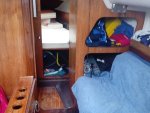

Similar sign of water ingress,but no delamination of plywood bulkheadDo you have a more close up photo of the chainplate please?
And what does it's partner on the port side look like for comparison?
Re tapping the deck to see if it is soft, I have found that if you walk gently over it in bare feet, your feet will tell you a lot. It is much easier to notice if the deck is 'soft' compared to if you have shoes on.

Seems a sensible decision.On reflection I am going to put this boat aside,it’s really at the limit of my budget and I don’t see the price being dropped for a while.To do a proper repair the boat needs to be out the water with he mast down.Meanwhile will find out the construction of the deck and maybe make an offer next Spring if it’s still for sale.Meanwhile there are other boats but I have to admit not that many in my price range.It’s not my perfect boat as I would have preferred a s keg hung rudder.One thing though is quite difficult being a hard headed surveyor and a romantic would be owner,At the price it’s being sold a proffess survey would probably be a good thing.Anyway thanks for everybody’s input and advice

The owner is 80 years old and is in denial of a problem with an incredibley important structural area.Wise deferment at this time in your life
( sometimes just articulating this to the vendor can produce a more reflective price too!)
Here what I see in that pic
Starboard side .
1/Marginal plywood web not a full bulkhead , so any degradation should be considered that much more seriously
2/ there appears to be a fibreglass inner moulding to the cabin ceiling , compounded by structural shaping into a flange that comes down onto the part bulkhead..
3/ so deck coring inspection is that much more difficult from underneath
And cutting out a section would be inadvisable to me , with the proviso that I am not familiar with this exact model and manufacturers preferred way of doing things in that decade ..
4/ so , any problems in deck coring requiring remedial stiffening would be done from on deck .
Since the deck is unpainted , those are going to show and show badly .
5/ reducing the boats attractiveness and maybe its cosmetic resale..
6/ the cost of doing the inspection
7/ and the work
8/ x2 for both sides
9/ the time , travel , organising it and loss of nice sailing days
= what’s a price to you at which you might be prepared to take on a possible project , all other parts considered ??
Here’s a thing . Get someone to heave laterally on the lower shroud in toward the mast , at head height , whilst you watch and feel the chainplate /deck joint… some flex a lot more than others ! Flex equals leaks equals soggy bits , even a heavy guy walking in the deck next to the chai plate over the years , drip drip , soak soak , soggy soggier , rust , rustier , bolt wastage
Obviously I am painting The Worst Possible Scensrio for you but isn’t that what you want to safeguard against at this stage of viewing , “ eyes wide open”
Past performance is no guarantee of future prospects !The owner is 80 years old and is in denial of a problem with an incredibley important structural area.
Yes the price is quite good and the condition good apart from the “problem”I suppose if I was more confident of my skills indeed it would be not too difficult but I really don’t want to have to do a major operation which in all events would all ways worry me that it had been done correctly. I noticed a van in the marina that proclaimed the owners did all manner of grp work,maybe a quote from them would be a way