Darnet Fort for sale

Not sure what any purchaser could do with it as the magazine level is flooded due to settlement of the building in the mud. Also being a protected monument adds numerous regulations and restrictions on what can be done to the structure. Everything needs to be brought by boat, but shoreside access is fairly poor. If it was turned into a residential building, there are no services available like water supply. For decades there have been many visitors who have looked around the fort and expect they may feel it should remain free for all to visit.

It starts at Hoo Fort and then Darnet Fort is 6.07 to 14.24.
 
Last edited:
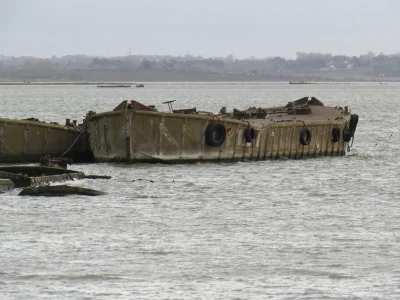
Don’t forget the 4 sunken barges included in the sale. Makes this an irresistible purchase
I think those barges are concrete, so they might still be relatively intact. There used to be quite a few of them around the Thames, including one or two afloat (I think used for storage by a trip boat company) near the Houses of Parliament, which are probably still there., and one sunk on a slipway near Woolwich Ferry (now broken up as part of redevelopment) that I fantasised about salvaging. This was partly watertight, since one of the sections remained flooded at low tide, though the other (three?) were free flooding through holes in the hull.

Cant remember the provenance, if I ever knew it, but think there may be a Mulberry connection. They wouldnt be any good for solid cargo, since there are only narrow manhole access hatches, so they either had a pontoon function (my best guess) or were for liquid cargo
 
I had a bit of a poke around.

The WWII Concrete Houseboats of Burnham-on-Crouch, Essex

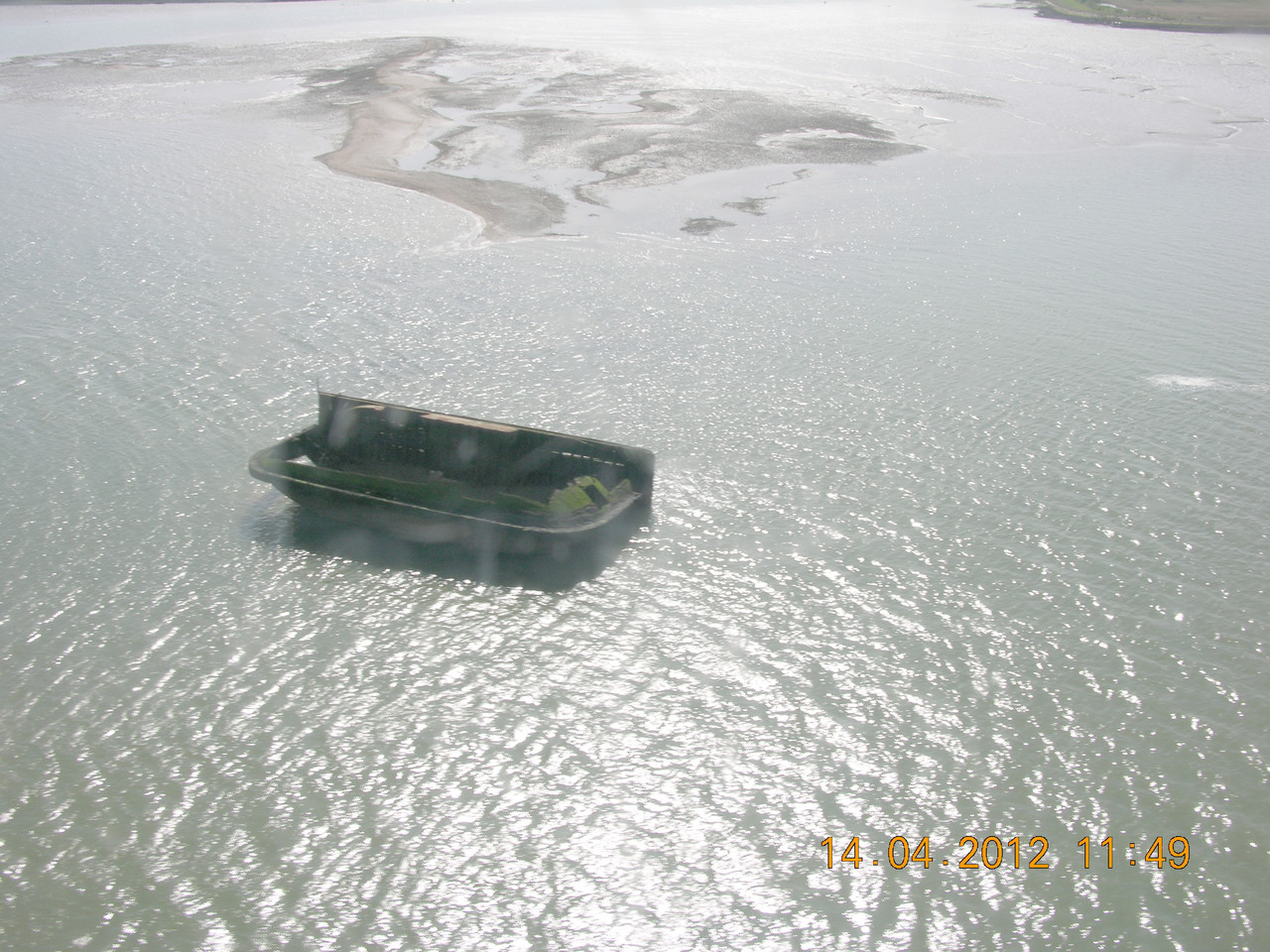
The ones I saw were apparently concrete petrol tanker barges, built for D-Day but not used, (perhaps because of the success of the Pluto project?), so no Mulberry connection..

I THINK the ones in the aerial photo of that island are the same (double ended stem headed hulls) but they are rather small in the picture so cant be certain.
 
I watched a short film once about a homeless guy who was living on Darnet Ness. The guy was clearly having a tough time of things, not helped by the fact that after a week or so on the island his dog decided ‘enough is enough’ and swam ashore without him and fecked off! It was quite a touching film actually.
 
I first visited Darnet fort back in the mid 70's with my parents & have visited it many times since. A fascinating place, the idea it was flooded due to settlement is wrong, The forts were built on a substantial deep foundation of oak tree trunks of huge length close piled deep into the estuary bottom, in turn these were covered in crisscrossing oak planks & a huge circular platform of bricks. Its effectively the same technique as was used to build Venice.
The Granite facing was built up with the interior being built from brick. The builders did place a huge iron ring round the outer wall as the weight had caused some sideways settlement during building & this was successful.
There is no serious cracking to the structure that i ever saw & structurally its in good condition.
Apart from a damp problem!
In the 70's the fort was dry & you could walk the lower levels though they were badly vandalised. All the huge slate water tanks had been shot to pieces & the place was littered with empty shotgun cartridge cases.
The fort was flooded deliberately in the late 80's early 90's to stop access nothing more, The cut through the sea wall where they flooded it is still there with the retaining dam being built of scaffolding & boards then filled in.
Interestingly a pub was built to fuel the thirsty navvies & watermen, this was named The Isles of Beauty & was located on the edge of the marsh approx 120m south east of the fort itself, its site was washed away.
I remember reading it was finally closed at the turn of the century, but not sure of the date.
Must have been a lively & character building watering hole in its day!
 
One of my friends is trying to organise a group purchase based on £5k each.

Quite what we’ll do with it afterwards isn’t clear yet.
 
Those concrete lighters.
Built when other materials were in short supply. hundreds of them still around up and down the East coast repurposed as mooring docks,breakwaters and house boats.They also built several very unsuccessfull concrete ships , one of which I helped tow, along with several lighters, into Hoo many years ago.
The sheer numbers of them still afloat confirm the construction, steel counterparts having long turned back into rust years ago.

Violette | National Historic Ships
Just type Violette into Google.
Regards the "Forts" scuttlebutt that both were supposed to have had a second storey but the weight would have caused the entire constuction to sink into the clay.
Vague recollections that concrete fuel lighters were still in use post war carrying fuel (petrol) from Grain to the wharf just below Aylesford Bridge fuel depot. ?
The fuel being carried in each tank was identified with a small coloured disc on a wire sealing the valve tap.
Once had a collection of these little tags.
1764237556094.webp
and for the Medway curious,anybody want to guess what this is/was and where ?
 
Last edited:
The blog I linked to says they were tested for use supporting the D-Day landings and as pontoons to support the roadways linking the Mulberry pieheads to the shore, and were found to be too fragile. Those are of course arduous duties, and I wouldnt necessarily take it to imply they wouldnt be suitable for more normal service afloat. Apparently they need to be well supported when taking the ground though, or they break thier backs.

Re Barge versus Lighter, they seem to have been officially barges, as indicated by the acronym PCB (Petrol Concrete Barge, I assume). My AI reckons the term Lighter is generally used to describe a vessel used for short range transfer of ships cargo in ports, while a Barge tends to be for longer range use. IF this is true, the PCB's may be B's because they were originally intended to be present at D

rs=w:1280

Full title seems to have been PCB (I assume Petrol Concrete Barge) but they, or at least #122, left the "C" off the bow number.

The blog linked also supports my assumption that the ones off the fort are PCB's
 
Last edited:
The blog I linked to says they were tested for use supporting the D-Day landings and as pontoons to support the roadways linking the Mulberry pieheads to the shore, and were found to be too fragile. Those are of course arduous duties, and I wouldnt necessarily take it to imply they wouldnt be suitable for more normal service afloat. Apparently they need to be well supported when taking the ground though, or they break thier backs.

Re Barge versus Lighter, they seem to have been officially barges, as indicated by the acronym PCB (Petrol Concrete Barge, I assume). My AI reckons the term Lighter is generally used to describe a vessel used for short range transfer of ships cargo in ports, while a Barge tends to be for longer range use. IF this is true, the PCB's may be B's because they were originally intended to be present at D

rs=w:1280

Full title seems to have been PCB (I assume Petrol Concrete Barge) but they, or at least #122, left the "C" off the bow number.

The blog linked also supports my assumption that the ones off the fort are PCB's
There are lots of them used as breakwaters on Horsey Island, in Hamford Water.
 
Those concrete lighters.
Built when other materials were in short supply. hundreds of them still around up and down the East coast repurposed as mooring docks,breakwaters and house boats.

Not just the East Coast, either. I seem to recall there are beached/sunken concrete barges (along with other craft) lining the shore at Purton, Gloucestershire, trying to prevent the River Severn eating into the adjacent Gloucester and Sharpness Canal.
 
No guesses..
It a caisson, and visible as you go into Otterham Creek.
Same as the units keeping the water out of the dry docks at Chatham.
 
No guesses..
It a caisson, and visible as you go into Otterham Creek.
Same as the units keeping the water out of the dry docks at
Well if you know thats the case I suppose it must be, but with those flared sides it seems a funny shape for that role.
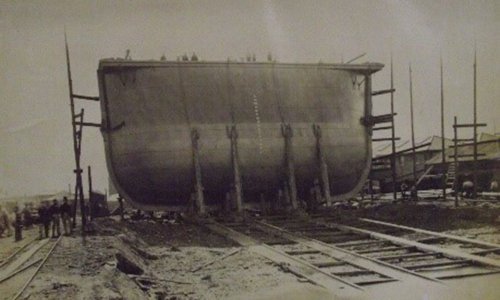
 
Well if you know thats the case I suppose it must be, but with those flared sides it seems a funny shape for that role.
1764667261695.jpeg
On This Day - HM Submarine TALENT
 
Did wonder if it was the actual one that allowed the submarine to exit the dock.
Suspect as the Subs over at Bee Ness, original plan was to cut up for scrap but when the bottom fell out of the scrap market, they were all just left to rot. ?
 
Top