
Could someone explain the numbers for gearbox ratios

tudorsailor

Well-Known Member
Joined
12 Jun 2005
Messages
2,756
Location
London
zebahdy.blogspot.co.uk
A friend and I have the same boat but with slightly different engines. He needs higher revs to achieve a similar speed. I wonder if this relates to having slightly different gearboxes.
I have Yanmar 4JH3-HTE and he has 4JH3-HTBE. This means that the gearbox on mine is KBW21 and on his KM4A.
In the manual there is an explanation of the difference between the engines + gearboxes
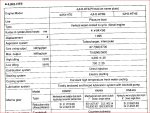
Yanmar.JPG
The S numbers are different but the G numbers are the similar. What does the S and the G mean?? Do the props turn at a similar rpm for a given engine rpm or different?

Many thanks in advance

TudorSailor
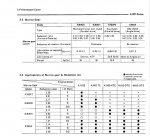
 
The S and G are simply code letters used by the maker. The higher the ratio the lower the output revs per same input revs. For instance 2.00 means for every 1000 input revs the output revs will be 500, whereas 4.00 the output would be 250.

So so if your two ratios differ then so does the relative prop speed, however the pitch and diameter of the props on the two boats may also vary to compensate.

I would expect the dataplate to show the specific gearbox ratio code as part of the nomenclature. If the ratios are close e.g. 2.14 and 2.17 the actual difference will be almost negligible. In which case differing prop sizes could account for the speed differences. Also to compare boat speeds in this way assumes both have a similar level of fouling and indeed weight / displacement. One with tanks 1/4 full will perform differently to one with full tanks.
 
Last edited:
The only major differences are the types of clutch and the fact that the KM4A has a 7 degree down angle, allowing the engine to be installed fairly level fore and aft whilst the prop shaft is angled downwards. The same gearbox has identical forward and reverse ratios instead of the more usual higher ratio astern. Identical ratios make good sense if you have a feathering propeller that is set to produce the same blade angle in either direction as such a prop is equally efficient both ways. The higher reverse ratio works better for propellors like the KiwiProp which has greater pitch when going astern.

I must confess that I have never understood why a higher ratio, meaning less propellor speed at given engine RPM is commonly used for the gearbox reverse. Fixed propellors are less efficient in generating thrust when turned backwards, so turning them slower astern seems counter intuitive unless they just cavitate if spun too fast the wrong way.
 
Last edited:
I must confess that I have never understood why a higher ratio, meaning less propellor speed at given engine RPM is commonly used for the gearbox reverse.

Probably engineering design pragmatism. Fitting in the reverse transfer gear needs space and making the reverse input gear smaller than the forward gear is as easy a way as any of fitting it all in.
 
Probably engineering design pragmatism. Fitting in the reverse transfer gear needs space and making the reverse input gear smaller than the forward gear is as easy a way as any of fitting it all in.

Anyway, how often do you run your boat boat backwards at full chat? Puts a huge strain on the steering gear. Also Makes it a bit safer if someone is heavy handed on the throttle - the boat wont go shooting off backwards out of control!
 
Top