[164147]
...
I think they just started penny-pinching and stopped including any electrical connectors. No doubt it also reduced their liability in the US market.


I think they just started penny-pinching and stopped including any electrical connectors. No doubt it also reduced their liability in the US market.
TBH I’m of the view that most modern design and suitable for purpose electrical connectors, when properly fitted, are so far ahead of choc box connectors which in my experience is what is typically used, that arguments about which type to use are a little academic. Also, again in my recent experience, the quality of the work done by many so-called marine electricians/contractors is so poor that the connections are the least of the problems to worry about.I think they just started penny-pinching and stopped including any electrical connectors. No doubt it also reduced their liability in the US market.
Toolstation is enroute to the boat, I can have a wee chat with John about the price of fish and pick up other stuff. I like Toolstation, no postage to pay.eBay is easier to buy Wago connectors and cheaper than Toolstation & Screwfix however I wouldn't recommend them for small wires as the weight of the connector can easily break the wire. I tend to use a solder connectors and heatshrink especially for Raymarine radar cables.
They're pretty easy to crimp and new plugs cost peanuts.You can, but can RJ45 connectors get through all the conducts on your boat. I know they would not survive the route through my boat.
I'd be wondering what invisible damage had done to the cable as I pulled it through tight 90/180/270° turns in conduit filled with several other cables.They're pretty easy to crimp and new plugs cost peanuts.

I’ve done a couple of RJ45 plugs with careful use of needle nose pliers when I’ve misplaced my crimpsI'd be wondering what invisible damage had done to the cable as I pulled it through tight 90/180/270° turns in conduit filled with several other cables.
As a Scot, I'm not going to buy an RJ45 crimping tool for something that I might use two or three times.
You might also look at the price of Raynet cabling.As a Scot, I'm not going to buy an RJ45 crimping tool for something that I might use two or three times.
Thankfully, I use Garmin kit.You might also look at the price of Raynet cabling.

Garmin use rj45s but yes it is much more standards compliant.Thankfully, I use Garmin kit.
Not on my cable they don't. The chartplotter connector is much bigger than a RJ45.Garmin use rj45s but yes it is much more standards compliant.
Not on my cable they don't. The chartplotter connector is much bigger than a RJ45.
I am pretty sure that the chartplotter connector is bigger than RJ45. I'll take a network cable down to the boat on my next visit and see if it fits the chartplotter, always happy to be corrected.Garmin radar cables are RJ45, but housed in a waterproof and secure body.
You can get field installable Garmin connectors, so you can cut the plug off of the plotter end of the cable and fit a new connector with the screw on collar.
I am pretty sure that the chartplotter connector is bigger than RJ45. I'll take a network cable down to the boat on my next visit and see if it fits the chartplotter, always happy to be corrected.
I have a rather ancient Garmin GPSMap 750 and not so ancient Garmin 18HD+Which plotter do you have Sandy ?
I have a rather ancient Garmin GPSMap 750 and not so ancient Garmin 18HD+
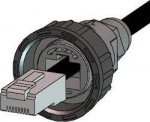
Thanks Paul, that's interesting.I suspect the locking collar is what makes you think it's bigger than an RJ45.

Thanks Paul, that's interesting.
I have enough slack in the system to pull the cut cable through to the chartplotter and have one continuous run, which to be honest I'd be more comfortable with. A job for when it gets warmer.