conbraco valves and corrosion

Thanks for the replies

The valve and seacoks are for the hose that goes from the through hull fitting to the toilet.
It's in the shower room, used 2 times a day maybe 3.
 
Thanks for the replies

The valve and seacoks are for the hose that goes from the through hull fitting to the toilet.
It's in the shower room, used 2 times a day maybe 3.


If they are physically attached to the thru-hull, and used as the valve that keeps water out of the vessel, then you'll want an 85/5/5/5 (sometimes called 85 three 5) bronze valve.

I would avoid cheap yellow brass as it will have a high zinc content and can dezincify and corrode. Thru-hulls are almost always made from 85/5/5/5 bronze or a very similar bronze unless purchased from a non-reputable source.

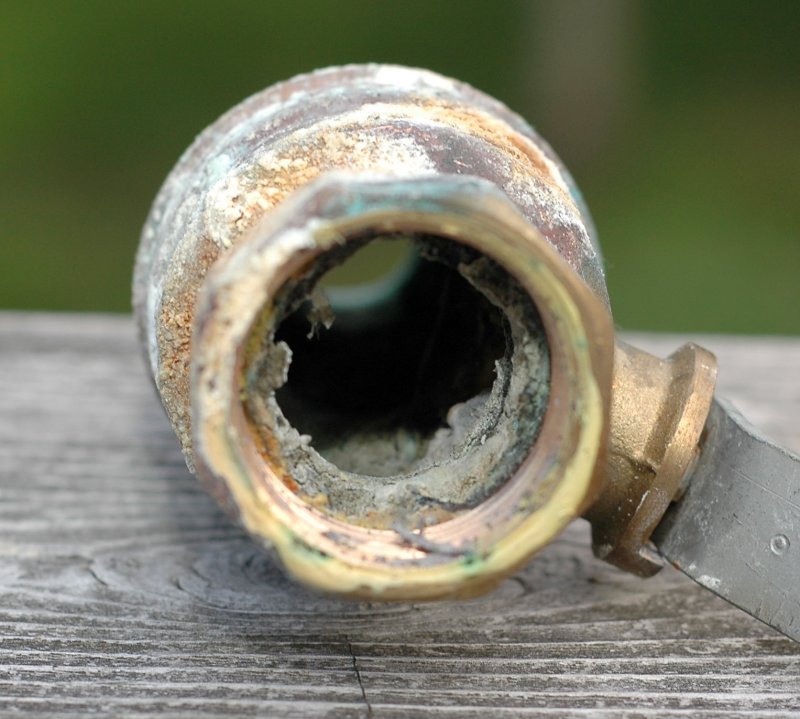
Belowis a yellow brass home center ball valve at less than one year. The ball was completely gone, as in, nothing, not there, vanished... The bronze thru-hull it was attached to was perfectly fine and showed zero corrosion..

91175624.jpg


91175621.jpg


Underwater metals should be of the same or a very similar make up to avoid galvanic issues.
 
If they are physically attached to the thru-hull, and used as the valve that keeps water out of the vessel, then you'll want an 85/5/5/5 (sometimes called 85 three 5) bronze valve.

I would avoid cheap yellow brass as it will have a high zinc content and can dezincify and corrode. Thru-hulls are almost always made from 85/5/5/5 bronze or a very similar bronze unless purchased from a non-reputable source.

I agree that 85/5/5/5 is an excellent material underwater but it comes at a price. I investigated this not long ago and found a 1 1/2 inch valve to be more than £300 in this material.

The alternative generally used is DZR, a 60/40 brass with subtle additions of other elements, notably arsenic. This is used by Blakes, for example, in their seacocks and skin fittings. A far cheaper solution and equally effective.

Your example (a very nice one!) has all the hallmarks of a galvanic corrosion problem. I am guessing that the ball was a metal further down the galvanic series than the body, hence the rapid corrosion. Valve manufacturers have traditionally been very guilty of this, hopefully they are learning.
 
I'm affrais that the stainless steel will "eat" the bronze

That is all, not the valve but the through hull bronze fitting will be eaten and the boat will be in big danger.
 
That is all, not the valve but the through hull bronze fitting will be eaten and the boat will be in big danger.

No. The stainless steel part is the handle, inside the boat. How is that going to place the boat in danger?

Take a look at the PN30 valve here. It has a carbon steel handle. I have had one on my galley drain seacock as long as I have had the boat, 15 years. Many people on this forum use exactly the same type, equally with no problems at all. Many similar ones with stainless steel handles are also in use, also without problems.
 
the stainless steel will eat the bronze.

forbiden to put together bronze and stainless steel in humid enviorment (electrolit)

see nigel calder book.
 
As Vyv says DZR is the preferred material. Any good quality chandlers will stock them. They are not expensive. I have just fitted a 19mm (same size as toilet inlet). Bronze through hull, ball valve and hose tail about £40. Just removed a 12mm intake (engine change) which was still working perfectly after 17 years.

The only negative is that most have a mild steel, often plastic coated handle, but again, not normally a problem.

The key thing is to get the body material right - do not use brass fittings intended for domestic water supplies and if you can, get a stainless handle. No problem with electrolysis as it is not in water.
 
"and if you can, get a stainless handle. No problem with electrolysis as it is not in water"

It is in the shower room, wet and humid, is that ok?

Are you sure?
 
Yes, we are absolutely 100% positive certain. Look around the inside of your boat. There are dozens of bits of stainless steel connected to brass and bronze. Are they all corroding into oblivion? No, because they are not immersed in water.

Even looking outside your boat, your manganese bronze (= modified brass) propeller is connected to a stainless steel shaft. Does the propeller corrode away every couple of weeks? No, it may be affected after 20 years but nothing that a bit of inspection cannot cope with.
 
Top