Cobra MR F57B E vhf radio connection to garmin 128 gps

Hardyowner

Member
Joined
28 Jun 2020
Messages
36
Visit site
Hi there

I want to connect a cobra MR F57B E vhf radio to a garmin 128 gps for the DSC function of the radio and to display the coordinates on it

The vhf radio is brand new and the garmin gps is quite old.

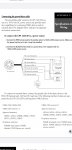
I've attached two pictures each from the respective manuals.

I'm just unsure if they are compatible with each other and as far as I can work out the vhf radio has a data in + and data in - to connect to but the gps only has a single NMEA out connection.

Any help on how to achieve this appreciated. Thanks!
 

Attachments

  • Screenshot_20200909-182433_Drive.jpg
    Screenshot_20200909-182433_Drive.jpg
    664.8 KB · Views: 40
  • Screenshot_20200909-184315_Drive.jpg
    Screenshot_20200909-184315_Drive.jpg
    813 KB · Views: 37
For me Garmin blue to Cobra green. You might need to connect the yellow to earth. Make sure the Garmin is set to output at 4800 baud, I can’t remember offhand whether it has multiple baud rates.
 
For me Garmin blue to Cobra green. You might need to connect the yellow to earth. Make sure the Garmin is set to output at 4800 baud, I can’t remember offhand whether it has multiple baud rates.
Thanks Jamie

I did wonder myself if connecting the spare yellow (-) wire to earth would work. Haven't got any experience of connecting NMEA cables. Can I ask why it needs to be set at 4800?

Cherts
 
One thing to check. What NMEA sentences will the Cobra radio accept? The should be listed somewhere in the manual, and what NMEA version is it running? NMEA 0183 is complex and is not a single homogenous system, but a set of standards to which different manufacturers applied their own methods, with some using the 12 volt negative line as an NMEA connection. The guide published by Actisense is invaluable, but I cannot now find it on their website.

There is a useful paragraph here about older Garmin units. https://www.boemarine.com/blog/post/nmea-0183-interfacing-guide/
 
Ah I see thanks, I'll have to have a play with the garmin and see what I can find in the manual in relation to the baud rate.

I'll connect the green (vhf) to blue (garmin) and as you say the black (ground) to yellow.

Thanks guys great responses
 
One thing to check. What NMEA sentences will the Cobra radio accept? The should be listed somewhere in the manual, and what NMEA version is it running? NMEA 0183 is complex and is not a single homogenous system, but a set of standards to which different manufacturers applied their own methods, with some using the 12 volt negative line as an NMEA connection. The guide published by Actisense is invaluable, but I cannot now find it on their website.

There is a useful paragraph here about older Garmin units. NMEA 0183 Interfacing Guide - BOE Marine

Thanks have just had a read, that's very useful information. Bit of a steep learning curve!

Just had a quick skim through the manual and couldn't find anything about the sentences.

Looks like my Garmin might indeed use the ground as an NMEA connection then.

Perhaps I will just have to give it a go and see what happens. Worse case I'll be upgrading the old Garmin but would be nice to use it and save some cash
 
Garmin 128s use a common ground as did most Garmin gear of that generation. Connect the +ve (NMEA output/input) wires together and connect the -ve wires to any connection to ground (-ve) as long as they are ultimately connected to the same battery it will work.

edited to add, due to the longevity of these Garmin units (I have 2 myself) this question has come up on the forums many times over the years and you can google up loads of helpful threads.
 
If anyone can now find a link to the Actisense NMEA 0183 guide, please post a link to it. I have a printed copy, but its on the boat in Turkey.
 
When I got our current boat we had a similar set up, GPS feeding the VHF with position data, that kept failing. I replaced that with a VHF with internal GPS as I consider the transmission if a Mayday location via DSC to be paramount,
 
When I got our current boat we had a similar set up, GPS feeding the VHF with position data, that kept failing. I replaced that with a VHF with internal GPS as I consider the transmission if a Mayday location via DSC to be paramount,
I have considered that option but if connected correctly why should the gps feeding the vhf fail? Also excuse my ignorance but is that purely internal and requires no external gps reciver/ antenna?
 
I have considered that option but if connected correctly why should the gps feeding the vhf fail? Also excuse my ignorance but is that purely internal and requires no external gps reciver/ antenna?
Well I wanted to mitigate the risk of it failing on a dark and stormy night when I needed to call for help.

The VHF, a Standard Horizon one, has internal GPS receiver that works flawlessly.

Note: before retiring I worked as a Safety Engineer. As a result I look at risk in a very different way to most.
 
Well I wanted to mitigate the risk of it failing on a dark and stormy night when I needed to call for help.

The VHF, a Standard Horizon one, has internal GPS receiver that works flawlessly.

Note: before retiring I worked as a Safety Engineer. As a result I look at risk in a very different way to most.

Oh I see. I suppose even without the gps working and no DSC in an emergency it would still function simply as a vhf radio in the worst case scenario.

But I agree a built in gps is definitely something to consider. ?

Safety engineer. What does that entail? I'm a refrigeration engineer and funnily enough most of the kit I work on at old fruit farms etc is particularly unsafe.
 
Oh I see. I suppose even without the gps working and no DSC in an emergency it would still function simply as a vhf radio in the worst case scenario.

But I agree a built in gps is definitely something to consider. ?

Safety engineer. What does that entail? I'm a refrigeration engineer and funnily enough most of the kit I work on at old fruit farms etc is particularly unsafe.
You are correct in saying that it will work as a VHF radio, but the huge advantage of a DSC distress call is every DSC VHF in the area will spring into life and wake the dead, the signal will travel further as it is a burst transmission and the CG need to send an ACK reply to tell your set to stop sending the message and that somebody has seen it with your position. While you can manually add your position would you have time or could you remember when dealing with an emergency?

Safety Engineering is the bit of engineering that makes sure that the things we build don't kill people. A good introduction on Wikipedia Safety engineering - Wikipedia
 
I thought all new DSC VHFs had to have a built in GPS now - clearly not based on the OP! My solution was to sell my old Icom (for £70) and buy a new model. You can buy a new Standard Horizon with built in GPS for £150ish - considered it well worth it to have the additional features and avoid this type of hassle with fiddly wiring connections.
 
Last edited:
You are correct in saying that it will work as a VHF radio, but the huge advantage of a DSC distress call is every DSC VHF in the area will spring into life and wake the dead, the signal will travel further as it is a burst transmission and the CG need to send an ACK reply to tell your set to stop sending the message and that somebody has seen it with your position. While you can manually add your position would you have time or could you remember when dealing with an emergency?

Safety Engineering is the bit of engineering that makes sure that the things we build don't kill people. A good introduction on Wikipedia Safety engineering - Wikipedia
Yeah you make a valid point there and when you need it you will appreciate it.

I may consider getting one with the built in gps then. What I was trying to achieve was a lower cost vhf to hook up to my old garmin and save some money in the process.

Ah I see cheers I'll check that out ??
 
Last edited:
I thought all new DSC VHFs had to have a built in GPS now - clearly not based on the OP! My solution was to sell my old Icom (for £70) and buy a new model. You can buy a new Standard Horizon with built in GPS for £150ish - considered it well worth it to have the additional features and avoid this type of hassle with fiddly wiring connections.
Yeah staring to consider if that's the better option for the sake of simplicity
 
Garmin 126/128s are providing NMEA positions for hundreds of thousands of boats around the world, and have been doing for years. I’d try it before shelling out unnecessarily if I were you.
 
Garmin 126/128s are providing NMEA positions for hundreds of thousands of boats around the world, and have been doing for years. I’d try it before shelling out unnecessarily if I were you.
Cheers yeah seems I've opened a can of worms.

To save the expense of replacing the gps was my original plan.

Didn't realise there may be compatibility issues and these 'sentences' and 'baud rates' etc. Love to learn though!
 
Also worth noting that Garmin 128s go for surprising money on Ebay. I just sold one for £160 even without an aerial, and they go up to £200 - you might factor that in to your decision if you do upgrade as it gives a reasonable sum towards something else.
 
Top