Circuit Breakers

Why, what is it's purpose ?

It is difficult to know without tracing the circuit. I suspect the windlass.

Anyway, its poor physical appearance suggests it has reached the end of useful life and as it is easily and reasonably inexpensively replaced, that is what I would recommend.
 
It is difficult to know without tracing the circuit. I suspect the windlass.

Anyway, its poor physical appearance suggests it has reached the end of useful life and as it is easily and reasonably inexpensively replaced, that is what I would recommend.

You think the windlass is supplied by 10mm cable?

Plus, in post #11 the OP identifies the windlass breaker.

The poor condition one is in the main panel supply cable, at the load end. It's in the wrong place, it's not protecting anything and it's impossible for it to do anything where it is. It does not need replacing it needs throwing away.

As for suggestion he uses an AC rated, 80A domestic breaker, where he needs a 100A DC rated breaker, you think that's good advice ?

Why not stick with the correct device?

https://www.lofrans.com/product/77-circuit-breakers/6411-thermal-circuit-breaker-surface-mounted
 
You think the windlass is supplied by 10mm cable?

Plus, in post #11 the OP identifies the windlass breaker.

The poor condition one is in the main panel supply cable, at the load end. It's in the wrong place, it's not protecting anything and it's impossible for it to do anything where it is. It does not need replacing it needs throwing away.

As for suggestion he uses an AC rated, 80A domestic breaker, where he needs a 100A DC rated breaker, you think that's good advice ?

Why not stick with the correct device?

https://www.lofrans.com/product/77-circuit-breakers/6411-thermal-circuit-breaker-surface-mounted
The pictured circuit breaker is DC rated. It is fine on 12v DC system. These circuit breakers are commonly used on low voltage DC systems.

If the wire is 10mm a 80A breaker would be too high, a breaker around 50A would be more appropiate but this depends on the wire insulation rating, if it passes through the engine space etc. From the photograph I suspect the wire is thicker than 10mm and this fits in with the 80A breaker, but we need the OP to measure the wire to be certain.

As I have indicated the combined magnetic and thermal circuit breaker pictured in post #11 is superior to a thermal only circuit breaker for the anchor windlass.
 
The pictured circuit breaker is DC rated. It is fine on 12v DC system. These circuit breakers are commonly used on low voltage DC systems.

If the wire is 10mm a 80A breaker would be too high, a breaker around 50A would be more appropiate but this depends on the wire insulation rating, if it passes through the engine space etc. From the photograph I suspect the wire is thicker than 10mm and this fits in with the 80A breaker, but we need the OP to measure the wire to be certain.

As I have indicated the combined magnetic and thermal circuit breaker pictured in post #11 is superior to a thermal only circuit breaker for the anchor windlass.

Why don't you read what has been previously typed ?

The breaker is at the load end of the supply cable, it is serving no purpose.

The 80A breaker for the windlass is underratted it needs to be 100A, so does need changing.
 
Paul, perhaps you are seeing something in the photos that is not clear to me. The wires disappear into a conduit and I am not sure why you are so certain the breaker posted in post #11 is on the load end of the supply cable. Perhaps the OP can trace the circuit.

Assuming you are correct If it is on the load side I agree the circuit protection function is redundant, but it will still function as main switch which is fine, providing the IC rating is adequate. Removing the circiut breaker and joining the bare ends of the wire is likely to more dificult than simply replacing like with like and replacing the circuit breaker. The switch function would be lost.

In terms of the circuit breaker rating in post #11 the difference between 80A and 100A for an anchor windlass is very nominal. If an 80A breaker has not been a nuisance tripping, I would not recommend the expense of changing it, especially for an inferior thermal only circuit breaker.
 
Last edited:
Paul, perhaps you are seeing something in the photos that is not clear to me. The wires disappear into a conduit and I am not sure why you are so certain the breaker posted in post #11 is on the load end of the supply cable. Perhaps the OP can trace the circuit.

If it on the load side it will still function as main switch which is fine, providing the IC rating is adequate. Removing the circiut breaker and joining the bare ends of the wire is likely to more dificult than simply replacing like with like and replacing the circuit breaker. The switch function would be lost.

In terms of the circuit breaker rating, the difference between 80A and 100A for an anchor windlass is very nominal. If an 80A breaker has not been a nuisance tripping, I would not recommend the expense of changing it, especially for an inferior thermal only circuit breaker.

I'm seriously losing the will here.....

Post #1 shows the suspect breaker, not the one in post #11. It's behind the electrical panel, so it's at the load end of the supply cable, the batteries are not behind the panel, are they ? If the supply cable needs protecting it needs to be done close to the batteries, as i have already stated.

The OP states that he has "a very nice "domestic" isolator for everything emanating from the batteries ", so he has no need of a switch behind the panel. If the wires cannot easily be joined he could run another cable, getting rid of the suspect breaker, which cannot function as a breaker and he doesn't need as a switch. It also removes an unnecessary failure point that could result in a total loss of power at the panel.

The breaker in post #11 has been identified by the OP as being that of the windlass. I have posted a link to the correct type of breaker, as specified by the windlass manufacturer. I have also posted that this breaker should also be located as close to the power source as possible, fitting it in behing the electrical panel could result in several metres of unprotected 35mm/50mm cable.

Have you actually read any of this thread ?
 
The pictured circuit breaker is DC rated. It is fine on 12v DC system. These circuit breakers are commonly used on low voltage DC systems.

If the wire is 10mm a 80A breaker would be too high, a breaker around 50A would be more appropiate but this depends on the wire insulation rating, if it passes through the engine space etc. From the photograph I suspect the wire is thicker than 10mm and this fits in with the 80A breaker, but we need the OP to measure the wire to be certain.

As I have indicated the combined magnetic and thermal circuit breaker pictured in post #11 is superior to a thermal only circuit breaker for the anchor windlass.

It is NOT DC rated. It is also a C curve breaker, meant for normal loads. A D curve breaker is better suited to high inrush devices, such as motors.

IMO, always fit the correct device.
 
I'm seriously losing the will here.....

It happens to the best of us :).

I would recommend replacing like with like. The pictured circuit breakers are fine for 12v DC according to manufacturer's specifications.

But let's agree to disagree about the best way forward for the OP.
 
It happens to the best of us :).

I would recommend replacing like with like. The pictured circuit breakers are fine for 12v DC according to manufacturer's specifications.

But let's agree to disagree about the best way forward for the OP.

Like for like doesn't work if the original installer fitted the wrong equipment.

Sorry, but no mention of DC in the manufacturers specifications.

1635790967632.png
 
Like for like doesn't work if the original installer fitted the wrong equipment.
First of all: guys, don't get cross... all of this is very instructive, for me.
Yes: I think someone (don't know who) may have fitted the wrong equipment, at some stage. Possibly multiple times.

Let's stick to the windlass breaker, for now.
I see that Lofrans sell breakers for an extortionate cost. I also see that this has been discussed before (Lofrans v Generic Circuit Breaker).

Now, for example, I find that Cactus quotes >£200 (Lofrans 100A Thermal Circuit Breaker (187333))

While this one here (https://www.amazon.co.uk/RED-WOLF-Waterproof-Inverter-Protection/dp/B0946RPS5H) sells at £15, give or take.

They look similar (to the ones @PaulRainbow posted), but ARE they the same? The description of the Red Wolf appears to fit. Is it a scam?
 
Last edited:
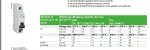
Merlin Gerin have been taken over by Schneider. The Merlin Gerin Multi 9 has been replaced the Schneider Multi 9. This is what I would suggest the OP uses, although there are many identical Din rail circuit breakers from similar manufacturers that are equally suitable. Prices from different manufacturers vary enormously in different countries and all of the Din rail circuit breakers will fit the same mounting bracket so pick any reputable brand although check the DC rating to be sure.

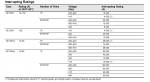
You can see from the catalogue that the Schneider Multi 9 is OK for up to at least 60v DC, so it is perfectly OK for 12v DC with a very healthy IC rating.

I have the specifications for the original Merlin Gerin Multi 9 on an older computer and It basically identical and suitable for similar DC voltages.

The original installer has not made a mistake installing this equipment. It is perfectly suitable in my view and the OP can replace like with like which is always the easiest option.

The technical details for the Schneider Multi 9 is listed below. Note the 60v+ DC rating.

image.jpeg
 
Last edited:
Top