Charging domestic bank thats currently only charged via shore power.

Contest1

Well-Known Member
Joined
16 Apr 2011
Messages
689
Location
Dublin and Alicante.
Visit site
Hi, touched on this some years ago but never sorted it as day cruising didn't cause any problem.
My Contest engine only charges the starter battery, the shore power charges both starter and domestic via a built-in fairly decent charger that also powers 220 volt sockets.
Not really an issue for day sails but on cruise the with a few nights anchoring a couple of years ago the domestic did fail and had to be recharged in a very expensive Formentera marina overnight.
At the time I bought jump leads as a stop gap but never need to use them so can't be sure if they would work.
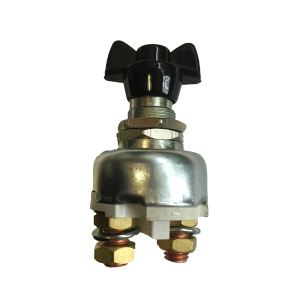
My starter battery has two , live and neutral , key switches directly wired using normal battery heavy cable that must be switched on to start the engine via the start button. Once started the alternator charges only the starter battery. I thought this odd but was advised it was not unusual in Scandinavian boats from the 70s.
May initial thought was to permanently connect the the jump leads, replacing the crocodiles with stud lugs on the switched key outputs and crocodile onto the domestic now pair of 110ah agms if I was ever out anchoring for more than a couple of nights. Bit like jump starting an old style car engine before all the electronics made it a dodgy proposition.
Its not generally how I sail as I prefere overnights mostly in port or maybe an occasional overnight on the hook.
Bit long winded but wondering if the jump leads are a realistic answer given I have not had any need to use them since to one occasion that they might have been useful.
I have a wind gen that's connected through the shower power charger and that does keep the domestic and starter well topped up when I'm away from the boat for months at a time and the shore power is disconnected.
Any advice welcome, bearing in mind I've never had a problem when port hopping.
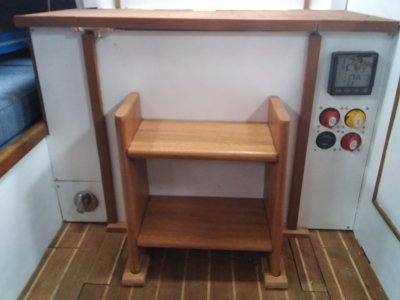
 
That does sound odd. The simple way of getting charge from the alternator is to use a charge splitter such as a VSR between the start battery and the house bank. I used one of these. force4.co.uk/item/BEP/Dual-Battery-Single-Engine-DVSR-Cluster/94Z

Simple to wire up, gives independent switching for each bank and the ability to parallel so that you can use the house bank in an emergency to start the engine. The photo shows what it looks like in my boat.
 

Attachments

  • IMG_20230223_132529.jpg
    IMG_20230223_132529.jpg
    447.3 KB · Views: 28
My starter battery has two , live and neutral , key switches directly wired using normal battery heavy cable that must be switched on to start the engine via the start button.
Not answering your question (Tranona has dealt with that) but I think 2 battery isolator switches is unnecessary. You could reasonably and safely get rid of the negative side switch and put it to some other use.

I used mine (another Scandinavian boat) to make an emergency domestic to engine connection.
 
That does sound odd. The simple way of getting charge from the alternator is to use a charge splitter such as a VSR between the start battery and the house bank. I used one of these. force4.co.uk/item/BEP/Dual-Battery-Single-Engine-DVSR-Cluster/94Z

Simple to wire up, gives independent switching for each bank and the ability to parallel so that you can use the house bank in an emergency to start the engine. The photo shows what it looks like in my boat.
Thank you Tranona. Looks great but a bit more than I wanted to spend for issue thatc occured once in 10 years . I did buy one of the 1, 2 both and off that worked great on my old Centar but haven't decided if it's the answer.
 
Not answering your question (Tranona has dealt with that) but I think 2 battery isolator switches is unnecessary. You could reasonably and safely get rid of the negative side switch and put it to some other use.

I used mine (another Scandinavian boat) to make an emergency domestic to engine connection.
Thanks , That's something along the lines I'm tthinking off. The selection switch, 1,2 both and off, I had on the old Westerly seemed to work well and if memory serves did the job without much in the way of electronics. Maybe that could be a way forward.
 
The really cheap option is what I had on my previous boat: All the negatives connected to the engine block; A 0-1-2-B switch, common to the starter, 1 to the engine battery, 2 to domestics, and a simple cube relay operated from the field coil (charge warning light) connection on the alternator. A VSR would be better, but the cube relay would be change from a fiver.

Off isolates the engine battery, 1 for normal use, 2 to start from the domestic, both to parallel the two, which I never had to use, but would allow charging the domestics if the relay fails.
 
Yup. Wasn’t suggesting it was a budget option, although wiring it in is easy and quick which might be a factor. Ditto the VSR of course.
Sorry, wasn't meaning to suggest your well thought out response was not practical and clealy it would be an elegant but expensive solution if I was more than a port hopper.
I was really wondering if the jump leads could actually be used to boost the domestic bank in a simelar situation as I described on my post. My old Penta 2002 has little or no electronics so unlikely to suffer as modern engines might.
 
The really cheap option is what I had on my previous boat: All the negatives connected to the engine block; A 0-1-2-B switch, common to the starter, 1 to the engine battery, 2 to domestics, and a simple cube relay operated from the field coil (charge warning light) connection on the alternator. A VSR would be better, but the cube relay would be change from a fiver.

Off isolates the engine battery, 1 for normal use, 2 to start from the domestic, both to parallel the two, which I never had to use, but would allow charging the domestics if the relay fails.
 
It is really is unusual not to be able to charge your domestic bank from the engine and very simple to arrange it. The VSR at about 375 plus a bit of cabling is the simplest way. The engine battery needs little charge so as soon as the engine is running the VSR feeds the charge to the house battery. The switch set up I originally suggested is jut a neat way of both switching the charge and providing isolators for each bank and the possibility of using the house bank to strt the engine. Then you have all possibilities covered.
 
Thanks
Sounds very like my old Centar set up. I have the selector switch and could look into the set up you describe.
Still tempted to pursue my original idea regarding the jumper cables in the event the domestic was being pulled down . My load while on the hook is minimal and I've not had any issue since the first failure, now all leds and no fridge while away from the dock.
 
I appreciate all the advice and like to thank all who took the trouble to reply.
If I do make any changes I'll post again.

Be great to see your solution. I know nowt but used to have two Lucas isolator switches for charging and starting:

1760868448853.png

Switch 1 you got start and charge to batt 1
Switch 2 and you got start and charge to batt 2
Switch Both and you got start and charge to Both
A separate switch controlled the domestics from battery 2, which also had a small solar feed.

Probably very close to what you have, simple to set up, easy to trouble shoot. Liked it a lot.

Nowadays you could get rid of one switch, use your batteries as one bank and keep a cheap engine jump starter for back up. (which thinking about it may well be pretty much what you are suggesting in post 1 :) )

.
 
https://amzn.eu/d/8fCy2cO

Honestly get one of these. It's a voltage sensitive relay from victron and it's under 40 quid. I added one to my contessa. Piece of piss. Works fully independently and just does the job quietly in the background no fuss. You would struggle to wire it wrong and it will look after you.

The other option is like what stemar said and I did on my classic camper years back - an old automotive relay with the trigger taken from the alternator light so it only links the batteries when the engine is charging. I got the relay from silver lake scrappies as I was there anyway so total cost was 20p but even new it would give you change from a tenner.
 
Top