
Can a pressure washer cause osmosis?

jj1000

Member
Joined
12 Sep 2007
Messages
24
Location
Thailand
Visit site
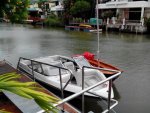
I recently sold my speedboat and am very happy to be returning to sail. After agreeing the sale I gave the boat a final wash down with a cold water power washer. A day or so later dozens of small blisters 1-2mm appeared in one area of the topsides gel coat. Ooops, the buyer was not too pleased but I had sold it cheap so he took it away anyway.

There was definitely no blistering before so I'm thinking maybe I got the nozzle too close to the deck and injected some water into the gel coat. The boat was a Four Winns from 1995.

So the worry now is could the same thing happen to my beloved new (to me) yacht if I clean it with the power washer?

Cheers John
 

Attachments

  • Speedboat.jpg
    Speedboat.jpg
    60.2 KB · Views: 0
Osmosis is a very slow -- glacially slow -- process. It'd couldn't possibly form in the time it takes to wash a boat.

Your blisters would have been the result of some pre-existing condition: probably just tiny voids (air bubbles) in the gelcoat, but possibly osmotic. In either case, your power-wash didn't cause them, it simply revealed them.
 
Hi Mac

Thanks for your feedback. Yes it's likely a pre-existing problem with the quality of the gel coat. Something in the gel coat expanded in lots of discrete spots under the surface within days of power washing. Maybe the high pressure water penetrated the surface and started some chemical reaction, or maybe it compressed the air in tiny voids which then expanded to form blisters. I really don't know. The affected area was in the top sides so easily visible - surface was smooth before washing and blistered shortly after.

I'm sure most of us have used power washers on out boats at some time and this doesn't seem to be a known problem so I guess it was just a one-off.

Thanks John
 
Mac is correct. I recall doing tests of osmotic pressure through a membrane that was intended to allow the passage of water. I had to leave the test overnight before it ran to completion, which I would guess will be the minimum time before sufficient pressure could build up to form blisters in gel coat.
 
John, "by topsides" do you mean the bit between the waterline and the gunwhale, or the...er, whatever the deck and stuff is called on a speedboat? (Not being picky, but it would be good to be clear, as I'll explain).

Osmosis happens in GRP surfaces which are immersed in water, or have water lying on them for very extended periods. So underwater areas can suffer from osmosis. So can poorly-drained areas of deck/cockpit etc. Pretty much the last place you'd expect to find osmosis is the topsides...i.e. the bits twixt sea and gunwhale. If that's where you'r blisters are, it's highly unlikely they're osmotic.

To add to Vyv's comments, you don't need a jet-wash: in the UK there's plenty enough moisture in the air to 'feed' osmotic blisters. Bascially, the chemical products of osmosis are hygroscopic: they absorb water, and GRP is porous enough to allow water through, the result being liqui-filled blisters or voids. (If popped, these have a characteristic vinegary smell.) Any such chemistry takes an age to develop (the "glacially slow" bit I mentioned early). If that chemistry isn't present, any blisters which appear cannnot be osmotic in origin.
 
Top