

Dellquay13
Well-Known Member
Hi all,
My first yacht, a 1980 Foxhound has just been delivered to the boat yard, 280miles away from home, in the middle of covid lockdown.
When I am finally allowed to travel and start working on it, I need to get the boat prepped into a reasonable condition asap, to get some experience in it this summer. I can spend a lot more time and attention and maybe money next spring when things are hopefully coming back towards normal. Common layup jobs like engine service and hull antifoul are not new to me, but dealing with keels is.
I can't afford expensive processes like shotblasting, or weeks of layering thin coats of anything a little bit at a time, because it's a 10 hour round trip.
Will my keels be cast iron, so a little bit porous? It's spent years in Cardiff bay in freshwater and will be going into salt water, does that make a difference?
There are no sign of keel anodes, and as the boat seems to have lasted 40 years without, do I need some fitting, and how?
To get me through to the winter haul out, can I just do this?
1 leave the keels a few weeks to gently weep out some moisture, while I'm not allowed to travel anyway
2 wire brush on a grinder the worst of the rust away
3 treat with fertan or kure-rust etc
4 a few coats of primer
5 a few coats of antifoul?
that sounds like 2-3 days continuous on site, while doing other stuff to fill the days up, like getting the mast ready for the crane, and i hope I can do that around Easter.
Bearing in mind I need a quick route to a seasons use, when I might even decide to sell it on and get my motor cruiser back out of storage, are there any glaring holes in my plan?
looking forward to your thoughts...
chris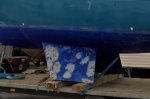
My first yacht, a 1980 Foxhound has just been delivered to the boat yard, 280miles away from home, in the middle of covid lockdown.
When I am finally allowed to travel and start working on it, I need to get the boat prepped into a reasonable condition asap, to get some experience in it this summer. I can spend a lot more time and attention and maybe money next spring when things are hopefully coming back towards normal. Common layup jobs like engine service and hull antifoul are not new to me, but dealing with keels is.
I can't afford expensive processes like shotblasting, or weeks of layering thin coats of anything a little bit at a time, because it's a 10 hour round trip.
Will my keels be cast iron, so a little bit porous? It's spent years in Cardiff bay in freshwater and will be going into salt water, does that make a difference?
There are no sign of keel anodes, and as the boat seems to have lasted 40 years without, do I need some fitting, and how?
To get me through to the winter haul out, can I just do this?
1 leave the keels a few weeks to gently weep out some moisture, while I'm not allowed to travel anyway
2 wire brush on a grinder the worst of the rust away
3 treat with fertan or kure-rust etc
4 a few coats of primer
5 a few coats of antifoul?
that sounds like 2-3 days continuous on site, while doing other stuff to fill the days up, like getting the mast ready for the crane, and i hope I can do that around Easter.
Bearing in mind I need a quick route to a seasons use, when I might even decide to sell it on and get my motor cruiser back out of storage, are there any glaring holes in my plan?
looking forward to your thoughts...
chris
Last edited:


