
Best way to stop a leak?

Tryweryn

Well-Known Member
Joined
25 May 2012
Messages
286
Location
Pwllheli
Visit site
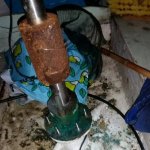
gland.jpgIve done the gland packing and its ok no leaks. Below the tightening nuts you can see a plate with loads of bolts that fix it to the boat hull. I have noticed the sealant between must have gone as you get a drop of water every minute. I dont want to take it out of the water for this as it has just gone in. What is the best way to stop this leak?
 
Ive done the gland packing and its ok no leaks. Below the tightening nuts you can see a plate with loads of bolts that fix it to the boat hull. I have noticed the sealant between must have gone as you get a drop of water every minute. I dont want to take it out of the water for this as it has just gone in. What is the best way to stop this leak?

I had a leak recently and the good folks on here came up with CT1 Sealant which can even be applied underwater. My leak sealed itself without any intervention but as a temporary measure CT1 looks as though it would be perfect until you lift out at the end of the year.
 
I had a leak recently and the good folks on here came up with CT1 Sealant which can even be applied underwater. My leak sealed itself without any intervention but as a temporary measure CT1 looks as though it would be perfect until you lift out at the end of the year.
Googling it thanks...
 
You can't stop that leak successfully with the boat in the water. If you apply any sealant while water's leaking in, the water will just push the sealant out of the way.
 
pvb is probably correct, but if it is easy to get at, some quick curing sealant may do it.

You could try giving those through bolts a careful try with a spanner but there is an element of jeopardy, as it could increase the flow.

How big/efficient is your bilge? Yahoo tells me there are 15,140 dribbles in a gallon and 1,140 minutes in a day. So leave it as it is and you should get a gallon every couple of weeks. I would carry on regardless - and keep an eye on it.
 
The good news is this is the leak I couldn't find last year. It seems ct1 clings to wet surfaces and maybe the drops are so slight it wont force the sealant away. They say it can be used under water.
 
The good news is this is the leak I couldn't find last year. It seems ct1 clings to wet surfaces and maybe the drops are so slight it wont force the sealant away. They say it can be used under water.

Yes, it can be used under water - but then the water pressure is forcing it in to the hole. With your leak, the water pressure is forcing it out of the hole!
 
Cant tell exactly from your pic but if it is leaking from the joint under the flange plate and you have enough access can you wrap self amalgamating tape around the joint as a bodge to last until the next lift out and then do a proper repair ?
Pete
 
Couldnt you just put some epoxy putty like milliput yellow/grey stuff over it. It dries like concrete and then when you take it out of the water next, then use a dremmel or something similar to cut/sand it off the epoxy?

I did this to the thru-hull transducer, as it was leaking a bit. Worked perfectly - no more leaks and has been dry as anything for the last month.
 
A leak of this magnitude is not going to threaten your boat's survival but does need fixing properly sometime. I don't think CT1 is the answer, you always need to seal on the pressure side. Unless it has magical properties, it won't do this. Use milliput/self amalgamating tape/other to sort it for now and carry on sailing, do a proper repair when next dried out.
 
Top