B2B more efficent than alternator charging?

Travelling Westerly

Well-Known Member
Joined
20 Dec 2019
Messages
460
Location
Dorset
Visit site
Im wondering about the value of having a Sterling 12v 60A B2B to charge my house battery as opposed to my current setup.

Present set up;

115A alternator charging 110Ah start battery, 230Ah house battery & 100Ah BT/windlass battery via a Victron 3 way Argo Fet.

I also have a mains Sterling Pro Ultra 30A charging the house and starter battery when alongside and a Victron MPPT 100/20 charger with 100w solar panel feeding the house battery for when at anchor.

Also fitted a Sterling alternator protection device ready for future upgrade to LiFEPO4 upgrade (dump protection).

Im thinking about fitting the Sterling 12v 60A B2B, source/starter batt to target/house battery and disconnect my Argo Fet output to house battery.

Will the B2B provide a faster and more efficent way of charging the house battery as opposed to the alternator?

I live aboard full time and often anchor up for a week or so, finding sometimes I need to run the engine up to charge the house battery hence the B2B question charging the house battery faster.

Im going to put another 400w of solar into the equation next month so that should help and Im contemplating a hybrid LiFEPO4 setup also making the B2B attractive to charge the new hybrid bank.

I dont want it to decend into a LFP thread, its the B2B value im after.

Thanks
 
Short answer, no, leave it as it is.

If you're planning Lithium, don't charge the Lithiums from the engine battery via a B2B, it defeats a key advantage of Lithium, that being the ability to be charged super fast. Better to use all charging sources to charge the Lithiums and charge the engine battery from them via a B2B.
 
What is your average daily usage?

I have a 70AH alternator that charges:
  1. 390AH house bank
  2. 110AH starter
  3. 110AH windlass
with ease. I also have shore power when in a marina.

My average daily usage is 50AH when underway and about 5AH at anchor.
 
Short answer, no, leave it as it is.

If you're planning Lithium, don't charge the Lithiums from the engine battery via a B2B, it defeats a key advantage of Lithium, that being the ability to be charged super fast. Better to use all charging sources to charge the Lithiums and charge the engine battery from them via a B2B.
Nice one Paul, great help as always - cheers (y)
 
Im wondering about the value of having a Sterling 12v 60A B2B to charge my house battery as opposed to my current setup.

Present set up;

115A alternator charging 110Ah start battery, 230Ah house battery & 100Ah BT/windlass battery via a Victron 3 way Argo Fet.

I also have a mains Sterling Pro Ultra 30A charging the house and starter battery when alongside and a Victron MPPT 100/20 charger with 100w solar panel feeding the house battery for when at anchor.

Also fitted a Sterling alternator protection device ready for future upgrade to LiFEPO4 upgrade (dump protection).

Im thinking about fitting the Sterling 12v 60A B2B, source/starter batt to target/house battery and disconnect my Argo Fet output to house battery.

Will the B2B provide a faster and more efficent way of charging the house battery as opposed to the alternator?

I live aboard full time and often anchor up for a week or so, finding sometimes I need to run the engine up to charge the house battery hence the B2B question charging the house battery faster.

Im going to put another 400w of solar into the equation next month so that should help and Im contemplating a hybrid LiFEPO4 setup also making the B2B attractive to charge the new hybrid bank.

I dont want it to decend into a LFP thread, its the B2B value im after.

Thanks

It's sensible of you to think ahead if your are planning an LFP system. It is true that LFP is more efficient than lead acid at harvesting solar, so on sunny days you will have all the power you need, but come winter-time or a series of cloudy days you may find a B2B is disappointing in how much it will give you in compensation for low solar yield. Check the other current LFP thread and you will see sailaboutvic describing this problem. He has good solar but high demands and he is now contemplating other forms of charging as his B2B is not cutting it as winter approaches. A forum member a couple of years back described an Atlantic crossing, following an LFP conversion, with good solar but a 60amp Sterling B2B. He found it very disappointing. It ran hot and then would switch itself off to cool down so he ended up using a lot of fuel during dull days. So I agree with Paul Rainbow about all charging going to the LFP and that is the route I took even though it doubled the cost of my installation to add a Balmar alternator, external regulator and serpentine belt upgrade. Apart from the cost, I haven't regretted it for a moment. You could of course spread the cost by getting alternator upgrades first - they will improve your lead acid charging now and be all set for the eventual LFP transition.
 
Last edited:
Is a B2B more efficient at battery charging? Well yes but... The B2b takes the voltage from the starter battery and alternator and raises it from 14v to say 15+ volts to induce a greater charge current in to house batteries. There is some inefficiencies in this process perhaps 5% lost in heat. So alternator has to provide additional current 15/14 to provide the additional voltage plus that inefficiency. But the end effect is that for a given duration of engine run you can have the alternator providing a high current right through the run period. Whereas with out B2B the batteries will take less current at 14v and this current will taper off through the engine run period. So for say a one hour engine run you can get more amp hours in to batteries with B2B than without. All assuming you alternator (and drive belts) and engine speed can provide the power.
Now the charge current in to a battery with straight alternator regulated 14v depends on the discharge state of the battery and the battery bank size. So with a large battery bank and limited time battery charge engine run you can get a lot of amps in to batteries before the charge rate tapers off. So while you won't fully charge the batteries you will get a lot of AH in to them which you can take out. This may lead to a situation where B2B is not so much better than with out. Monitor charge current in to batteries or use a battery monitor to find just how much better a B23B is. Perhaps comparable in price B2B to another deep cycle battery might be a better option. Or an alternator controller that gives the high charge voltage might also be a better deal. ol'will
 
Short answer, no, leave it as it is.

If you're planning Lithium, don't charge the Lithiums from the engine battery via a B2B, it defeats a key advantage of Lithium, that being the ability to be charged super fast. Better to use all charging sources to charge the Lithiums and charge the engine battery from them via a B2B.
now I am confused.

A professional specialist wrote to me that it would be better for us to have:

alternator>>Lead/acid>>B2B ("dcdc")>>Lithium

Why is this wrong, in your opinion?
 
now I am confused.

A professional specialist wrote to me that it would be better for us to have:

alternator>>Lead/acid>>B2B ("dcdc")>>Lithium

Why is this wrong, in your opinion?

The alternator can only charge the LA battery at LA charging rates, which isn't very fast. If you charge the Lithiums from the alternator they can be charged at a much faster rate. One of the main advantages of Lithium is the rate at which they can be charged, if you do it as above, you throw that advantage away.

Do note though, additional costs and equipment are required to charge the Lithiums from the alternator, to protect the alternator from the high current demands of the batteries.
 
The alternator can only charge the LA battery at LA charging rates, which isn't very fast. If you charge the Lithiums from the alternator they can be charged at a much faster rate. One of the main advantages of Lithium is the rate at which they can be charged, if you do it as above, you throw that advantage away.

Do note though, additional costs and equipment are required to charge the Lithiums from the alternator, to protect the alternator from the high current demands of the batteries.
OK, thanks. So, in this equation, what is X?

alternator>>X>>Lithium>>B2B (DCDC)>>Lead>>cranking starter
 
Short answer, no, leave it as it is.

If you're planning Lithium, don't charge the Lithiums from the engine battery via a B2B, it defeats a key advantage of Lithium, that being the ability to be charged super fast. Better to use all charging sources to charge the Lithiums and charge the engine battery from them via a B2B.
I can see that as a good solution now but
It may be a different matter once there is another 400w of solar installed. Most of the day to day charging will easily be achieved by the then 500w of solar. The need for alternator fast charging will be hugely reduced. For us with 720w of solar, alternator charging is never required.
it may be different if the OP intends to change the way he uses his lithium battery. For example, electric cooking. However, running the engine and burning diesel to be able to cook seems a bit crazy
 
OK, thanks. So, in this equation, what is X?

alternator>>X>>Lithium>>B2B (DCDC)>>Lead>>cranking starter

Usual procedure is to fit a high output alternator with an external regulator. Without the ability to limit the alternator output the Lithiums can just run the alternator flat out for an extended time and it can overheat.
 
I can see that as a good solution now but
It may be a different matter once there is another 400w of solar installed. Most of the day to day charging will easily be achieved by the then 500w of solar. The need for alternator fast charging will be hugely reduced. For us with 720w of solar, alternator charging is never required.
it may be different if the OP intends to change the way he uses his lithium battery. For example, electric cooking. However, running the engine and burning diesel to be able to cook seems a bit crazy

The key question was "Will the B2B provide a faster and more efficent way of charging the house battery as opposed to the alternator? " and the answer to that is "No".

You might be correct that having 500W of solar will negate running the engine, but for full time liveaboard in the UK, in Winter, i'm not so sure. Although we don't know the OPs power consumption (probably low if 100W is almost enough in Summer). He might even find that with 500W of solar he won't want to fit Lithiums.

But if he does fit Lithiums he'll be better off charging them via all charging sources as the will charge faster than his LA engine battery, he can then use a B2B to charge the engine battery from the Lithiums, it wouldn't actually need charging much, most of the time anyway).

Personally, i certainly would not run the engine for electric cooking (others may disagree). I'm happy to cook with gas, a couple of 4.5kg bottles last me all year.
 
The key question was "Will the B2B provide a faster and more efficent way of charging the house battery as opposed to the alternator? " and the answer to that is "No".

You might be correct that having 500W of solar will negate running the engine, but for full time liveaboard in the UK, in Winter, i'm not so sure. Although we don't know the OPs power consumption (probably low if 100W is almost enough in Summer). He might even find that with 500W of solar he won't want to fit Lithiums.

But if he does fit Lithiums he'll be better off charging them via all charging sources as the will charge faster than his LA engine battery, he can then use a B2B to charge the engine battery from the Lithiums, it wouldn't actually need charging much, most of the time anyway).

Personally, i certainly would not run the engine for electric cooking (others may disagree). I'm happy to cook with gas, a couple of 4.5kg bottles last me all year.
Once he has 500w of solar. He can save a chunk of money if he goes the lithium route by using a B2B to charge the lithium from the engine battery. If he isn't electric cooking. Yes, I agree, alternator charging will give you more potential amps than the 30 amp B2B but the question may become irrelevant once he has more solar.
Since most don't winter cruise in the UK, I would expect the OP to be in a marina in the winter or tucked up at home in front of a nice fire?
Maybe the OP could advise how he expects to use the boat once he has lithium batteries
 
So here my two penny worth , since April our 750w solar have done all the charging we only use the victron B2B,
2 or3 times after over night sails followed by over cast days ,
the rest of the time it's been turned off .
The victron 12/30 I only ever seen it put out 25A when it been used ,
up to this point I've been happy .

Over the last week we been at anchor and not moved and most days it's been overcast , let me say at this point we in the Med and slowly each day the 400ah bank and got charged less and less to a point one morning we where down to 35%SOC ,
managing what we used and the odd sunny day it's back up to 75% SOC this morning but it did mean for a few days using the gas to cook .

Now if say the weather continues to be overcast it would mean we would need to run the engine or Gen for 4 hour to put in 100A and that's without what used in that 4 hour times .
To me that's a waste if fuel .
But it would give us another week without moving but still being careful how much we use .
we now looking at finding a way we can put more Amps in on days when the solar is not working with full output.

One way is a new Altnator that will charge lithium then there external reg and so on.
cheaper way might be a bigger charger .

We need to run the gen ever 2 or 3 days to make water adding another charger that can put anther 50A as well as the 25A from the B2B would go. Long way on over cast days .

For the weekend sailor a B2B would work as you be starting off with full batteries , using your engine at some point would put some Amps back in and a solar of some type would do the rest , even if you return back to the marina with a 50% SOC batteries it's got all week using solar to charge it back up.

But if you cruise over weeks especially if your somewhere like northern Europe unless you got a large array of solar the B2B is going to be almost unless .
 
Once he has 500w of solar. He can save a chunk of money if he goes the lithium route by using a B2B to charge the lithium from the engine battery. If he isn't electric cooking. Yes, I agree, alternator charging will give you more potential amps than the 30 amp B2B but the question may become irrelevant once he has more solar.
Since most don't winter cruise in the UK, I would expect the OP to be in a marina in the winter or tucked up at home in front of a nice fire?
Maybe the OP could advise how he expects to use the boat once he has lithium batteries
Thanks for the reply

As a full time live aboard I am looking into electric cooking. I'm so impressed with the little solar I have played with so far (100w), that's why I have decided to put an extra 400w on this trip home. I'm thinking it should look after me during some extended cruising this winter when I'm away from shore power?

I love cooking on the induction hob and with the Ninja, so much better than the gas option I also have. I do have a new gas set up, new oven, regulator, hoses and a decent big gas locker. It's just nowhere near efficient as induction/electric cooking.

The LFP upgrade I guess I can't ignore if I'm planning to cook on electric hence the reason for fitting the Sterling alternator protection, kind of slow time upgrade of my system to suit LFP later. I'm also learning about the LFP set up different people use as I go. The LA battery won't cope well with a big 3kw inverter for the cooking, TV etc etc.

The 60A B2B question is very relevant to me as I wanted to know if I brought one now, would it charge my LA battery quicker and if it did, could it still remain relevant /useful in a future LFP set up. If it did I was going to buy one now but as Paul pointed out, it's not worth it. I thought it may have been useful in charging the LiFEPO4 batteries on a dedicated charge setting and also protecting the alternator from a BMS dump at the same time but I've gone for the Sterling alt protector now.

I'm in the UK for 1 more year then off to the Med to begin with.
 
Last edited:
Thanks for the reply

As a full time live aboard I am looking into electric cooking. I'm so impressed with the little solar I have played with so far (100w), that's why I have decided to put an extra 400w on this trip home. I'm thinking it should look after me during some extended cruising this winter when I'm away from shore power?

I love cooking on the induction hob and with the Ninja, so much better than the gas option I also have. I do have a new gas set up, new oven, regulator, hoses and a decent big gas locker. It's just nowhere near efficient as induction/electric cooking.

The LFP upgrade I guess I can't ignore if I'm planning to cook on electric hence the reason for fitting the Sterling alternator protection, kind of slow time upgrade of my system to suit LFP later. I'm also learning about the LFP set up different people use as I go. The LA battery won't cope well with a big 3kw inverter for the cooking, TV etc etc.

The 60A B2B question is very relevant to me as I wanted to know if I brought one now, would it charge my LA battery quicker and if it did, could it still remain relevant /useful in a future LFP set up. If it did I was going to buy one now but as Paul pointed out, it's not worth it. I thought it may have been useful in charging the LiFEPO4 batteries on a dedicated charge setting and also protecting the alternator from a BMS dump at the same time but I've gone for the Sterling alt protector now.

I'm in the UK for 1 more year then off to the Med to begin with.
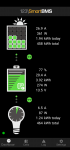
Just to give you some idea thus is what my 750 W solar is given me in the med at. 14.30 on a slightly overcast sept day .
 

Attachments

  • Screenshot_20210928-142609.png
    Screenshot_20210928-142609.png
    107.2 KB · Views: 12
Top