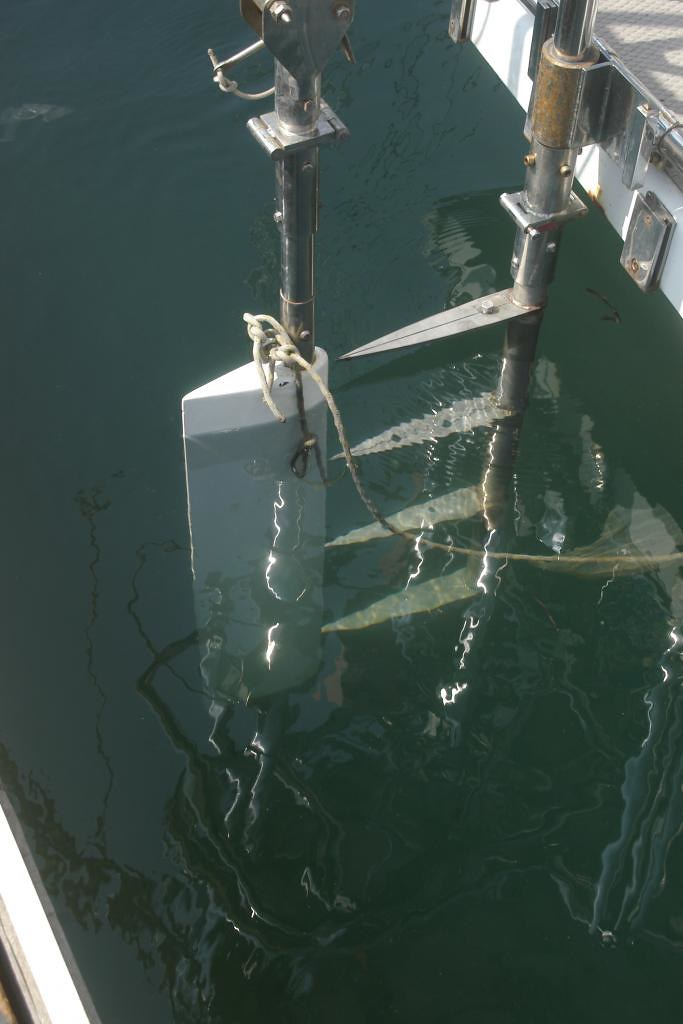
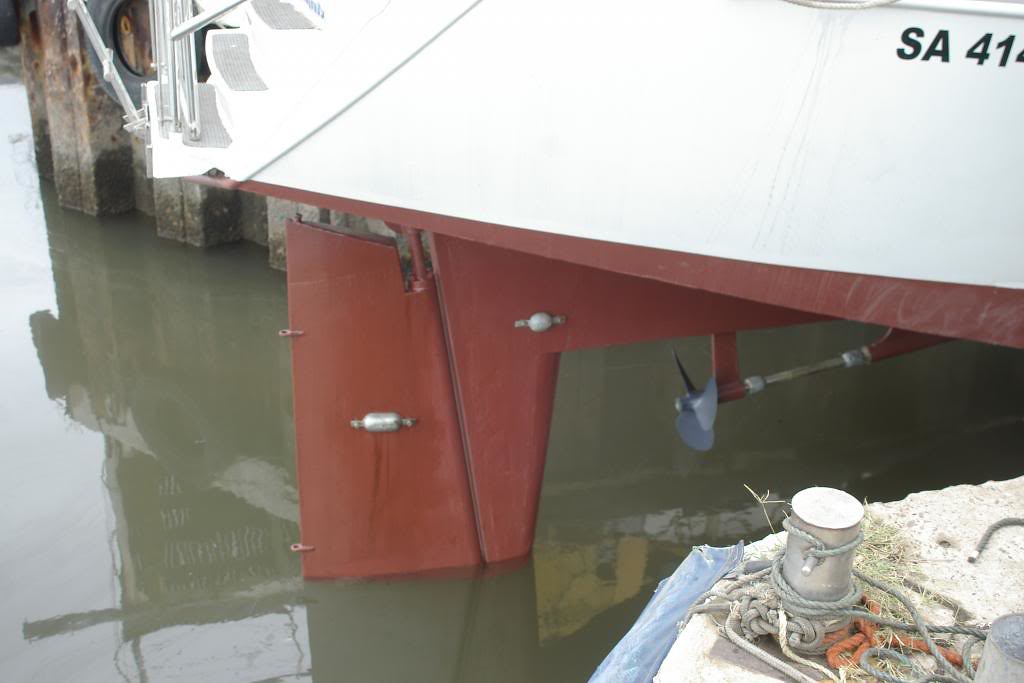
Any reason to get stainless 316 over galvanised mild steel for a rudder blade?

steve yates

Well-Known Member
Joined
16 Oct 2014
Messages
4,114
Location
Benfleet, Essex/Keswick, Cumbria
Visit site
Is it stronger? A new rudder blade for a bradwell 18 is £80 in galvanised mild steel, and £120 in ss. I dont mind paying the exta if there are real benefits.

The old rudder was badly rusted and flaking, and bent today, with a section of it actually splitting. It is exactly on the line of it being bent in big seas a few years ago.
Its 5mm plate and I do have quotes for 8mm, but when I took the whole thing apart today, feeling the weight of it, I wonder if a weight increase of over 50% is a wise move to get extra strength, especially if stailess at 5mm will give me that?
 
I can't claim particular expertise, but it seems to me galvanised steel and sea-water are a mis-match - as you have discovered. It's a safety issue; if in a few years time your "new" rudder disintegrates it could be seriously hazardous. I'd go for stainless and if you've had your 5mm rudder bend previously I'd go up to 8mm . It should last the life of the boat.
 
Where stainless steel underwater is partly covered and partly exposed to sea water it can suffer pitting corrosion.

I have first hand experience of this on oceanographic instruments that suffered pitting corrosion where barnacles had settled on otherwise clean stainless steel. Also, on stainless steel heel fittings for the rudders on a Prout ctamaran. When I removed the heel fittings during a refit the outsides looked perfect, but the insides, against the skegs, were so pitted as to look porous.

Apparently stainless steel, even high grade marine varieties, can set up a galvanic cell along the boundary between areas exposed to sea water and covered areas.

I would not use stainless steel underwater unless it is completely encapsulated.

As to the galvanised rudder failing, the fault was probably due to a partial break down of the galvanising when first bent a few years ago and subsequent corrosion. Also, galvanising (like other surface coatings) does not last for ever.
 
I reckon if the old rudder needs to be replaced now is a good time to make a wood and GRP foil shaped rudder. Flat metal plate is horrible for hydrodynamics especially if you are hard pressed with weather helm from heeling to deal with. A decent shaped foil will give better control and less drag so more speed. I would advocate a wooden or foam basic centre with a lot of layers of glass. So you would describe it as a GRP rudder on a wooden mold. Rather than a wooden rudder with GRP cover. A good time also to improve balance and depth for more bight. If hitting the bototm is a concern make it a swing rudder. ol'will being radical.
 
Stainless steel, 316, has a lower yield point than mild steel - so the rudder would bend more easily if made from 316. In terms of complete failure, unlikely, but both would tear apart under a similar force (or so similar you would not tell the difference).

You mention the option of using thicker plate to engender strength but in the same breath mention increased weight. If weight is an issue go William_H route. The other way to engender strength is to use a better steel, a stronger steel, and you can do this with either Duplex at some extravangant cost or a 'normal' steel with a higher tensile strength (think of those Bis80 anchor shanks). Steel, off the shelf, comes in strengths from (I don't actually know the bottom limit) say 350 MPa to well over 1,000MPa (1,300 MPa rings a bell) - and this latter is about 4 times the strength of mild steel and allows you to reduce weight (maybe to less than William's option).

As an aside - use of higher tensile steels in a 'similar' application is common place - the fins of keels on performance yachts are sometimes made from HT steels milled to the profile (that William discusses for the rudder).

Galvanising does not last for ever, as mentioned, but as the rudder should not be subject to abrasion it should last as long as you are likely to own the yacht. The main places to watch would be where the rudder is drilled to take bolts and the leading edges that may be impacted by flotsam (or the accidental grounding). I'd also consider a kick up rudder in any case.

An option I might consider in your case is buying a piece of HT steel from a steel stockholder, they should sell you a rectangular piece to suit. I'd then cut it to size (angle grinder) and grind the edges. I'd drill as necessary to allow it to be attached. Prior I would have spoken to Highland Galvanisers, discussed what I propose to do, and then have them galvanise the final product. Making one yourself would not be difficult - but it is noisy!

For steel options I know Corus (are they still in the UK?) made higher tensile steels but I'd suggest looking at something like Strenx or one of the other HT steels the same steel maker supplies. I option them as they offer thin plate - most other steel makers don't make that thin.

Jonathan
 
I reckon if the old rudder needs to be replaced now is a good time to make a wood and GRP foil shaped rudder. Flat metal plate is horrible for hydrodynamics especially if you are hard pressed with weather helm from heeling to deal with. A decent shaped foil will give better control and less drag so more speed. I would advocate a wooden or foam basic centre with a lot of layers of glass. So you would describe it as a GRP rudder on a wooden mold. Rather than a wooden rudder with GRP cover. A good time also to improve balance and depth for more bight. If hitting the bototm is a concern make it a swing rudder. ol'will being radical.

I agree.
My kingfisher 20 came with a rudder like the OP’s & it is in ‘perfect’ condition after 50+ years. But it didn’t tack well. So I’ve encapsulated it with ply & glassfibre to make it semi-balanced and with a foil-shaped cross section. It handles much better now.
 
Or make a hollow foil shaped steel rudder and get it galvanised. Stainless could be cheaper in this circumstance. This would make a lighter and stronger section with far better hydrodynamic properties. If the original bent because of rough water and not a rock, it wasn't strong enough! (One then has the worry as to whether the rudder tube & hull/pintles & transom are strong enough, but...)

Do beware pitting corrosion, but I'd suggest that most yacht prop and rudder shafts are in stainless and they don't fail that quickly. Also there is nothing to stop you coating the stainless in paint to reduce the corrosion, I'd suggest something containing antifouling agents. ;0)
 
William H is correct. The worst possible rudder shape is a flat plate. Lift is substantially less than a profiled form and drag is about 150% more than a profile of 8% L/B. Stall angle is around 10 degr. versus 30degr. for a profiled form.
A NACA four digit foil of 12% will give you the best results (NACA 0012).
Stainless steel is not a happy solution under water, particularly where there is oxygen deprivation.
 
On my 50ft steel boat I have a mild steel foil shaped hollow rudder. The shaft is solid stainless steel

The outside was grit blasted and painted with epoxy tar then antifouled. There are also a zinc anode on each side.

The hollow rudder was pressure tested to ensure no was water could leak in. I then filled the inside with old engine oil to protect the inside and if the rudder got damaged oil leaking would show up.

I also made a auxiliary rudder for my self steering gear from 316 stainless steel. It again is foil shaped and hollow but as this is hinged up and down and will only be used immersed in sea water when in use

Inside framework before external plating

35696698760_12b9277490_b.jpg


35696693420_ff8f66d169_b.jpg


35277822113_7e93a26d63_b.jpg
 
The OP's boat is 18' long.
The reason the original builder/manufacturer built the (fold-up?) rudder in flat steel is because it was cheap & quick to do.
This was quite common a while back, but it is, technically speaking, poor practice for a number of reasons. Their only mitigating benefit is economy and even at that it is a poor trade-off.
I know, because our boat had a flat 10mm steel plate rudder. As a steering device it was so ineffectual that I had to assume it was merely an attachment point for the zincs.

For an 18 footer a ply & glass rudder would be quite adequate and if profiled, superior to any flat plate steel construction and with reduced maintenance to boot.
 
Fascinating replies and a whole load of stuff I never knew about, thank you.
For the time being I have ordered a galvanised mild steel replacement, and I'll use the wait to sand down and revarnish the rudder stock and tiller.

But I'm really interested in the idea of just making a new much better one from grp & ply, and think it might be a good winter project. How on earth do you calculate the angles etc and what makes it an aerofoil shape, and how do I get those curves without them being rather lumpy and mishapen?
 
How on earth do you calculate the angles etc and what makes it an aerofoil shape, and how do I get those curves without them being rather lumpy and mishapen?

I got the info to design my rudder shape fro the internet. Plenty of design info and whats more as a rudder is symmetrical you only need to design one side.

If you wish to make one from GRP. I would cut the profiles like in my pics and attached to the rudder shaft with tabs welded to the shaft then glue flat GRP sheets over the profile and tape the joints.

Of cause I used stainless steel sheets welded together. I made the mistake of making the sheets too thin so they distorted while welding so I would say 3 mm thick steel or GRP sheet would be about right.

I don't realy see any need for foam inside as if there is a leak the foam will just soak up water and compromise the stainless steel shaft and tabs inside.
 
Fascinating replies and a whole load of stuff I never knew about, thank you.
For the time being I have ordered a galvanised mild steel replacement, and I'll use the wait to sand down and revarnish the rudder stock and tiller.

But I'm really interested in the idea of just making a new much better one from grp & ply, and think it might be a good winter project. How on earth do you calculate the angles etc and what makes it an aerofoil shape, and how do I get those curves without them being rather lumpy and mishapen?
To make a foil is relatively easy and straight forward.
First you make a template of the foil; the numbers for that are available online. NACA 0012 would be a good foil for a rudder.
Fairing the ply is easy as the glue lines, when removing the material, act as parallel guides.
The most important part of the foil is the nose shape. Think of it as easing the flow of the water around, rather than cutting through the water. For best results match the foil as closely as possible.

Another solution is to order the foam cut to profile from one of these companies that hot cut foam wings for the model airplane crowd. Not all that expensive either. Mount over a solid core and glass heavily.
 
I reckon if the old rudder needs to be replaced now is a good time to make a wood and GRP foil shaped rudder. Flat metal plate is horrible for hydrodynamics especially if you are hard pressed with weather helm from heeling to deal with. A decent shaped foil will give better control and less drag so more speed. I would advocate a wooden or foam basic centre with a lot of layers of glass. So you would describe it as a GRP rudder on a wooden mold. Rather than a wooden rudder with GRP cover. A good time also to improve balance and depth for more bight. If hitting the bototm is a concern make it a swing rudder. ol'will being radical.
Agreed. There was an article in PBO a couple of months ago in which the plate rudder on a big wheelhouse boat was similarly changed and the owner described a big improvement in handling. A flat plate stalls at a very low angle of attack.
 
I feel fairly sure the rudder for an 18ft sail boat is going to be transom mounted. The rudder then is a plank extending up to the top where a tiller is 2 pieces of wood clamped each side to join together. Pintles are mounted on the rudder it self to match the gudgeons on the transom. (or have I go the terms swapped around? )
The foil shape is essentially a semi circle shaped leading edge with essentially a long slope to the fine trailing edge. Perhaps a little fatness in this line near the middle. Thickness would be around 30mm.
Do cut the rudder shape so that the leading edge of the foil is under the hull by about 15%. The part going up to the head is then narrower. This will give about 20% ballance ie area ahead of the pintle line. If you can give it an elliptical bottom. If grounding is a concern for the tip of the rudder you can make it frangible. (sacrificial) or flat and solid)
ol'will
 
As per ol'will I think that you should be looking at large dinghy rather than big yacht technology. The forces on your Bradwell are going to be akin to a wayfarer or a trapeze boat and something like that would give a much better performance and feel.
 
Stainless rudder on a Bradders 18? That's a bit bling, innit?

Personally, I'd stick with galvanised mild rather than stainless - benefit of SS is marginal (if any) and Stainless is a pain to work.

There does need to be weight in the rudder (assuming you're keeping it as a drop/lift rudder) else it won't submerge.

The comments on changing to a foil section are good, and have me pondering...
The Internet will give the offsets for airfoil shapes, eg NACA 0012 AIRFOILS (n0012-il) for the NACA 0012. For a chord (front-to-back distance) of 300mm, you'd need a maximum thickness of 36mm. So a 15mm sheet of ply epoxied each side of a 5mm steel inner (for strength and weight), all shaped with a hand sander would do. [rudder is 300mm by 600 - 700 mm depth below water]. You don't need to be perfect on the shaping; it'll be better than flat plate.

On the other hand, it's only an 18 foot fun boat - don't overthink it unless you want to

Don't know why yours bent. That's some wave you came off if that's what it was.
 
Top