Anti foul vs Copper coat vs Silic one ?

jon and michie

Well-Known Member
Joined
28 Dec 2014
Messages
1,765
Visit site
Hi - So after having my boat lifted early Jan after being launched late May last year after 2 fresh coats of Anti foul and very little use which resulted in a build of slime and poor performance
I am thinking in 2022 of changing from anti foul to either Copper Coat or Silic One.
I know there has been a few discussions on Copper coat and from what I have seen on you tube Coppercoat has to be applied correctly or its not worth bothering with.
Silic one have have very little knowledge of.

So I am looking at something with little maintenance i.e anti foul after every 2 seasons.

So what is recommended ?

Jon
 
Seacoat Technology | Silicone Foul Release Bottom Paints

Have a look at this stuff. We had it on out workboats and it was pretty good unless the boat sat off charter then a quick pressure wash in dry dock and we were away again.
It’s a lot harder than the hempel product.

copper coat is great as you say as long as it’s applied properly, and your hull is dry enough, or you go to town with the epoxy under coats. It’s great advantage over a silicon system is it actually deters fouling! But nothing is impervious!
 
I applied the Silic One system last February just before the first lock down. Boathasn't been used much due to a failed engine, but the visible areas don't appear to have too much build up on them, and what is there brushes off easily.

Not sure when I am going to arrange a haul out to check for damage and the anodes, but I intend to report how the stuff has performed after ~ 1 year.
 
I applied the Silic One system last February just before the first lock down. Boathasn't been used much due to a failed engine, but the visible areas don't appear to have too much build up on them, and what is there brushes off easily.

Not sure when I am going to arrange a haul out to check for damage and the anodes, but I intend to report how the stuff has performed after ~ 1 year.

I’m looking forward to your report.

I’ve yet to see a foul release that works and I hope yours does. Genuinely interested to know.
 
For a boat not moving any silicone and copper coat fares badly compared to antifouling paint..
The concept of copper coat is great, i would have it but it seems its one of those products that works very well for some and fails terribly for others once in the water..
SV delos (youtube) tried silicon antifoul.. It failed badly when relaunched but that was probably due to being stationary for many months. Not sure if they still use it or have given up
Silicone af works well on a ship as its always moving at a decent speed.. According to discovery channel it cost one million to af an oil tanker but should be good for 10 years..
 
Last edited:
You could simply try top of the range AF and apply liberally. Most AF is applied parsimoniously and without exception AF companies say apply a generous coating or 3 (which everyone ignores).

The best AF are for commercial use only. Hempel's Globic is excellent, Jotun's Sea Quantum is excellent - liberally applied you would achieve 2 years - but they are commercial use only. Top of the range International are good. I did a survey of about 12 AF and these 3 are the best. Note Jotun produce a range of Sea Quantum, based on vessel speed. One formulation is for stationary vessels, one for 0-4knots (I recall) etc.

Most of our formulations, like International, demand that the vessel moves - or it collects slime and then organisms live on the slime, protected from the AF.

Copper coat and Silic One both demand a decent upfront investment for application. Neither yet have customers beating to their door - there is not enough consistency. Note that if you appli=y Silic One and it does not suit - its a devil to remove the silicone to have anything else stick.

Whatever you do, it is a lottery :)

The question you raise, this thread, repeats about once every 6 months - and we still do not have a clear answer.

Jonathan
 
. Most AF is applied parsimoniously and without exception AF companies say apply a generous coating or 3 (which everyone ignores).
I do my long keel between tides so it's a bit of a rush to get it done but one year I had time to give one side a generous second coating.
A few months later both sides had equal growth !
A long time ago I painted my hull using the leftovers of lots of different brands from the cheapest to expensive. In those days some really didn't like being mixed with others so I had a multi coloured hull.
Next time I dried out the whole boat had an even covering of weed !
I even tried sea jet after pbo rated it. That was the year I ended up antifouling 3 times in one year !
Personally I think they are all rubbish giving a waterline of snot no longer than 8 weeks later regardless..
I did get some international that turned out to be commercial and it lasted twice as long.
Location is everything it seems and maybe why people get such different results.
 
You could simply try top of the range AF and apply liberally. Most AF is applied parsimoniously and without exception AF companies say apply a generous coating or 3 (which everyone ignores).

The best AF are for commercial use only. Hempel's Globic is excellent, Jotun's Sea Quantum is excellent - liberally applied you would achieve 2 years - but they are commercial use only. Top of the range International are good. I did a survey of about 12 AF and these 3 are the best. Note Jotun produce a range of Sea Quantum, based on vessel speed. One formulation is for stationary vessels, one for 0-4knots (I recall) etc.

Most of our formulations, like International, demand that the vessel moves - or it collects slime and then organisms live on the slime, protected from the AF.

Copper coat and Silic One both demand a decent upfront investment for application. Neither yet have customers beating to their door - there is not enough consistency. Note that if you appli=y Silic One and it does not suit - its a devil to remove the silicone to have anything else stick.

Whatever you do, it is a lottery :)

The question you raise, this thread, repeats about once every 6 months - and we still do not have a clear answer.

Jonathan
No one yet beating a path to the door of Coppercoat?

What total nonsense.

20 + years of trading. 75,000 yachts. Plus super yachts. Plus commercial stuff.

Furthermore all the conventional antifouls will have to further reduce leeching for environmental reasons. Coppercoat is already comfortably within any proposed standards. And of course superheats solution doesn’t leech at all.
 
I am approaching the end of 2 seasons with Silic One and have been pleased at the results. ( So much so that I helped Superheat6k to apply it to his boat last year).

Slime does build up but I just go for a spin to wash it off. For planing powerboats it's great, for displacement ones it significantly reduces build up and is dead easy to lightly pressure wash off any build up.

I expect to just touchup any damaged areas this spring, all I need is a lift and hold which saves me a few quid.

I would expect to have to re apply just one full coat after 3 seasons, making it cost and time effective. I will post before and after photos here too....
 
No one yet beating a path to the door of Coppercoat?

What total nonsense.

20 + years of trading. 75,000 yachts. Plus super yachts. Plus commercial stuff.

Furthermore all the conventional antifouls will have to further reduce leeching for environmental reasons. Coppercoat is already comfortably within any proposed standards. And of course superheats solution doesn’t leech at all.

75,000 yachts, amazing, that's (by my arithmetic), - say 4,000 yachts per year, say less at the outset maybe 6,000/7,000 per year now. My understanding is that the coating needs to be replaced after, 20 years, so some of the 75,000 must be repeat business (if you are not getting repeat business......?

Of the comment here on usage - ambivalent, works for some, not for other - why it works, does not work has not ever been defined - so no recommendations offered to those that doubt. Some of the people who applied CC reverted to conventional AF - how do I know - they said so on this forum (not many I'm sure - but some.

But world wide, CC is sold in Europe, N Am, Australia - I'm sorry but 7,000 hulls a year might make a neat business but I don't think anyone of the AF Coys are trembling in their shoes (and neither have they produced a competitive product (and that would not be difficult). Your copper powders are freely available, resin chemistry is hardly new nor novel - its not rocket science (we sold, amongst other items, copper powders into China).

So tell me 7,000 is a big number, Show with data that people and builders are beating a path to your door. I wonder what 7,000 means - how many yachts are there that are Solent based, for example.

The future - the demise of our current crop of AF has been talked about for some time now and though there are moves to ward significant restrictions it has not yet happened. I am sure the AF Coys have something up their sleeves - or they will go out of business. Some large commercial operators have tried silicone based AF and have reverted back to conventional products - but not Coppercoat.

Nonsense? I think you lack the ambition to world domination :)

Jonathan

I had a quick look at UK stats on boat ownership but the useful stats are behind a paywall - and the stats are of little value, actually none, to me. But I am sure that an organisation with a future in the industry will have the data at their finger tips.

It appears there are half a million leisure craft in the UK - but this covers, everything, I assume including kayaks, maybe SUPs as well as 50' Bennys. So the data is not of much value - unless you have the breakdown.

Topic: Recreational boating in the UK

The RYA also has data - again I would have thought a company with a future in the leisure boating industry would have the relevant data at their finger tips


In Australia in 2016 - 166,000 people (or households?) claimed to own a yacht.
 
Last edited:
Thanks for the replies so far this makes for interesting reading.
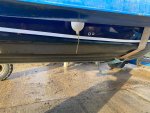
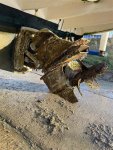
I have a planing boat, single engine which after a being in the water for a few months with little movement due to lockdowns the performance was terrible and unable to get on the plane.
I asked the marina prior to washing the hull during lift out to take photographs of port starboard and aft this was after 8 months immersion but also to remember the uk had a very hot April as well as subsequent months which may have contributed to the slime.
The boat had 2 good coatings of Hempel anti foul in late March and was launched in May within the 3month time frame
 

Attachments

  • image001 (Medium).jpg
    image001 (Medium).jpg
    156 KB · Views: 62
  • image002 (Medium).jpg
    image002 (Medium).jpg
    119.8 KB · Views: 58
  • image003 (Medium).jpg
    image003 (Medium).jpg
    162 KB · Views: 52
We coppercoated during the winter of 2017/18 in Edinburgh. The boat is now in Mustique and I just spent an hour cleaning the waterline and rubbing the hull with a Scotchbrite pad. She's been hauled out and pressure-washed 3 times since she was coppercoated and each time there was pretty much nothing to wash off.
 
Don't get me wrong

If we were buying a new yacht we would insist on having Coppercoat applied - but as I said on a previous post (about something else) just because you think a product might be advantageous does not mean you should gush all over it and, importantly, you should be critical. If the CC did not work on our hypothetical new boat it might be expensive but you would have an extra layer of resin on your hull - but the cost of soda blasting now simply makes it a non- starter. We need to slip (or beach) anyway we have anodes to change, hull fittings to check and I personally don't mind the AF procedure (considering CC needs to be rubbed down periodically anyway).

I don't think it is THE answer (which is why no-one is beating a path to the CC door) but it might be the answer for us. However I'm simply not willing to lash out on the soda blast and the coating and the labour to find out. If there was some decent investigation by CC on why it works for some and not others and the answer suited our conditions I might be a bit more gung ho, or not. But to expect wholehearted support when the reason behind success and failure are a mystery (and critically - its a mystery why its a mystery) is asking a bit much.

Jonathan
 
For a boat not moving any silicone and copper coat fares badly compared to antifouling paint.
That is not my experience. CopperCoated (CC) in July 2019. Since then I have done less than 500 miles and at 26/12/2020 I had a little slime on the hull that rubbed off with a brush at the waterline. I am afloat in Plymouth, England all of the other boats in the marina with CC are in the same condition.

Before deciding to go the CC route I looked at the silicone option. Unless you are moving at over 7 knots for a lot of the time it won't work, that is the manufacturer saying that not me.

To pick up on @Neeves point, I am convinced the secret is in the preparation. I spoke to CC at the Southampton Boat Show in 2018 about application. The product is designed for DIY application, but that is not my skill set. I then spoke to several companies in the Plymouth/South Devon area and they wanted to charge twice what I considered the cost for the job. Their major cost was the erection of a tent round the boat to do the work (and one of them wanted to spend 50 hours making the hull smooth enough to be used in the Hubble Telescope). I eventually found Mylor Marina, in Falmouth who do work in a dedicated shed at the price I had in my head and the huge benefit was they had environmental control, the ambient temperature was not going to change too much and if it rained when the coating was curing the boat indoors. I had the work done in July where even in the UK the temperature is above the minimum for applying the stuff.

On being relaunched the boat felt as if she was on rails and without doing anything fancy with the sails we were at hull speed at the top of a F3.

By my calculations CC will pay for itself in cash terms in six years, add to that two days a year where I'm not covered in paint. In performance terms I am getting, on average, a knot or 24 extra miles per day on passage.
 
As far as I am concerned Coppercoat is worse than antifoul paint as regards performance. I get slime on my boat within 3-4 months which really kills the speed. However, It is easier to have the boat lifted & washed a couple of times a year than it is to get underneath & spend hours rubbing the old antifoul off & re painting every year. I would, therefore, rather go the coppercoat route because I end up with a clean hull some of the time at least. On a good year I clock up almost 2000 miles so the boat does not sit idle & the areas I sail are varied. Just do not try to tell me coppercoat actually works as the manufacturer claims.
 
Have tried all three. Coppercoat is my preference. Silic One was a complete and utter waste of money.

I'm interested to know the circumstances - your comment is the complete opposite of my experience. Is your boat a planing hull, was it applied as per instructions?

I know it is useless on props as it can't stand the forces applied.. Then again, a stainless prop on an outboard kept out of the water 99% of the time will never foul anyway!
 
I suspect that for many of us with boats of a certain age the thought processes work something like this.

1) Hmmm, the antifouling is looking bad with chunks falling off - looks like it will need to be stripped back.
2) Hmmm, if I am stripping the antifouling back with a scraper I am going to damage the gel coat - looks like it will need a few coats of epoxy to repair the damage.
3) Hmmm, I'm never scraping this back again - looks like if I am going to Coppercoat it is now or never.
4) Hmmm, I wonder how long we will be able to scrub antifouling without having the washings classed as hazardous waste and disposal costs, plus will we still be permitted to apply it in the future - looks like as I am planning to keep the boat for a few years Coppercoat is the way to go.

In my experience no better than antifouling, fine if the boat is regularly used but slime and weed build up during lockdowns. Going out for a thrash in grumpy weather usually clears some of this, but not all. About 1h to pressure wash with a domestic pressure washer when the boat comes out for winter and then ready to go next spring with no further work.

Generally happy with my thought process and outcome.
 
I'm interested to know the circumstances - your comment is the complete opposite of my experience. Is your boat a planing hull, was it applied as per instructions?

I know it is useless on props as it can't stand the forces applied.. Then again, a stainless prop on an outboard kept out of the water 99% of the time will never foul anyway!
A sail boat. Tried a section with silic one for one season. It fell off mostly. Redid it the next season paying special attention to the prep (just in case I had been slack) and same result.

Tried it on prop too using the prop kit. Watched as, after launch, within yards of the crane dock, it all was left in my wake as I motored back to my berth.
 
Top