Anode degradation

Jamie Dundee

Well-Known Member
Joined
24 Jul 2019
Messages
1,544
Visit site
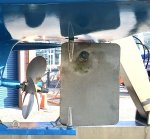
Dried my boat out last week to do a couple of jobs and was surprised to see how much the prop anode had degraded. Been in the water for 3 months, swinging mooring so no shore power, batteries always switched off when away from the boat. Would this level of deg be considered normal in 3 months?
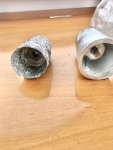
CC717556-19E0-4A8D-898A-82A6116CC606.jpegA9BED213-DA57-4135-B75D-4E9687CD05D6.jpeg
 
Assuming your bilge pumps are hard wired to the batteries….or solar panel charging….maybe you have a current leak? Does seem a lot in 3 months

17 plotters and fish finders won’t be helping ?
 
Assuming your bilge pumps are hard wired to the batteries….or solar panel charging….maybe you have a current leak? Does seem a lot in 3 months

17 plotters and fish finders won’t be helping ?
Bilge pumps, trim tabs and solar panels hard wired to batteries. Tabs and main bilge pump new this year but anode wear was also heavy last year, in fact the prop anode had disappeared when the boat was lifted last year! Bilge is dry, the keel and steering gear anodes are also suffering although the rudder anode is on its second year and shows no sign of degrading. It’s a conundrum.

Bloke can never have too many nav toys. Thinking about getting another 3 fixed VHFs a la Deadliest Catch boats…?
 
How long have u been moored in the current position. Had the mooring become available in the last year or so for a particular reason?!
 
Dried my boat out last week to do a couple of jobs and was surprised to see how much the prop anode had degraded. Been in the water for 3 months, swinging mooring so no shore power, batteries always switched off when away from the boat. Would this level of deg be considered normal in 3 months?
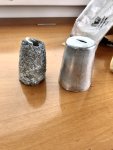
View attachment 118607View attachment 118608
Similar prop anodes on my Azi did not last long. I added anodes clamped to the prop shaft and this fixed the issue. Insufficient material is the issue.
 
Similar prop anodes on my Azi did not last long. I added anodes clamped to the prop shaft and this fixed the issue. Insufficient material is the issue.
That is exactly what I did for the same reason. But I won’t know if it works until I relaunch her next week. But your post greatly reassures me.
I was umming and ahing for a while because I was worried if it might put the shaft out of balance, especially if it starts to wear unevenly. But plenty of boats have them, I told myself
 
This is my second season on this mooring, sought after position as pretty protected from most weather.
And what happened to anodes after first season? Have things suddenly got worse or is it inadequate time to compare overall. Agree that its quick sacrificial anode loss
 
Quality of the anodes ? There are anodes and anodes .
As others have said add some more zinc mass , like what’s that D shaped bracket under and slightly fwd of the prop for ?

Or fix a type strap ( forgot the tech term ) , it’s like a bush on a electric motor commutator, to the shaft INSIDE just before the shaft seal .Then wire this to a through the hull transom anode , a beefy 4-6 Kg bolted at the stern .Means another hole in your boat , but a nice stainless long bolt , through with sika seal should do the trick .


Tell more about the rope cutter ? Age ? How many metals have you got in that chemistry set now ? All itching to throw electrons at each other in the salt solution .
 
Last edited:
You have a lot of metal under the water. Does that metal keel have any anodes?
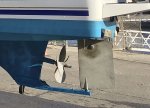
Keel is grp but the heel and rudder base are metal and has its own anodes. Maybe this shows the setup better. BD8B4D13-E962-47FA-9C57-C557E51D7CF6.jpeg
I assume the rope cutter is stainless like the shaft and rudder. This photo was taken when the boat was lifted before I bought it. The prop anode looks pretty worn again after only 3 months or so in the water.
 
Last edited:
I think your anodes are simply too small.
As suggested that’s a lot of metal you are trying to protect vs some fairly small anodes. As I understand it you need to have anode surface area in proportion to the prop and rudder surface area, the more the better. Easiest to put much larger through bolted rudder anodes on provided you have got the prop shaft and rudder electrically bonded.
ASAP supplies sell prop shaft brushes that enable you to bond the rotating shaft.
 
I think the collective thought of too little anodic (?) protection seems likely. Nothing I can do about the size of the prop anode, rather than add layers of complexity with shaft add-ons etc I think a 3 monthly dry out and anode swap is the answer. Glad I’m not in a marina with requirement for a lift (y) As previously mentioned the rudder anode suffers no degradation, unlike the 1kg hull anode which is bonded to the rudder shaft/stock.
 
I think the collective thought of too little anodic (?) protection seems likely. Nothing I can do about the size of the prop anode, rather than add layers of complexity with shaft add-ons etc I think a 3 monthly dry out and anode swap is the answer. Glad I’m not in a marina with requirement for a lift (y) As previously mentioned the rudder anode suffers no degradation, unlike the 1kg hull anode which is bonded to the rudder shaft/stock.

Jamie, check if you have good wire connection between rudder shaft and engine housing....
 
+1 no wear usually means broken connection...
fwiw, I went the other way from shaft anodes (45mm shafts) to these cone things. I did weigh them and they are similar weight to the clamp shaft ones.
Last over a year but the point is that I gradually increased the size (and number) of the trim tab and rudder anodes to a level that I now get similar wear to the lot.
I'd also go up two sizes on the rudder anode (assume there's another one on the other side of the rudder!) and check rudder connection to engine housing/battery neg/whatever
boat in port, no shore power ever, just solar.
 
Top