
Ammeter with shunt how wire it; photos

tim_ber

Well-Known Member
Joined
12 May 2009
Messages
1,039
Visit site
I have always fancied having an ammeter and knew the basic wiring with a shunt, but the device that was posted today has me stumped.

Would anyone be kind enought to tell me which wires go where, please?

And maybe you know what the selector switches are on the back and the blue trim tab ?

No word back from producers yet - doubt I'll get one either.IMG_8546.jpgIMG_8545.jpg
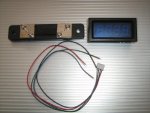
Thanks in advance
 
Last edited:
Hero

View attachment 31020View attachment 31021


The above images may help. Usually the DIP switches are set up for the shunt provided. You will also need an isolated power module similar to here.

http://www.ebay.co.uk/sch/i.html?_t...=12v+isolated+power+module&_sacat=0&_from=R40

View attachment 31022


I also notice that your unit is only a 50amp not 500amp so will not take the engine starter current and should therefore be used for domestic circuit only.

Thanks so much for that.
Do you have a source for those photos or larger ones because I (maybe being thick) cannot reconcile the last photo showing everything wired together with the second photo in which the ammeter's two right hand wires seem to go to 12V battery, but inthird photo went to a different place.

But huge thanks, because I am certainly less confused than before.
cheers,
Tim
 
No link to the supplier ??


My guess is that the red and black wires will be the power supply but as "theoldsalt" suggests it may need an independent power supply.

The other two wires going to the shunt

That tallies with the first two of old salts diagrams

I dont understand the last of oldsalts diagrams either ! i dont think its for the same device.
 
Last edited:
No link to the supplier ??


My guess is that the red and black wires will be the power supply but as "theoldsalt" suggests it may need an independent power supply.

The other two wires going to the shunt

I dont understand the last of oldsalts diagrams either !

Yes, he is good isn't he. I can understand the first diagrams, but the third one seems to have replaced pin 1 and 2 with wires from the shunt instead of from the 12v power source for the meter. But I am probably not reading it properly, will go back and look again. Very excited to play with it, but want to get it right and not fry it.
 
Yes, he is good isn't he. I can understand the first diagrams, but the third one seems to have replaced pin 1 and 2 with wires from the shunt instead of from the 12v power source for the meter. But I am probably not reading it properly, will go back and look again. Very excited to play with it, but want to get it right and not fry it.

I had not seen oldsalts post when I first posted my reply... I have edited it abit subsequently.
 
Hi tim_ber,

In the second photo the "power source" is the boat batteries whereas the "DC 5-15v" is the power for the display which must be isolated and comes from the isolated power module. the isolated power module also gets it's supply from the boat batteries.
 
tim_ber,

View attachment 31025

I believe your meter is wired slightly differently to the one in the above diagram.

I think this is correct.

View attachment 31026

I wired up the meter assembly in the project case (see previous post) and connected it to a 12v supply to make sure the display worked (lit up) before connecting to the shunt for a full test.
 
Last edited:
Thanks a lot everyone.
Is the isolated power module the same as a dc-dc buck converter (I think they are called) because I have seen ones that look like this (and bought some) and they seem to take 12 to 15 volts and always give out 12V - I have used them on my car for fitting LED running lights - is it okay to one of these as opposed to the image Old Salt showed; I'm eager to get out and try rather than wait for a delivery, but I will do whatever you guys suggest:

http://i01.i.aliimg.com/wsphoto/v0/...r-Module-Step-Up-Step-Down-Power-supply-3.jpg
 
View attachment 31061View attachment 31060
A DC-DC converter can be isolating, but not necessarily. Did the original advert not say you needed one?

In the meantime, run it from AA batteries.
Thanks, I did use the device I mentioned before you replied at 12v output and it worked, but does not mean I did it correctly.

What does isolating mean?
And you don't mean use 8 AA batteries do you?
Advert just showed the meter in parallel to the shunt so very grateful for your input

Photos should be above now.
Have I done it it badly, wrongly, dangerously?

If all is ok, I will box it all up nicely of course.

Running a 3W cob led there. Bright little bugger.


Just twigged, I think. The ammeter can have the AA batteries (anything from 5V TO 12V, THEREFORE USE 4 AA batteries, the other battery in sub-circuit with shunt and load is the 12 V battery - have I got it now? In my photos I was using a lead acid battery to power eveything but using those buck things to keep 12V.
 
Last edited:
A 9v battery might be another option just fit a push switch to turn amp meter on when you want to read it.
Re an isolating power module. The volt meter part of the amp meter (an amp meter is a millivoltmeter measuring drop across the shunt) has a negative and +ve input. ie wires from the shunt.
Now the negative input of this millivolt meter is related to the negative power supply for the volt meter. (often connected)
If the shunt is in the negative wires of ships battery then "no problem" as the negative millivoltmeter input and meter supply negative are near ships negative. However if the shunt is in the +ve of the ships supply we have the meter negative input at virtually ships +ve. If you then connect the millivoltmeter supply negative to ships negative and the 2 are connected internally you have a small fire or at least failure to work.
NB "no problem" may not be correct even for -v line shunt as some older meter chips had an input power negative above shunt input negative. So isoaltion may be essential in all cases.
So for a shunt in the +ve you need an isolated supply to the millivoltmeter. This means that both the +ve and -ve must have no relation or connection to the ships +ve or -ve. A battery will do this OK.
If you want to run the meter power from the ships battery you need an isolated supply. This will contain a circuit to switch ships battery to AC put it into a transformer the secondary of which is rectified and provides the power. The only connection being the magnetic field in the transformer.
I think the use of "buck supply" would mean that the negative input to the supply is connected to the negative output so does not provide isolation. You might check with an ohm meter only 10 megohms or more from negative in to negative out will be any good.
I hope this usefully explains the concept of isolated power supply. good luck olewill
 
thanks

A 9v battery might be another option just fit a push switch to turn amp meter on when you want to read it.
Re an isolating power module. The volt meter part of the amp meter (an amp meter is a millivoltmeter measuring drop across the shunt) has a negative and +ve input. ie wires from the shunt.
Now the negative input of this millivolt meter is related to the negative power supply for the volt meter. (often connected)
If the shunt is in the negative wires of ships battery then "no problem" as the negative millivoltmeter input and meter supply negative are near ships negative. However if the shunt is in the +ve of the ships supply we have the meter negative input at virtually ships +ve. If you then connect the millivoltmeter supply negative to ships negative and the 2 are connected internally you have a small fire or at least failure to work.
NB "no problem" may not be correct even for -v line shunt as some older meter chips had an input power negative above shunt input negative. So isoaltion may be essential in all cases.
So for a shunt in the +ve you need an isolated supply to the millivoltmeter. This means that both the +ve and -ve must have no relation or connection to the ships +ve or -ve. A battery will do this OK.
If you want to run the meter power from the ships battery you need an isolated supply. This will contain a circuit to switch ships battery to AC put it into a transformer the secondary of which is rectified and provides the power. The only connection being the magnetic field in the transformer.
I think the use of "buck supply" would mean that the negative input to the supply is connected to the negative output so does not provide isolation. You might check with an ohm meter only 10 megohms or more from negative in to negative out will be any good.
I hope this usefully explains the concept of isolated power supply. good luck olewill

Thanks for that. After being a bit dumb yesterday I finally understood what the others were telling me and did as you suggested and used a 9V battery. Boy did I feel dumb; it's not that complex a thing.

BUT I didn't understand all the isolated bit until you described it so well. Many thanks; I love learning from others and am most grateful.
 
Top