
PaulRainbow
Well-Known Member
Our feed it the sparks this thread has "generated" ! (I'll get my coat !)
Don't give up the day job Trev


Our feed it the sparks this thread has "generated" ! (I'll get my coat !)

That is basically an "intelligent" vsr, . It would be a good choice. It would be wired as I have shown for a vsr in # 53.How about one of these, much cheaper and I save myself lots of money, also looks simper that b2b
Cyrix Battery Combiners - Victron Energy
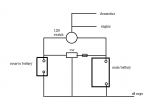
That is basically an "intelligent" vsr, . It would be a good choice. It would be wired as I have shown for a vsr in # 53.
If you feel persuaded by the arguments in favour of a12both switch that could be used in place of the two separate switches.
Go away let those do what they are happy with, why insist they follow you??????????????????????????So why not just have an off/off switch, with a single battery/bank ?
Why carry lifejackets, flares, VHF, first aid kit, tools etc etc etc
Same as refueler and anyone else, you're free to us whatever system you choose and to use it however you want. The OP is clearly not entirely satisfied with what he has and want to improve it, i'm proposing a simple solution that makes his charging fully automatic (which is what his aim is) and suggesting a more robust switching arrangement. He's also free to take the suggestion up, or not.
Go away let those do what they are happy with, why insist they follow you??????????????????????????

Jesus you lot still going on.. Your worst than a bunch of kids

Jesus. Are you still following this thread even though you clearly have no interest in it?Jesus you lot still going on.. Your worst than a bunch of kids

It might make no sense to you but I am sure it will make sense to anyone with a little understanding of simple electrical circuits and the ability to read a simple circuit diagram.Your sketch, depicting 2 separate switches make no sense.
I don't call those pictures " proper schematics"I've already posted proper schematics showing how to wire the VSR, with a 1-2-B switch, or with separate switches.
There is nothing wrong with my diagrams, especially compared with your pictures that look as though they've been lifted straight from a kid's book on electricity.Your fag packet sketch shows that each separate switch switches one battery or the other, to supply power to the engine and the domestic circuits and there is no "emergency" switch. Why on Earth would the OP fit such an abomination ? He's better off with the existing 1-2-B switch, it does the exact same things as your sketch, but has an emergency setting and involves no cost, work or changes. If the OP were to swap the 1-2-B switch for separate switches, it makes sense to have each switch perform a dedicated purpose and to fit the 3rd, "emergency" switch as depicted in my schematic.
More Rainbow insults and garbage.Once again, you've tried to reinvent the wheel and just confuse matters.
There is no need for an emergency switch in the circuit I show with two switches. Switching both ON serves the same purpose just as switching a 1, 2, both switch to the "both" position does, I thought you might have realised that..
With a 1, 2, both switch if you have a flat or faulty battery that you don't want to parallel with a good battery you simply just select the good battery, leaving the other isolated.It would indeed function in the same way as a 1-2-Both switch, but has the big disadvantage of paralleling a good battery with a flat/faulty battery, which is never a good idea. A proper emergency switch, as shown in PaulRainbow's diagram in post 45, links the load side of the two switches, so that a flat or faulty battery can be isolated.
It might make no sense to you but I am sure it will make sense to anyone with a little understanding of simple electrical circuits and the ability to read a simple circuit diagram.
I don't call those pictures " proper schematics"
There is nothing wrong with my diagrams, especially compared with your pictures that look as though they've been lifted straight from a kid's book on electricity.
There is no need for an emergency switch in the circuit I show with two switches. Switching both ON serves the same purpose just as switching a 1, 2, both switch to the "both" position does, I thought you might have realised that..
The OP does not have an existing 1, 2 , both switch, at least in the first sentence of #1 he says he has two on/off switches so he would not be swapping a 1,2 , both switch for separate switches . He would be using the existing switches.
More Rainbow insults and garbage.
I'm not reinventing the wheel or confusing matters. I have merely responded to the OP's question with a simple diagram showing how I might do things with just the existing two switches and how the same result could be achieved with a good old 1, 2, both switch, favoured by some
It is you who is confusing things .
I doubt anyone with even the most vague notion of battery switching and automatic split charging will make any sense of a system design where separate batteries and separate switches, with a VSR, have all domestic and engine loads connected to one battery, or the other.
As for switching them both on in an emergency, how does that go:
"I have a problrem with one of my batteries, i know, i'll parallel the good one with the bad one" What could possibly go wrong ?
See above, what could possibly go wrong ?
Amidst the chatter form others about 1-2-B switches and the anti VSR vitriol i missed the OPs switching arrangement.
My drawing don't cause any confusion, they are all very straightforward and well proven. You concepts are typical of some of the ideas that you dream up and post on here, born of a lack of real World experience and understanding.
It is a simple system that will be familiar to anyone who uses a 1,2, both switch and which anybody with any understanding of simple electrical circuits will be able to understand
I've explained how this works in #71 but an "electrician" should be able to follow such a simple electrical circuit diagram without needing an explanation
You seem to think that the circuits you posted in #18 and # 45, and your version of the circuit with a 1, 2, both switch in #23, have some magical ability to prevent a failed battery being paralleled with a good one.
I have news for you. They don't.
Close the "emergency combine" switch, or set the 1,2,B switch to "both", and they will do just that.
You don't even seem to understand the circuits you've posted yourself.
You keep on harping on about this "real world".
My world is one of heavy electrical and mechanical engineering, working with other engineers and scientists and a substantial manual workforce.
What's your "real" world? The insular world of a one-man-band doing electrical work on small boats ?
I suspect that the original poster "passed over" some time ago.
Richard

