Alternatives to crimp eyes

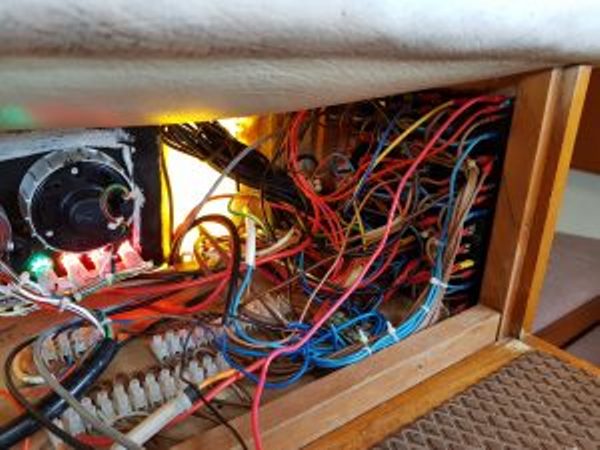
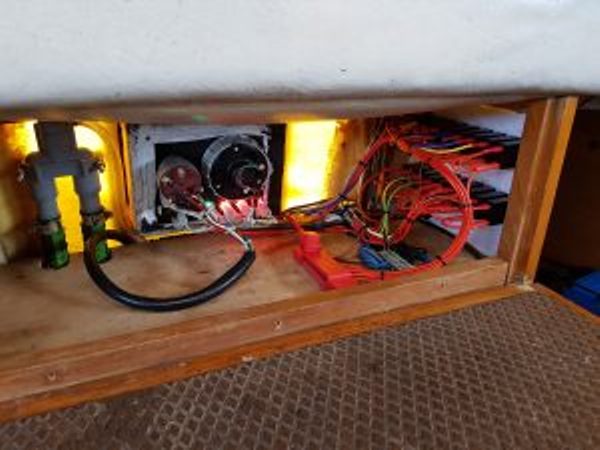
Looking at those pictures, what strikes me is that I hate the 'tradition' of needlessly bringing all the boat's wiring into one rat's nest behind the chart table.

The problem in some of the pictures is not so much the actual connectors, but the fact they've got fat heavy unsupported wires hanging off them.
Some boats, there's a lot of stress on the connectors just to get the bloody panel back in place.
The sign of a really good job is when the wires are neatly loomed (but accessible) and you don't have to fight the wiring to get the covers on or off.
Any fool like me can put in 4 or 5 wires reasonably neatly, when you've got 50+ wires, a skilled avionics wireman will make a huge difference.

A lot of people make life hard for themselves (and subsequent owners!) by using cable which is much fatter than necessary.

When adding a few circuits to a boat, the best thing I ever did was to make a little auxillary panel for the heater, some extra lights, well away from the main panel.
 
Rather than chock blocks, this style of connector is better ;

Bluesea Systems 20A Terminal Blocks | 12 Volt Planet

Available in 20a and 30a (if you need to use bigger crimps). Other makes and suppliers are available.

I see there are piggy back spade terminals on some of your switches, i'm not a fan of those, they look untidy and they are not fully insulated. Rather than use those, there are at least a couple of better methods ;

1) Use a fully insulated spade on a short cable going to a terminal on the connector strip above. Then use a terminal jumper (shown on the link above) to allow you to connect two cables, you can bridge as many connections as you need to, subject to the rating of the connector strip.

2) Use a fully insulated spade on a short cable going to a 221 series Wago connector, available in 2, 3 or 5 way. Fit the other cables in the connector. You can make a very neat installation with these connectors, by fixing them in a row with some fast drying epoxy (Rapid Araldite or a clone thereof).
Thanks for this Paul and yes, definately the way to do it. Hopefully I can buy these here otherwise I will try and get them shipped, trouble is at the moment the marina office is shut and no one to take deliveries. I shouldn't complain there are many in the world a hell of a lot worse off than me. Thanks for your advice.
 
Looking at those pictures, what strikes me is that I hate the 'tradition' of needlessly bringing all the boat's wiring into one rat's nest behind the chart table.

The problem in some of the pictures is not so much the actual connectors, but the fact they've got fat heavy unsupported wires hanging off them.
Some boats, there's a lot of stress on the connectors just to get the bloody panel back in place.
The sign of a really good job is when the wires are neatly loomed (but accessible) and you don't have to fight the wiring to get the covers on or off.
Any fool like me can put in 4 or 5 wires reasonably neatly, when you've got 50+ wires, a skilled avionics wireman will make a huge difference.

A lot of people make life hard for themselves (and subsequent owners!) by using cable which is much fatter than necessary.

When adding a few circuits to a boat, the best thing I ever did was to make a little auxillary panel for the heater, some extra lights, well away from the main panel.
I completely agree and that is why I am trying to terminate all wiring within some sort of insulated terminal and then take a single wire to the switch panel. The engine bay fares a little better but unfortunately the Southerly tends to run its wiring within its double skin which is completely inaccessible and so tight it won't allow the cables to be pulled through. I am starting to lay trunking from stem to stern so that I can easily rewire but as you can imagine, 38 years of careful owners have taken their toll ;-)
 
Looking at those pictures, what strikes me is that I hate the 'tradition' of needlessly bringing all the boat's wiring into one rat's nest behind the chart table.

The problem in some of the pictures is not so much the actual connectors, but the fact they've got fat heavy unsupported wires hanging off them.
Some boats, there's a lot of stress on the connectors just to get the bloody panel back in place.
The sign of a really good job is when the wires are neatly loomed (but accessible) and you don't have to fight the wiring to get the covers on or off.
Any fool like me can put in 4 or 5 wires reasonably neatly, when you've got 50+ wires, a skilled avionics wireman will make a huge difference.

A lot of people make life hard for themselves (and subsequent owners!) by using cable which is much fatter than necessary.

When adding a few circuits to a boat, the best thing I ever did was to make a little auxillary panel for the heater, some extra lights, well away from the main panel.

You raise several good points here. There is no need for everything to be in one place being a particularly good one.

A good example of this is the negative wiring, why run 20 negative wires across the boat ? Why not a single cable across the boat, to a busbar, then take 20 short cables from the busbar, the main cable obviously has to be rated for the combined currents of all equipment connected to it.

The principal is equally valid for positive cabling too. For instance, if there are several devices that could be powered by a single switch (VHF, AIS, Sounder, Plotter etc) run a fused cable (rated for the combined current of all devices) to a blade fuse panel near the instruments, the fuse each instrument separately.

Saves lots of wire and keeps things much neater.
 
Fully insulated spades, no chock blocks and supported cables, before and after pics of a recent switch panel replacement and wiring tidy up ;

Westerly-Fulmar-Switch-Panel-3.jpg
Westerly-Fulmar-Switch-Panel-4.jpg
 
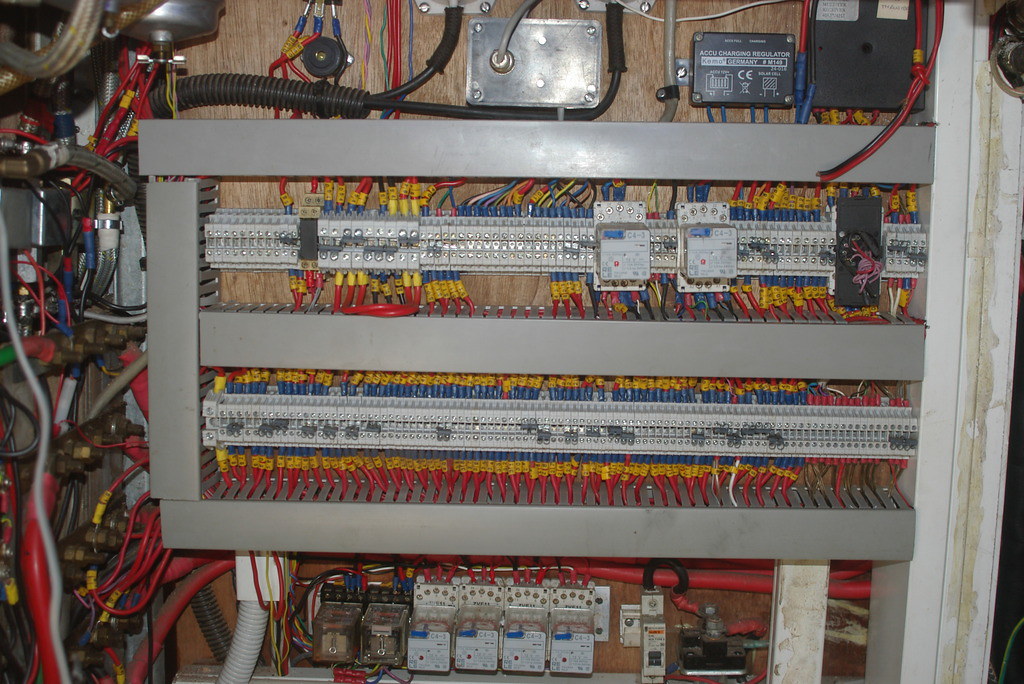
This is my main electrical distribution panel.

I use Din Rail mounted terminal blocks than can be obtained in a range of current rating and cable sized. You can also mount relays and circuit breaker/overloads on the same rail.

I use slotted trunking to keep the cables tidy with pin crimps on the end of each cable and each cable is numbered for east of tracing.

36086372475_7de02f9d53_b.jpg
 
This is my main electrical distribution panel.

I use Din Rail mounted terminal blocks than can be obtained in a range of current rating and cable sized. You can also mount relays and circuit breaker/overloads on the same rail.

I use slotted trunking to keep the cables tidy with pin crimps on the end of each cable and each cable is numbered for east of tracing.

36086372475_7de02f9d53_b.jpg
Jeez that's a lot of connections!
Can a boat really need that?

Can't quite see what's doing what there either, on that bottom one are the grey bits breaker switches for the set of connectors to the left or something?
 
Jeez that's a lot of connections!
Can a boat really need that?

Can't quite see what's doing what there either, on that bottom one are the grey bits breaker switches for the set of connectors to the left or something?

I like to have switched and breakers for every piece of major equipment. I no lots on lere disagree its my boat my decision.

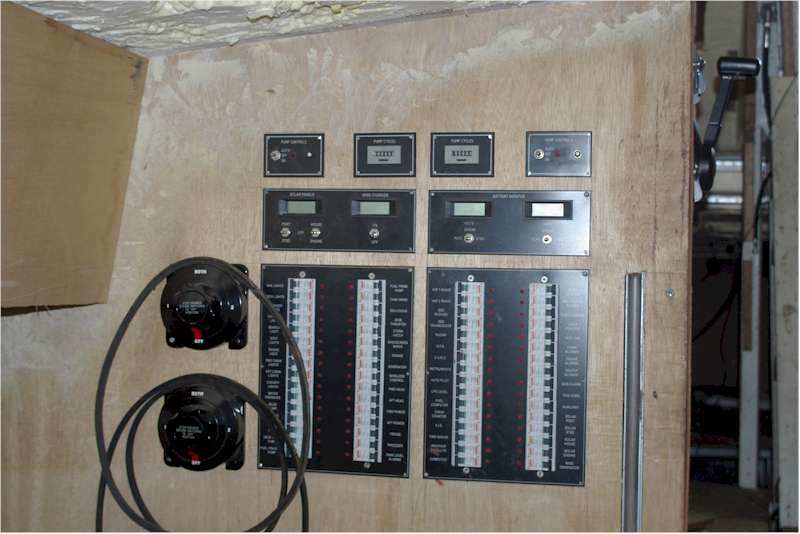
This is the main DC switch/breaker panels.

35696423550_fb6baf18e7_c.jpg


This is the back of the above before the distribution panel and wiring was fitted.

35277391673_3dbd04ebbe_c.jpg


On the left are the shunts and main batteries, and main plus and negative.

I have 2 domestic battery banks and a seperate engine / generator start battery.

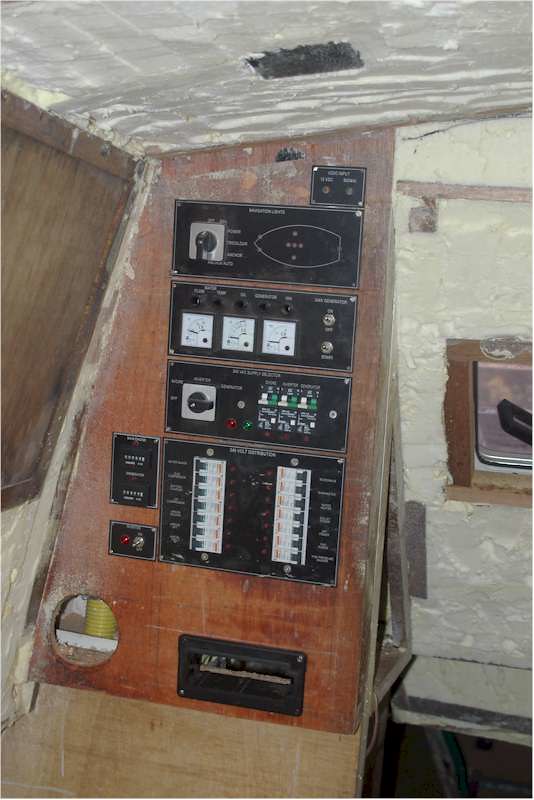
This is my AC mains input and distribution panel. Again separate breakers for each piece of mains equipment.

35696424210_9234423a84_c.jpg


Very top is the navigation light sevection switch and indicator panel.

Then is mains input selection panel (Shore power, Generator, Inverter and Off). Gauges for Current. Voltage and Frequency.

Generator and inverter start/control is also here.

I used to design industrial machine control panels so I followed that method .
 
Top