A frame for lowering mast, whilst on water

Conrad

Well-Known Member
Joined
30 Mar 2008
Messages
168
Location
Thames
Visit site
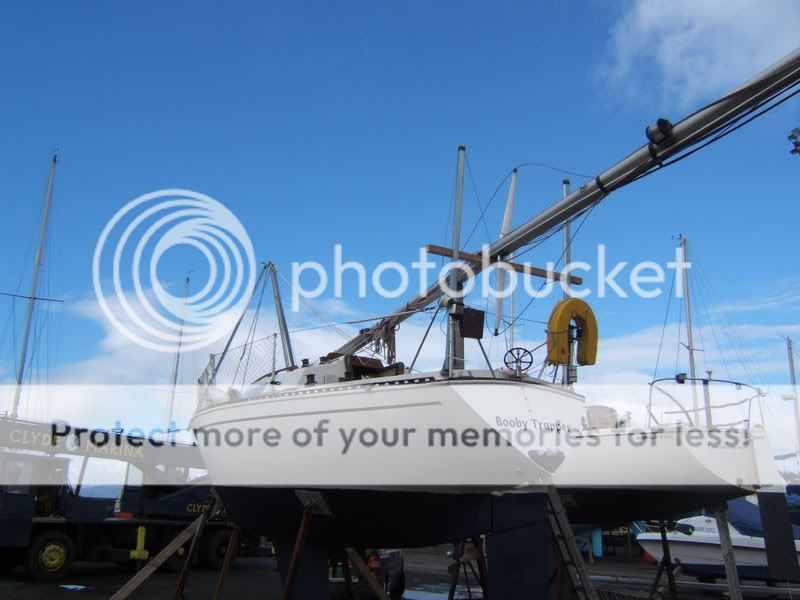
After some good advice from an earlier posting I now need to make an A frame so I can lower a 30ft mast whilst on the move. The mast has a pivot point at its base attached to the coach roof allowing it to tilt backwards.

Any hints on constructing an A frame would be most welcome, such as length and type of wood used, pulley arrangements, amount of crew etc.

All tips and experiences would be most welcome.
 
Aframe.jpg


It is not standard on the Parker 31, the second owner made it up from aluminium tubes. It is raised or lowered remotely from the cockpit by a 12 V car winch in the anchor locker. You can even lower it by two meters "en route", by hauling up the boom a bit. Avoids waiting for bridges to open!
 
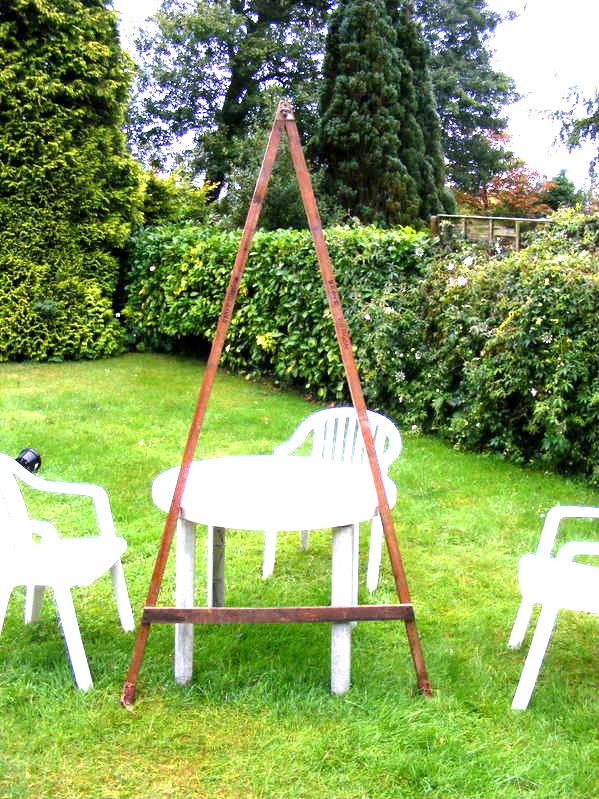
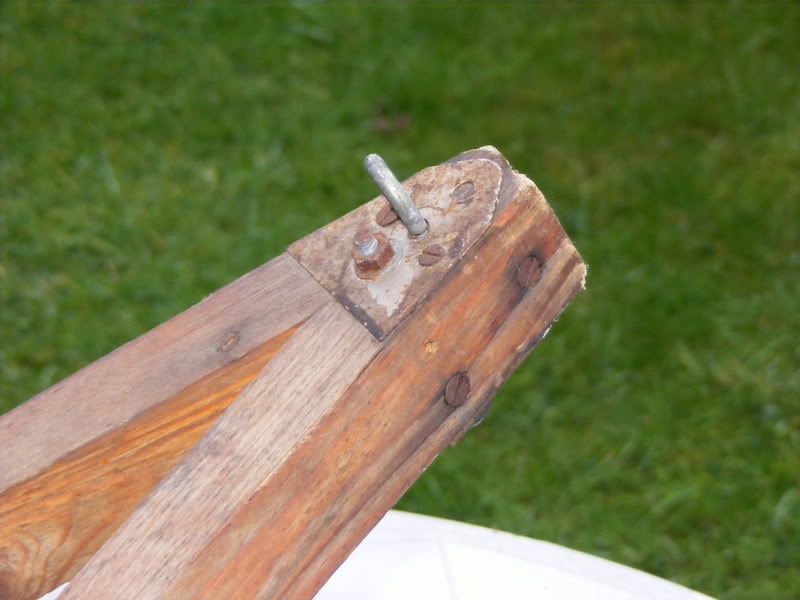
This is what I use. BUT the mast is only about 21ft so you will need something somewhat sturdier for your mast.

Its carpet padded feet rest up against a beam across the cabin top on to which the mast step is screwed.
It is just large enough to reach the stem head fitting.
The main-sheet tackle shackles between the stem head and the apex of the frame. The forestay is transferred to the apex also.
It does not give any lateral stability as the mast is lowered but it is easily controlled.

It is vital that your are sure about the integrity of the fastenings between mast step and cabin roof as the technique imposes high shearing loads on them, when the mast is nearly horizontal.

For a price Compass24.com do a mast raising set up but it may not handle your mast. Worth checking out if this is to be a regular requirement

<span style="color:white"> .............. </span> <span style="color:white"> ................ </span> Click the picks
 
We have a 30ft mast on our 25 ft boat. I use a couple of 3"by 2" wooden Planks. They are just a bit longer than the J measurement ie from the mast foot to the forestay so that when the mast is up they are pivoting in line with the mast foot and go to a point just outside the forestay resting on the pulpit. You can either lash them together or put a bolt through at the apex.
 
A 30ft. mast could be quite heavy. For lowering any mast, an essential need is to stop it swaying sideways if/when support from the shrouds is lost, being afloat won't be helpful. This can be done with 2 assistants or by arranging the pivot bolt to be in line with a pair of shroud attachments. A typical cast mast pivot is not very tolerant of being twisted, if your boat has a tabernacle, that would be better.
 
A quick question on technique, does the A frame actually move with the mast or is it designed to be a fixed point to hoist from?
 
The apex of the A frame is normally attached to the mast by, eg, the forestay and hence moves with it. The apex is also attached to the bow of the boat by a tackle, the mainsheet is often used, and this controls the lowering/raising.
 
26ft boat 30ft mast
I used a tripod arrangement made with 8 ft lengths of Unistrut. Outside 2 bolted onto the toe rail and the middle one which was slightly shorter onto the mast base. This gives a very strong rigid frame I rigged a pulley onto the top of the frame I tied another pulley at about 7ft from the bottom of the mast. I then tied a rope onto the top of the frame led it through the pulley on the mast then through the pulley on the top of the frame down to a pulley on the toe rail then around a winch. once you take the tension on the winch the fore stay can be released. On mine the cap shrouds can be loosed but kept attached. I steaded the mast and my not so willing assistant let out the rope on the winch. I was surprised how well it all worked and even managed to put it back up myself.
You may need a frame at the back to stop the mast hitting the companionway hatch.

2007_0303003.jpg


2007_0303006.jpg


Getting the mast onto the ground and back onto the boat was much more difficult
 
The A frame around here is almost always made from spinnacker poles. You can also use aluminium tubing or wood. But for a 30ft amst it needs to have reasonable compressive strength (in column) Hence spinm pole gives you an idea of streng5th needed.

Most people us a rig welded to a flat plate which is screwed to the deck one each side adjacent to the mast but near the gunwhale.

From mast up this frame is horizontal but rises with the end of the forstay so with mast horizontal the poles are near vertical.

You can use a halyard to lower the mast. This is more common with boats having a roller furling jib as often there is not much room between the furler drum and the deck. You need to have a tackle between the bottom of the forstay or halyard and the deck with the A frame poles attached at this point. Attachment of the poles is not so critical and rope or cord can do it. Many people us a 10cm ring of SS about 10mm diameter metal which is convenient for snapping the spin pole ends onto.

Obviously the forstay is a lot stronger more stable than a cleated halyard but by using the halyard you can crank down on the tackle to enable the forstay to be released against rig tension. (ease the backstay of course).

As said a decent support again A frame of wood is usefull at the transom. This should be as high as possible consistent with you being able to lift the mast down from the support for complete removal and low enough for mast to go under bridges etc but as high as possible to minimise effort to raise the mast again. The load is greater the lower the mast is.

As said also sideways support for the mast is critical especially if you are under way and a ###mobo comes past.
With mast head rig with shrouds abeam the mast this is easy. You need to extend the chain plates to a point in line with the mast pivot or provide some staying forward of the shroud at this point so shroud stays tight with mast vertical or near horizontal.

One method gaining popularity here (almost everyong drops their mast for bridges) is a system using 2 poles pivotted on deck about 2 metres aft of the mast near gunwhales. These poles connect to a car which runs up the mainsail track. If the car is raised up the track it pulls the mast down (or allows mast to go aft) until the poles are pointing aft making a support for the mast somewhere above the transom. This method can be used to raise or lower the mast be I think I would prefer the tackle on the forestay and A frame as well for taking the weight. good luck olewill
 
It is altogether feasible to use the A frame on a static basis. you will need two scaffold tubes + 1 swivel joiner to make the 'A'. Need wooden padding on the deck at the ends of the two tubes.

Erect the 'A' with a pulley attached to the apex, and a guy line fore and aft to keep the 'A' vertical, and make sure the lower ends are lashed.

A line through the pulley to a bowline under the spreaders will allow the mast to be lowered or raised with ease. Two man job but far from difficult, and unlikely to break your alloy step casting, which is always a very real risk if using it as a pivot.
 
Top