Asymmetric spinnaker or cruising chute?

Iain C

Well-Known Member
Joined
20 Oct 2009
Messages
2,366
Visit site
I'm going to order a new downwind sail for my Bav32. In the same way as I put a chute on my Sabre 27, I'm going to add a DIY bowsprit made from a piece of carbon 18' skiff mast, which at a convenient 76mm OD will be the perfect size to fit in a Selden bow ring. So I will have a retractable bowsprit, probably protuding somewhere between 600 and 750mm from the stemhead, and with around double that on the foredeck.

However my question is whether to go for a cruising chute or a proper asymmetric spinnaker, and I am looking particularly to hear from anyone with experience here. I had a cruising chute on the Sabre (fin version), and I did wonder if a bit more area and horsepower would have been good. And when I look at the much grippier spade rudder and deep keel of the Bav32 I am leaning more towards a proper asymmetric.

Probably worth pointing out that I am a dinghy racer, and have spent many years racing fast trapeze skiffs such as 18s, 12s, and my current boat, a 49er. So I am used to sailing with a big kite, and keeping the rig under it when driving! Whatever I go for, it will have a snuffer and will be gybed (inside probably) not snuffed and gybed.

Use will be primarily the following:

1-Single handed or short handed cruising, probably with the family. For this kind of sailing, it will probably only get flown on the much lighter days.
2-Faster cruising with the lads, also from a mixed yacht cruising/dinghy racing background
3-RTIR and the odd club race. However I'm really not bothered about handicaps or getting the area in etc etc.

I guess the two scenarios I'm looking to avoid are putting it up on day 1 and thinking "Dammit. Wish I'd gone bigger", or "Leave it in the bag, it requires constant trimming". I know in some ways the obvious answer is "you're primarily cruising a cruising boat, so buy a cruising chute" however I guess like a car I'd like the best performance I can get within reason...but it doesn't mean I have to use it all the time!

One other question...cloth weights. Most of the more budget lofts seem to go with 1.5oz on the basis of durability...and I do want something that will last. However one or two have said 0.9oz as an absolute maximum, perhaps less. However, for me longevity is more important than performance, and I don't want to constantly be worry about one broach meaning "game over" for the kite.

Any thoughts very much appreciated, however let's keep it on track and not say that asyms and snuffers are the work of the devil and I should buy a blooper and letterbox drop it.

Cheers all!
 
Snuffers are the work of the..... But then you know that!

With regard to the cloth weight first. I'd be tempted to go heavier rather than lighter. Light cloth is what you want in sub 10 knots of breeze, but from a cruising perspective anything you're likely to think of sailing in will have enough puff to lift the cloth, and there's a certain reassurance to knowing your kite is bulletproof when the wind is building quickly but you're having a lot of fun!

The main difference between a cruising chute and a full on A-sail in practice is how hard they are to trim, and how much constant trimming they require. And the A-sail is a lot less stable, mostly because (as I'm sure you are aware) they have a fair amount of area in front of the direct line from tack to head. This makes them great for running deep, as you can rotate a lot of the kite round the forestay, but hard work to do so at the same time, and require a lot of coordination between trimmer and driver.
As someone who's spent a bunch of time trimming a J109 kite, they really are very fast downwind, and surprisingly deep running, but not in cruising mode.
Which sort of brings me onto the other point.... There are A-sails and there are A-sails. An A2/A4 for a J109 (both are big running kites, the only difference is the A4 is a much heavier cloth) is a very different animal to an A3 reaching kite. I would suggest that as a general purpose cruising kite, an A3 would be the first one to get, and then only consider an A4 if you really want to run deep.

The only other thing to mention is that if you go for an A3 I'd definitely fit a bobstay to your pole. If you start reaching with it the loads will get big quickly.
 
It depends upon what crew you have. You can do a lot more with a full-size assymetric but to control it properly you need the trimmer and helm at least to understand what to do next in any circumstance. If your going to be sailing most of the time with crew that require on-going instruction better to have a more manageable cruising chute. OK, if you have the same regular crew you could train them up just like you would a race crew but....
 
Snuffers are the work of the..... But then you know that!

With regard to the cloth weight first. I'd be tempted to go heavier rather than lighter. Light cloth is what you want in sub 10 knots of breeze, but from a cruising perspective anything you're likely to think of sailing in will have enough puff to lift the cloth, and there's a certain reassurance to knowing your kite is bulletproof when the wind is building quickly but you're having a lot of fun!

The main difference between a cruising chute and a full on A-sail in practice is how hard they are to trim, and how much constant trimming they require. And the A-sail is a lot less stable, mostly because (as I'm sure you are aware) they have a fair amount of area in front of the direct line from tack to head. This makes them great for running deep, as you can rotate a lot of the kite round the forestay, but hard work to do so at the same time, and require a lot of coordination between trimmer and driver.
As someone who's spent a bunch of time trimming a J109 kite, they really are very fast downwind, and surprisingly deep running, but not in cruising mode.
Which sort of brings me onto the other point.... There are A-sails and there are A-sails. An A2/A4 for a J109 (both are big running kites, the only difference is the A4 is a much heavier cloth) is a very different animal to an A3 reaching kite. I would suggest that as a general purpose cruising kite, an A3 would be the first one to get, and then only consider an A4 if you really want to run deep.

The only other thing to mention is that if you go for an A3 I'd definitely fit a bobstay to your pole. If you start reaching with it the loads will get big quickly.

Also bear in mind that the length of your bowsprit may or may not give enough clearances for an inside gybe. We have a Selden bowsprit and are safer with outside gybes..We also fly a code0, which avoids the problem entirely.
 
Also bear in mind that the length of your bowsprit may or may not give enough clearances for an inside gybe. We have a Selden bowsprit and are safer with outside gybes..We also fly a code0, which avoids the problem entirely.

True... I think with a 600mm pole it will depend on if it's masthead hoist or fractional. With a masthead hoist I'd expect to be able to inside gybe.
 
My requirements match your first one plus the durability bit. So the cruising chute I have just had made for my 33 is c65 sqm. Made of CPN 1.5oz ripstop nylon. No bowsprit (although I might regret that) but on a Selden GX 10 furler to an eye bolt on the pulpit, solidly braced with a strut to the forestay tang (modified standard fitting) about 35cm forward of the Furlex.

Flew it for the first time last Thursday (on my own) in 12-15 knots with wind just aft of the beam. Certainly made the boat move! but of course not enough experience to really comment on how useful or effective it will be in cruising use. Bit of an effort to wind away as I did not have the main up to blanket it, but no doubt will get the hang of it after a few outings. Did it all from the comfort of the cockpit.
 
With your experience of dinghy's, if you only want to have one kite on board I would go for an A2 asymmetric with whatever cloth weight the loft recommends for up to 22 knots of breeze.

Yes, this is a "light airs" running kite - but in reality, when actually running that means up to about 22 knots of breeze in most boats, an A2 will still work fairly well reaching in lighter winds up to say 12 knots (in light airs quite often better than an A3 because even though the shape won't be quite right the A2 will have more area). For reaching in above 12 knots you will probably not need a spinnaker because of presumably having a big overlapping headsail.

As long as the sail is designed well it doesn't have to be that "tweeky" for example I am pretty sure I sailed the whole way from Falmouth to Plymouth last year with our A2 up with the sheet cleated off, yes if we had been racing we would have been constantly adjusting it to get a fraction more speed but if you just over tension the sheet from optimal by normally about a foot you can cleat it off and just steer the boat to keep the spinnaker flying.
 
Some really good info here, thanks people. Some thoughts and answers...

lpdsn-realistically I won't have the same regular crew, and as I'm not a yacht racer I might not be the best person to advise them anyway! Clearly I understand asymmetric sailing in a dinghy however I suspect it's a lot simpler than yachts, even though I do tend to do RTC club courses in the 49er rather than proper W-L stuff due to the racing at my club.

pagoda/flaming-the B32 is fractional with the kite halyard exiting the mast just above the forestay, so not sure if that will be a problem. In fairness, most lofts are saying go for a kite luff length less than 100% of the hoist height, and fly it slightly high of the end of the bowsprit, rather than having something more than 100%, if that makes a difference at all. However, my Sabre 27 was old school fully masthead and that was always OK to inside gybe.

lngwe-some interesting points. Yes, I absolutely do want to be able to just leave it on the s/t winch and steer to it, or for that matter oversheet slightly and in light steady breeze and flat water even let the autopilot do things for a minute or two if really needed.


Unfortunately I've not actually properly sailed the boat yet, so I can't comment on how she white sail reaches. And I do need to order a kite promptly to have it in time for a cruise in June and the RTIR in July. I think realistically I'm looking for something I can use in medium breeze in around the 120-140 AWA range, perhaps higher if it's lighter. I guess two big differences between my old Sabre and the B32 are the facts that the Sabre was old school masthead rig with straight spreaders, so I could pretty much square the boom out on a run. Also the mainsheet traveller was on the bridgedeck by the companionway hatch, so easy to get to from the tiller for gybing etc, and also very easy to dump in a big puff. The Bav32 has swept spreaders so will not like a dead run, and the mainsheet is the arrangement where the traveller is in front of the hatch with the sheet going onto a winch on the coachroof. I know I'm going to hate that on many occasions, but also probably feel very happy about it when my toddler is in the cockpit.

Keep it coming...and I'm not too proud to just go down the cruising chute route if that's genuinely going to be the best option...but I guess just not as useful running deeper...
 
Your boat has similar sail proportions to my old 37 and reaching was fine with the standard genoa, so you might want to have a sail that will cover deeper angles than the one I have. The newer boats have a 105% jib which improves both handling and upwind performance at the expense of off wind. For downwind I am hoping that goosewinging with a preventer on the main will be feasible - at least in light airs. Time will tell.
 
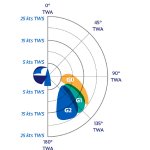
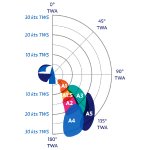
Sail Type: See the sail selection charts below. A2's ect are, if done right, racing sails and even though you can take them out of their designed use it's a bit like using a race car to commute in. Crusing gennakers are more forgiving and are built and designed perfectly for the sailing you want to do, they do not have to be any smaller, or less fun, but their flying shape allows them to more easily go through a range of wind angles and fly with less hassle.

Cloth: Contender Nylite 90 or Maxilite 150 is what I think is the best versatile cruising nylon. Nylite 90 (0.9oz) if you want bit more performance, or Maxilite 150 (1.5oz) if you want more durability. Bainbridge 'MPEX' and Challenge 'Fibremax' are budget cloths used a lot but they are lower quality (reflected in price though). Dimension Polyant CPN is good, but not much used. If you do go for a lower quality cloth increase the weight (1.5oz)

Spec: This is often overlooked, the cheaper the sail generally the lower the spec. Low end kites will have polyester luff and leech lines (if they actually have them!) over dyneema luff and leech lines, which can be the difference on keeping the kite together in a broach. They will often only be sewn together, not stuck and and sewn together.

Don't be afraid to go for a crusing gennaker, if built properly they will be perfect, these days you do not need to compromise performance for durability if you are willing to invest in the correct spinnaker.

downwind-cruising-gennakers.jpg
downwind-racing-asymmetric.jpg
 
In fairness, most lofts are saying go for a kite luff length less than 100% of the hoist height, and fly it slightly high of the end of the bowsprit, rather than having something more than 100%, if that makes a difference at all.

I think that for you, as a high performance dinghy man who's going to the trouble of building himself a bowsprit, might get frustrated by that. Whilst it will work ok broad reaching, heating up does require getting the tack down to the bowsprit to prevent the sail falling off to leeward too much, even in the light winds that you would be doing this in whilst cruising.

A further thought... One option might be to buy a cruising chute for use with the family, but look for a suitable second hand sail from something like a J92 or J105 for the lads trips.
 
When looking at increasing sails for the 389 we got the below.
kN4cGgz.jpg


In the end went for both the FFR and the Maxi. Both use the same top down furler. Adjustable tack line for the maxi.
The FFR is great fun to use and really gets the boat shifting but does require a bit of helming in gusts above 20kts close hauled.
The 389 has two attachment points so the FFR is flown of the acchor roller and the maxi further out on the bowsprite.
FFR
z7AeW2v.jpg


Maxi
2NCBsLv.jpg
 
For what it's worth, I sail a Southerly 46, fractional rig carbon mast and boom, with a 95% self tacking foresail.

The sheeting point on the self tacker is fixed, so off the wind I either have to use a barber hauler, or set an asymmetric.

I have a 1500 sq ft A5, masthead reacher and 2000 sq ft masthead A2, both by North.

I sail mainly single handed, and when I do have crew, they are mainly "passengers", so I almost always sail as if I'm single handed.

I grew up sailing Merlin Rockets, Fireballs and 505's, high performance boats in their day.

The Southerly carries quite lot of white sail, about 1200 sq ft, so the asymmetrics are very much light wind sail, the boat is heavy and doesn't plane, so there's little point in piling on more sail when she has reached hull speed.

I started off with a snuffer, I found it very unsatisfactory, I had to work on the foredeck and struggle to get the snuffer down, often in more wind than was sensible, I have a natural tendency to wait too long as the wind increases.

I then used a furler on the reacher, this was better, but often still a struggle to get good furl.

I now use a Karver furler and top down furling system, with a torque rope on both Asymmetrics. I find the Asymetrics much easier to handle with the top down system. The continuous furling lines are long enough to get back to the cockpit winches, so I can use them, if necessary, to furl the sail, and the top down system gives a more reliable furl.

The net result is that I use the sails more often, and handle them, with confidence, in stronger winds than before.
 
I think you need to be clear what you want from a cruising asy.
From my point of view, the biggest gain to be had on a typical cruising boat is to be able to sail effectively when other boats are reduced to motoring.
You can get a lot of that from something that will work well in the range 5 to 10 knots true.
Below 5 knots, nothing really works, above 10 knots, you're getting there with white sails. Around 7 knots your average cruiser sailor is motoring DDW bemoaning the calm.
On a typical UK or channel cruise there is often a big element of wanting to go more-or-less downwind, e.g. wind blowing along the coast.
This is where the chute really scores in the 5 to 10 knot true area, you will be heading up 20 to 30 degrees and putting the apparent fairly well forwards.
Work out your own vectors. If your boat beam reaches at 5 knots in 7 knots of breeze with white sails, a fair size kite might give you six knots of boat speed in 7 knots at 150 TWA? I made up those numbers, make your own guesses for your boat! But it's easy to see that in light air, even a leadmine can get the apparent forward of the beam.

In my view to make the best of this, you want a big light kite with moderate luff round.

If you are looking for something different, perhaps:
1) fastest possible passages in more wind, including reaching at higher angles
or 2) To sail DDW fast in more wind,
Then IMHO, you want 1) a smaller heavier asy with a straighter luff, or 2) a symetric kite of moderate size, maybe a large one too. Or a heavier asy with more luff curve.

So if I was to have one nylon sail, it would be a big light asy of moderate shape.
Next I would add a medium 'proper' spinnaker.

You can compromise and blur the edges a bit, but start by being clear about what you want the sail to do.
Maybe you don't see the same use pattern as me, not everyone beats to Cornwall and reaches/runs back for their summer break!
People who are planning a Transat might well have a set of TWA's they are designing to.
People with under-canvassed boats and/or draggy hulls might want a reaching boost in the 7 to 12 knots true area.
These will be different requirements with different sails as answers.
Then, please, get something well made and tri-radial or star cut, not some economy cross-cut abomination that will be cruelly mishapen after the first puff.
 
...heading up does require getting the tack down to the bowsprit to prevent the sail falling off to leeward too much, even in the light winds...

With only 150sq ft it may not matter on the dinghy...I'd hoped to tie off the tack to the end of the bowsprit, and not to need to adjust it in use. Not so? So many lines, so few hands to adjust them. My baggy asymmetric won't be much use anyway, close to the wind.
 
Don't forget if you are buying new and deffo only want one sail you can always spec a hybrid sail. Half between the two.
The better sailmakers who are more race orientated will have all the technology to build you a sail of whatever 'tweekyness' you want.
Whatever you get arrange your prodder so that you can have a tack line adjustable from the cockpit.
 
With only 150sq ft it may not matter on the dinghy...I'd hoped to tie off the tack to the end of the bowsprit, and not to need to adjust it in use. Not so? So many lines, so few hands to adjust them. My baggy asymmetric won't be much use anyway, close to the wind.

It's not normal to adjust the tack line in a dinghy.

Easing the tack line is only done on heavier, non planing, Asymmetric boats in order to encourage the sail to rotate to windward when sailing deep. Anything fast enough to plane never eases the tack line.
 
It's not normal to adjust the tack line in a dinghy.

Easing the tack line is only done on heavier, non planing, Asymmetric boats in order to encourage the sail to rotate to windward when sailing deep. Anything fast enough to plane never eases the tack line.

Such as a Bav 32, or my old Dehler. Also if you have eased the tack line, tighten it down before you gybe then ease again on the new gybe.,
 
Top